
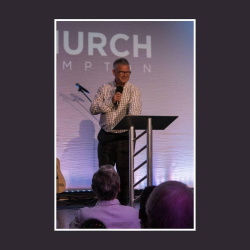
Look around you. You don’t need to look far until you see need. With the world that has shrunk because of social media then our neighbours can be living thousands of miles away and yet are very close to us, they are as reachable as the neighbour next door. Even in 2024 with the advancement of the world there are still many who spend every day wondering how they can eat and where will they get water from and how will they pay their debt. James has something to say:-
“Religion that God our Father accepts as pure and faultless is this: to look after orphans and widows in their distress and to keep oneself from being polluted by the world.” (James 1 v 27)
How do you treat people who do not have what you have? Who are you helping right now? James throughout the letter is very keen for us to understand and practice the importance of community. He warns us not to be ‘polluted by the world’ and though this could be that of morality, within the sentence it could also be that we are not self-centred and that is the God-morals to hold to.
Micah 6:8 ‘And what does the Lord require of you, but to do justice, to love mercy and to walk humbly with your God.’
The term mercy is the Hebrew word chesedh, God’s unconditional grace and compassion. The word for justice is the Hebrew word mishpat. Mishpat puts the emphasis on the action, Chesedh puts it on the attitude (or motive) behind the action.
To walk with God then, we must do justice out of merciful love.
The word mishpat in its various forms occurs over 200 times in the Hebrew Old Testament.
Its most basic meaning is to treat people fairly, rightly. It also means giving people their rights.
The mishpat or justness of a society according to the bible is evaluated by how it treats the groups of people found in Zechariah 7:10-11 “This is what the Lord Almighty says: Administer true justice, show mercy and compassion to one another. DO not oppress the widow or the fatherless, the immigrant or the poor.” James would have known this when he wrote of widows and orphans.
Any neglect shown to the needs of such people is not called merely a lack of mercy or charity, but a violation of justice, of mishpat. God loves and defends those with the least economic and social power and so should we. That is what it means to ‘do justice’.
Deut 10:17-18 “The Lord your God …defends the cause/mishpat of the fatherless and the widow and loves the immigrant giving him food and clothing”
So often God is introduced as the defender of the vulnerable. This is so significant.
So for the bible writers to introduce God as ‘a father to the fatherless, a defender of widows’ is significant.
This is one of the main things he does in the world. He identifies with the powerless, he takes up their cause. This sets our God apart from all the other ancient gods whose power was always channelled through and identified with the elite of society. Our God was and is always on the side of the powerless and of justice for the poor, needy and vulnerable.
Most people who are downtrodden by abusive power are those who had little power to begin with, God gives them particular attention and has a special place in his heart for them.
If God’s character includes zeal for justice that leads him to have the tender love and closest involvement with the socially weak, then what should God’s people be like? They must be people who are likewise passionately concerned for the weak and vulnerable.
Sometimes as Christians we get more concerned about our moral living and personal righteousness and obeying the laws of purity, than about living about the commandment of doing justice, loving mercy and speaking up for those who cannot speak up for themselves.
It’s time for us to get bothered about what really bothers God.
 Missions Paul
An important obligation for all Christians, whilst we wait for the second coming of our Lord and savoiur Jesus Christ.
thanks for the reminder🙏
LikeLiked by 1 person