
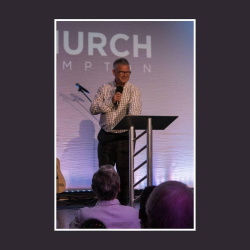
We are going to read one verse this morning that will remind us that we are all links in chains that began long before us and will continue long after us. We are recipients of truths, wisdom, and traditions that others died to preserve and pass on. We are also potential ancestors to future generations who will depend on our faithfulness.
This perspective transforms how we view our responsibilities. We are not just living for ourselves or even for our immediate circle. We are trustees of something larger, carriers of a flame that must not be allowed to die on our watch.
“And the things you have heard me say in the presence of many witnesses entrust to reliable people who will also be qualified to teach others.” 2 Timothy 2 v 2
When we trace Paul’s model, we can identify four distinct generations:
- Paul himself – the original teacher and source
- Timothy – the direct disciple who received the teaching
- Reliable people – those Timothy will carefully select and train
- Others – those who will be taught by Timothy’s disciples
This four-generation view forces us to think beyond immediate impact to lasting legacy. It challenges every teacher, mentor, and leader to consider not just their direct influence, but the influence of their influence.
The word “entrust” carries tremendous weight. Paul isn’t simply telling Timothy to share information or pass along interesting ideas. He’s talking about sacred stewardship – the careful, intentional transfer of something precious and irreplaceable. To entrust is to place confidence in someone’s character, to believe they will handle what you give them with the same care you would.
This entrustment isn’t automatic or casual. It requires discernment, relationship, and deep consideration of the recipient’s character and capability. Timothy must evaluate not just who might be interested, but who can be trusted with the responsibility of not only the preserving but the passing on of the gospel.
The genius of Paul’s vision becomes clear in the final phrase: “who will also be qualified to teach others.” This isn’t just about preservation – it’s about multiplication. Paul envisions an expansion where truth spreads not just from person to person, but exponentially as each faithful teacher raises up multiple qualified successors.
This multiplication principle recognizes that truth is meant to be shared, not hoarded. The ultimate test of successful teaching isn’t just whether the student learns, but whether they become capable of teaching others. It’s a vision of leadership development that prioritizes reproduction over accumulation.
This discipleship model is often found around the globe in successful measures and I have witnessed first hand the joy of making disciples who make disciples, something the UK and the Western Church would do well to follow.
 Missions Paul