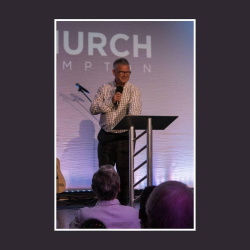
The miracle in a  town called LOVELY

The miracle in a  town called LOVELY

Luke 7: 11-17

11 Soon afterward, Jesus went to a town called Nain, and his disciples and a large crowd went along with him. 12 As he approached the town gate, a dead person was being carried out—the only son of his mother, and she was a widow. And a large crowd from the town was with her.13 When the Lord saw her, his heart went out to her and he said, “Don’t cry.” 14 Then he went up and touched the bier they were carrying him on, and the bearers stood still. He said, “Young man, I say to you, get up!” 15 The dead man sat up and began to talk, and Jesus gave him back to his mother. 16 They were all filled with awe and praised God. “A great prophet has appeared among us,” they said. “God has come to help his people.”17 This news about Jesus spread throughout Judea and the surrounding country.


Two large crowds. Going in opposite directions they merge together at the entrance to the town.

Two only sons. The only son of a widow of that town and Jesus, the only Son of God and the son of widow Mary.

Jesus does not let the important get lost in a crowd. He finds the heart of suffering. He comes for the broken-hearted. He specialises in the impossible. He does the unthinkable.

Jesus touched the frame that the coffin was being carried on, it is called the bier. He made the funeral procession stop, the bearers stood still. It was just a moment of hope perhaps, a moment that his disciples could maybe now have the faith for, (they had seen Jesus heal a centurion’s servant who was on his death-bed and Jesus wasn’t even there, they had never seen him do such a miracle but surely he could do this?!) a moment of silence.

There are times we have to stop everything and change the sound. The train of inevitability needs to stand still. The sound of heaven is more important than the sound of earth. Miracles don’t happen without the right sound.

Here are some questions that didn’t get asked: “How old is the young man? What did he die of? How did his father die? Who is going to provide for the mother now?”

We have a tendency to need to know everything before we do anything. It is as if information is necessary for us to be able to pray properly. It isn’t.

All we need to know is what cannot be done. What could the young man not do? That’s what Jesus declared over him with the same authority he had when the centurion’s servant was healed from a distance and the same authority that he has given to us! The authority to make happen what cannot happen.

All this happened because Jesus took interest in those heading in the opposite direction to him. This crowd turned around and went where Jesus was going, back into their town.

Nain came alive because God had come, He had visited them. May our cities, towns and homes come alive also with awe and wonder of a God who still visits. Jesus is here.

Authority to heal

Authority to heal

Luke 7: 2-10

There a centurion’s servant, whom his master valued highly, was sick and about to die. The centurion heard of Jesus and sent some elders of the Jews to him, asking him to come and heal his servant. When they came to Jesus, they pleaded earnestly with him, “This man deserves to have you do this, because he loves our nation and has built our synagogue.” So Jesus went with them. He was not far from the house when the centurion sent friends to say to him: “Lord, don’t trouble yourself, for I do not deserve to have you come under my roof. That is why I did not even consider myself worthy to come to you. But say the word, and my servant will be healed. For I myself am a man under authority, with soldiers under me. I tell this one, ‘Go,’ and he goes; and that one, ‘Come,’ and he comes. I say to my servant, ‘Do this,’ and he does it.” When Jesus heard this, he was amazed at him, and turning to the crowd following him, he said, “I tell you, I have not found such great faith even in Israel.” 10 Then the men who had been sent returned to the house and found the servant well.


The centurion was a Roman army officer who was in charge of 100 soldiers. He would be very courageous leading his men into battle. Cowards would be executed.

What Luke describes to us about this man would apply to all of us today.

You may be a very important person.

You may be a person of authority.

You may value someone very highly.

You may be known for your patriotism and love for people.

You may have given finances to build places of worship.

And yet there is always something you cannot fix.

Everyone needs a Saviour at some point in life.

This centurion had heard of Jesus. He had heard he healed people.

But there was something different about this man.

There were many miracle stories of people coming to Jesus or bringing their sick to Jesus.

Just one touch from the King changes everything, right?

But the centurion knew the power of the spoken word when it comes from the place of authority.

With authority you don’t need to touch, manoeuvre or place into position. With authority you just need to command.

The centurion experienced this every day of his life. Authority was normal for him. He didn’t need to manhandle his soldiers, he just spoke over their lives, they heard and it was done.

The centurion knew that authority is everything. He knew that Jesus had an authority greater than his. That is why he didn’t go to Jesus. He knew that authority has the ability to say ‘Come’, ‘Go’ and ‘Do this’.

May the authority of Christ be upon our lives today.

May the Living Word be our spoken word today.

May He grace us with the ability to fix what is broken today.

Amen.

The town of Jesus – Capernaum

The town of Jesus – Capernaum

Luke 7:1 When Jesus had finished saying all this to the people who were listening, he entered Capernaum.

This town was Jesus’ base. He continually kept coming back here ever since he left Nazareth. It became his home.

Leaving Nazareth, he went and lived in Capernaum, which was by the lake in the area of Zebulun and Naphtali— Matthew 4:13

A few days later, when Jesus again entered Capernaum, the people heard that he had come home. Mark 2:1

Once the crowd realized that neither Jesus nor his disciples were there, they got into the boats and went to Capernaum in search of Jesus. John 6:24

Jesus knew the town’s synagogue very well and he also knew the shores of the lake too spending lots of time there. The town also was where Peter had a house.

Why?

  1. Jesus knew it was the place ordered by God.

It was to fulfil Isaiah’s prophecy, “to fulfil what was said through the prophet Isaiah: “Land of Zebulun and land of Naphtali, the Way of the Sea, beyond the Jordan, Galilee of the Gentiles— the people living in darkness have seen a great light; on those living in the land of the shadow of death a light has dawned.” (Matthew 4:14-16).

On reading and memorising these Scriptures, Jesus would have realised that he was the great light, he was the dawn for a dark land and he had come for people like those living on the Way of the Sea, in Capernaum. Scripture was guiding him.

  • Isn’t that amazing?! If it guided Jesus then it surely guides us today. Who am I? What is God saying to me?


  1. Jesus knew that Capernaum would become strategic for his mission.

Capernaum gave Jesus’ ministry great opportunity. The Way of the Sea ran the full length of Israel and onwards to Egypt. But there was another road that came in from Arabia, across the Jordan and into Galilee. These 2 roads crossed in Capernaum! It was a stopping off place for travellers. It was the best and quickest way for communication.

  • This is a huge challenge to us wanting to become like Christ. Is where I live strategic to what God wants me to do?


  1. Jesus put down some roots even for a short time and lived as a man amongst them.

The residents of Capernaum had God on their streets, in their shops, in their synagogue and homes. God was there talking, laughing, in power performing miracles of healing and transformation. However, Jesus would bring judgment, “And you, Capernaum, will you be lifted to the heavens? No, you will go down to Hades. For if the miracles that were performed in you had been performed in Sodom, it would have remained to this day.” (Matthew 11:23) The people of Capernaum were indifferent to the presence of God amongst them. It wasn’t that they denied him as much as they ignored him. There were other things more important.

  • Be greatly concerned about those who have heard, who have been near the presence of Christ and yet have not been moved by His presence. The judgment on Britain will be greater than on a nation like North Korea.


Capernaum, the home of Jesus for some years. Where do you live today?

The blessed life – secure living

The blessed life – secure living

Luke 6: 46-49

 “Why do you call me, ‘Lord, Lord,’ and do not do what I say? As for everyone who comes to me and hears my words and puts them into practice, I will show you what they are like. They are like a man building a house, who dug down deep and laid the foundation on rock. When a flood came, the torrent struck that house but could not shake it, because it was well built. But the one who hears my words and does not put them into practice is like a man who built a house on the ground without a foundation. The moment the torrent struck that house, it collapsed and its destruction was complete.”


Read Eugene Peterson’s understanding of this passage: “But if you just use my words in Bible studies and don’t work them into your life, you are like a dumb carpenter who built a house but skipped the foundation.” Isn’t that wonderfully helpful?!

The Blessed life doesn’t mean you won’t be facing floods and torrents striking your life with such force that you become in danger of collapse. Why do bad things happen to good people? Wrong question! They happen to everyone, good or bad. There isn’t enough good in you to stop the bad happening anyway. Life contains the floods and the torrents, rivers are beautiful but they burst their banks and bring ruin. That is how it is.

But being in danger of collapse and collapsing are different.

What’s underneath you today?

Deuteronomy 33:27 The eternal God is your refuge, and underneath are the everlasting arms. He will drive out your enemies before you, saying, “Destroy them!”

Psalm 91

Whoever dwells in the shelter of the Most High will rest in the shadow of the Almighty.

I will say of the Lord, ‘He is my refuge and my fortress, my God, in whom I trust.’

Surely he will save you from the fowler’s snare and from the deadly pestilence.
He will cover you with his feathers, and under his wings you will find refuge; his faithfulness will be your shield and rampart.
You will not fear the terror of night, nor the arrow that flies by day,
nor the pestilence that stalks in the darkness, nor the plague that destroys at midday.
A thousand may fall at your side, ten thousand at your right hand, but it will not come near you.
You will only observe with your eyes and see the punishment of the wicked.

If you say, ‘The Lord is my refuge,’ and you make the Most High your dwelling,
10 no harm will overtake you, no disaster will come near your tent.
11 For he will command his angels concerning you to guard you in all your ways;
12 they will lift you up in their hands, so that you will not strike your foot against a stone.
13 You will tread on the lion and the cobra; you will trample the great lion and the serpent.

14 ‘Because he loves me,’ says the Lord, ‘I will rescue him; I will protect him, for he acknowledges my name.
15 He will call on me, and I will answer him; I will be with him in trouble, I will deliver him and honour him.
16 With long life I will satisfy him and show him my salvation.’


Psalm 40 v 2

He lifted me out of the slimy pit, out of the mud and mire; he set my feet on a rock and gave me a firm place to stand.


The enemies will come, you will face them and they will beat against the life you have built. All that you have built, all that you call are blessings, all that is beautiful in your life will be challenged to its core. It will happen but the destruction that it brings is determined by you.

Jesus is rounding off his beatitudes and he is saying to his disciples that just being reverent towards him is not enough. He wants them to have a blessed life. The only way is not through reverence, through worship or through respect. What Jesus says is so important we must take the truth of it and make it the base of our lives, we must practice the message of his parables, we must live according to the Word of God with all the responses and decisions and the attitudes of the heart that it calls for. If we do then it doesn’t matter what the enemy of our souls throws at us, we will respond not in the way that was expected, we will not lie down, back off, walk away, crumble, crash out. We will not become a casualty, a statistic, we will not walk through the valleys of the shadows of death in fear of our surroundings.

I will not be shaken.

I will not have eyes for the temporary but for eternal destiny.

I will rest.

I will trust.

I am saved.

I am covered.

I am protected.

I am unafraid.

I am protected by angels.

I am guarded.

I am protected.

I am loved.

I am rescued.

I am heard.

I am honoured.

I shall live.

I am lifted.

I am standing on a firm place.

My feet are on the rock!

This is the blessed life. Let’s live it today!

The blessed life – being influenced by the good

The blessed life – being influenced by the good

Luke 6: 43-45

 “No good tree bears bad fruit, nor does a bad tree bear good fruit. Each tree is recognized by its own fruit. People do not pick figs from thornbushes, or grapes from briers. A good man brings good things out of the good stored up in his heart, and an evil man brings evil things out of the evil stored up in his heart. For the mouth speaks what the heart is full of.”

Jesus uses simple images to reveal the hypocrisy of some of the Pharisees and religious leaders that were not only following him around trying to trip him up but also were leading people away from God through unnecessary burdens. The blessed life is to be the good tree, the good man and the good heart. That is of course what we draw from this parable but it is more than this.

He answers the question which is still as current today as it was when he first spoke it. “Can this person be trusted? Is this person good?” The blessed life is to be influenced by the good. It is to have people around you whether they are your leaders or your disciples who at the core are not rotting away through complaint, jealousy, regrets eating away at them and bitterness or superiority, pride and self-satisfaction. Why these particular traits? Well, of course, you may have a different or similar list. But you know that though we are rubbing shoulders with these people every day of our lives and we try to influence them for a heart transplant what we make sure of is that they do not influence our hearts. We do not eat their fruit, we do not digest into our systems of life their attitudes and values.

So how do we live a blessed life in our world today?

  1. We listen, not to the first thing that comes out of the mouth but perhaps the last sentence. The reasoning behind the words. The attitude. The story of the person’s life. The tone of their voice.
  2. We slow down and we look for the good to impact our lives. That might mean we spew out of our mouths what is not so good about the person but digest the good. Ever wondered what to do with a series of books from an author that you thought were a super saint only to discover that they were not a very nice person? Do you hold a burn the books ceremony? If so, I think you may have a small library by the end of your life! No, we look for the good that we want to come into our life, we take the good and we make less heroes in our life.
  3. Give it time. Let time reveal the truth. Good fruit will come, good things will emerge and good words will be spoken and the reverse also. Just because it is a tree it doesn’t mean a thing, wait for the season of fruit, wait for time to pass, all will be revealed.

The Blessed life – being able to see properly

The Blessed life – being able to see properly

Luke 6 v 41-42

“Why do you look at the speck of sawdust in your brother’s eye and pay no attention to the plank in your own eye? How can you say to your brother, ‘Brother, let me take the speck out of your eye,’ when you yourself fail to see the plank in your own eye? You hypocrite, first take the plank out of your eye, and then you will see clearly to remove the speck from your brother’s eye.”


One of my favourite cartoon characters has got to be Charlie Brown. The Peanuts cartoons are so funny because they carry messages that hit at the heart of our lives. For example:

In one cartoon strip, Charlie Brown’s best friend, Linus, asks his eldest sister Lucy, “Why are you so anxious to criticise me?”

Lucy responds, “I just think I have a knack for seeing other people’s faults.”

To that Linus snaps, “What about your own faults?”

Lucy in her self-righteousness responds, “I have a knack for overlooking them.”


The cartoon is funny and so is the image that Jesus portrays. The message however is not, many are hurt today maybe even outside the Church that they used to belong to because of a plank pointing at their speck!


The Blessed life is having:-

  1. An awareness. We naturally just don’t see our faults. We don’t hear the tone of our voice, the words we use, the look on our face. We don’t see our repeated actions, our addicted ways and the damage we do to ourselves and to others. We don’t see the attitude, the self-centredness nor the self-righteousness. There is no awareness. We cannot see the plank. “Search me O God …”
  2. The experience to help. I don’t know about you but I actually wouldn’t want someone trying to do eye surgery on me who didn’t know what they were doing! Neither would I want someone approaching me unable to see because of a plank in their eye trying to locate the speck they say they had seen in mine. I want someone to come to me and say, “Hey! I’ve been here and actually my life was worse. I had to deal with something far bigger than what is wrong in your life. This is how I got rid of my plank. Now let me help you.”
  3. The ability to not react. Responding seems to be more measured, taking the whole into account, there seems to be time for a pause, a deep breath and think. Reaction seems rushed, there is no time for anything measured and can easily become an overreaction. Did you ever consider that the way you react to someone’s fault may be a worse “sin” than the “sin” you are trying to correct? 3 days ago Vicky Beeching came back onto social media after a 6 month break. She had to stay away because “It was necessary for my overall health, trolling had really worn me down …” Why was she trolled? Because people believe she is a sexual sinner. Who was it who trolled her? Most probably sexual sinners.

If we can see better, clearer and with greater perspective then we will enter a blessed life.

The Blessed Life – following the right leader.

The Blessed Life – following the right leader.

Luke 6: 39-40 “He also told them this parable: “Can the blind lead the blind? Will they not both fall into a pit? The student is not above the teacher, but everyone who is fully trained will be like their teacher.”

Jesus clearly speaking of the self-righteous and religiously superior leaders in his day paints a vivid and probably at that time a humorous picture of a pit filled with 2 people. The teacher was blind to how to lead well and the student was blind to how not to be led.

The desire for every good teacher is to see their pupil advance so well that they too become a teacher, an influencer of many, in some classroom of life, having their own followers, even to the ends of the world.

This is discipleship.

The origin of discipleship is leadership.

The outcome of discipleship is becoming a disciple-maker.

This parable that Jesus told is as relevant today as it was then.

When the origin is blinded then the outcome is destroyed.

The amazing sad fact is that people do tend to follow blindly leaders who are only capable of taking them into a pit.

So how do you spot a good leader to follow?

  1. Humility: Good leaders apologise and learn from mistakes that they make.
  2. Success with minimal harm: Good leaders know that change brings success but that also change hurts, so they do this as carefully and thoughtfully as they can.
  3. Ambition: Good leaders are ambitious for the whole not for themselves.
  4. Accountable: Good leaders are happy to be questioned before and after their decisions.
  5. Obedient: Good leaders obey the policies, the rules, in the case of Jesus his Father’s will.
  6. Unity: Good leaders don’t create factions they build team.
  7. Development: Good leaders breed good leaders who go further.


If you don’t see anything of the 7 things in the leader you are following then you may be in danger of falling into the pit. Spot these things, follow this kind of leader and you will be living a blessed life. Better still, learn and then be this leader yourself.

The Blessed Life – Using the right spoon at the right time.

The Blessed Life – Using the right spoon at the right time.

Luke 6: 37-38

 “Do not judge, and you will not be judged. Do not condemn, and you will not be condemned. Forgive, and you will be forgiven. Give, and it will be given to you. A good measure, pressed down, shaken together and running over, will be poured into your lap. For with the measure you use, it will be measured to you.”


To use ‘a sledgehammer to crack a nut’ means to use disproportionate force or expense to overcome a minor problem. It was first used in the USA in the 1850’s but instead of a nut it was a fly. We Brits have been sledgehammering nuts not fly’s since the 1950’s. Now who does such a thing? Have you seen the size of a nut and the size of a sledgehammer? Precisely! But what happens when those nuts are people?

How do you treat people?

We have all done it. We have all said things in the heat of the moment that we regret. Often they come back to bite us. Even when you try to help sometimes picking up a huge blade instead of a surgical scalpel is the wrong choice!

I think we need a small spoon (a teaspoon) and a big spoon (a ladle) in our toolkit of life.

When correcting and bringing discipline which is crucially important we use the small spoon.

When being generous we get the ladle out, we don’t hold back, we bless freely and fully. Have you ever seen someone use a small spoon of generosity, it is painful to watch as they don’t want to give too much, so they give just enough to show they are making a contribution. Jesus never asked for a contribution. (Qualifying this of course with the fact that the poor usually give ladle size portions which are spoon size portions for the rich).

When you are with people today choose your spoon carefully, it is the way to a blessed life!

The Blessed Life – Lose

The Blessed Life – Lose

Luke 6: 32-36

“If you love those who love you, what credit is that to you? Even sinners love those who love them. And if you do good to those who are good to you, what credit is that to you? Even sinners do that. And if you lend to those from whom you expect repayment, what credit is that to you? Even sinners lend to sinners, expecting to be repaid in full. But love your enemies, do good to them, and lend to them without expecting to get anything back. Then your reward will be great, and you will be children of the Most High, because he is kind to the ungrateful and wicked. Be merciful, just as your Father is merciful.”

Where is the loss?

If you have given out more than you have received back then you are venturing into the blessed life.

There needs to be loss in your life.

The loss of loving someone who doesn’t return that love.

The loss of helping those who just take.

Loss because there is no hope of getting anything back from your kindness and generosity.

When you question whether it was worth it; when you ask whether you have been taken for a ride; when you see nothing from your acts of kindness it is then when you enter the blessed life.

The Blessed Life is a life where you look like God, especially in front of your enemies. They may be ungrateful and they may not recognise what you do but He sees. God can see you identify with Him for this is who He is and what He has done and does today.

So if today you meet that awkward, self-centred, seemingly unavoidable person then be kind. Lose. Be like God and then live the blessed life.

The Blessed Life

The Blessed Life

Luke 6: 27-31

“But to you who are listening I say: love your enemies, do good to those who hate you, bless those who curse you, pray for those who ill-treat you. If someone slaps you on one cheek, turn to them the other also. If someone takes your coat, do not withhold your shirt from them. Give to everyone who asks you, and if anyone takes what belongs to you, do not demand it back. Do to others as you would have them do to you.”


The sermon was based on Jesus’s command to love your enemies. The preacher spoke, “I’ll bet that many of us feel as if we have enemies in our lives. So raise your hands if you have many enemies.”

And quite a few people raise their hands. “Now raise your hands if you have only a few enemies.”

And about half as many people raise their hands. “Now raise your hands if you have only one or two enemies.”

And even fewer people raised their hands. “See, most of us feel like we have enemies.”

“Now raise your hands if you have no enemies at all.” And the preacher looks around, and looks around, and finally, way in the back, a very, very old man raises his hand. He stands up and says, “I have no enemies whatsoever!” Delighted, the preacher invited the man to the front of the church. “What a blessing!” the preacher said. “How old are you?

“I’m 98 years old, and I have no enemies.” The preacher said, “What a wonderful Christian life you lead! And tell us all how it is that you have no enemies.”

“All the fools have died!”

Most of us go through life and have to carry the problem of people not liking us and even worse, though we have tried to fix the situation we seem to be their enemy. They really don’t like us! They hold a grudge or they speak ill against us and they want to do as much damage to our reputation as possible.

I remember the phone call from one such man in the year 2000, “We will bring you down!” it was very unnerving as I pondered what that would mean exactly. They did try but the opposite happened as God lifted me up!

It would seem that these things are expected: You will have enemies; there will be people who hate you; they will curse you; they will ill-treat you; they will insult you; they will steal from you. The kingdom principle is to do the opposite of what comes your way and not the same response. To love, to do good, to bless, to pray, to not retaliate and to give what they need or want.

Hard that this is, it is the only way to stay in the kingdom and to let God reign in your life. Above all, it is the only way to stay blessed and happy.