
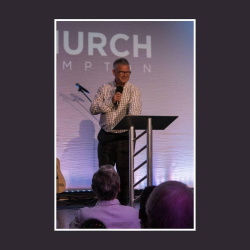
Not many fathers

We now know the problems of this Church. They were quarrelling over immorality, marriage, idolatry, worship, finance and theological issues like eternity. Above all they were dissatisfied with Paul’s authority as an apostle. Some were following him, others Apollos and others Peter. The Church was political and full of jealousy. Their need as Paul saw it was a lack of father’s. It still is the lack. The attack on the family is the attack on the father and similarly in the Church.

“I am writing this not to shame you but to warn you as my dear children. 15 Even if you had ten thousand guardians in Christ, you do not have many fathers, for in Christ Jesus I became your father through the gospel. 16 Therefore I urge you to imitate me. 17 For this reason I have sent to you Timothy, my son whom I love, who is faithful in the Lord. He will remind you of my way of life in Christ Jesus, which agrees with what I teach everywhere in every church.” (1 Corinthians 4 v 14-17)

When people see you, do they see Jesus? What kind of Messiah do you have?

The Jewish Messiah is a political leader descended from King David. A professional of the Jewish law and the commandments within it. A charismatic leader. A military leader. A great judge. The most important thing is this: the Jewish Messiah is a human being, not a god or a demi-god. He has certainly not come from heaven and once he is dead he doesn’t rise again. Political, professional, charismatic, a fighter, a judge, human, not divine. Some of those Messiah type figures can be found in churches today.

It would not have been strange if Paul had supplied a list of behavioural functions in order to help us to imitate him. He did have such lists and uses them elsewhere and it was not unusual in that culture for disciples to want to copy their rabbi.

So what does Paul say?

There are many instructors, guardians or guides. These guardians were the ones who tutored people and kept supervision on their conduct and there are many of these in the Church But not many Fathers.

“I have become a father and I have a son (Timothy). Now imitate me as I imitate Christ.”

His use of language in these verses are clearly revealing God the Father and God the Son.

  • The Church needs more Fathers who send and more sons who go. John20:21 “As the Father has sent me, I am sending you.” There are trapped sons today. The fathers will not send, they keep to themselves, they want to build empires, to preserve their name. Sons want to honour but they want to go.
  • The Church needs more Fathers who love and more sons who know they are loved: “You are my Son, whom I love; with you I am well pleased” Luke 3:22. This is sacrificial love. The sacrifice of the father to send the one he loves to people who are on the verge of rejecting Him.  The sacrifice of the son to be sent. The Father sends and the son dies. The church wants to live, God wants the church to die.

The ministry of Jesus was to reveal the Father. As people looked at the lifestyle of Jesus, saw his personality and character, they saw the beauty of the Father. Do people see the Father in us? Christ’s passion hasn’t changed now that he is in heaven. It is still his desire for our lives that we know the Father. What kind of Father do people experience from the Church? From you and me?

A Cross-shaped Church

Remember what Paul said at the start of his letter about the Corinthian Christians (1:26-31)? Their righteousness, holiness and redemption had nothing to do with what they had achieved, or learnt or earned. Paul used words like foolish, weak, lowly, despised and nobodies. Yet God called them.

But now Paul writes contrary to that opening.

“Already you have all you want! Already you have become rich! You have begun to reign—and that without us! How I wish that you really had begun to reign so that we also might reign with you! For it seems to me that God has put us apostles on display at the end of the procession, like those condemned to die in the arena. We have been made a spectacle to the whole universe, to angels as well as to human beings. 10 We are fools for Christ, but you are so wise in Christ! We are weak, but you are strong! You are honoured, we are dishonoured! 11 To this very hour we go hungry and thirsty, we are in rags, we are brutally treated, we are homeless. 12 We work hard with our own hands. When we are cursed, we bless; when we are persecuted, we endure it; 13 when we are slandered, we answer kindly. We have become the scum of the earth, the garbage of the world—right up to this moment.” (1 Corinthians 4 v 8-13)

What is Paul doing? This is satire at its best. Paul’s use of sarcasm is masterful. Why?

It is because they look and behave anything but their Lord (who died on a cross).

It is easy today with the use of the internet to see some mansion of a boasting televangelist. It is easy today to watch a successful Church online that seems to have more worldly influence than the Spirit and whose success metric is not in the shadow of the cross. In 1978 Ron Sider published his book with a challenging title, ‘Rich Christians in an Age of Hunger.’ Nearly 50 years later, “the world produces enough food to feed all of its 8 billion people, yet 733 million people (1 in 11) go hungry every day.” (https://www.concern.net/news/world-hunger-facts-figures)

It isn’t wrong to be rich but what you do with your riches could be. It isn’t wrong to be successful but how you view your success could be.

Paul is not looking for sympathy. Far from it. He is simply exposing the pride of the Church for what they have and their embarrassment on what they’re hearing of their apostle.

And what of us? I guess we are somewhere in the middle. We don’t want the pride but a little more riches, success and recognition would be desirable. We want the presence and power of God in our lives but some don’t want to pay the price. Paul’s way is definitely to be avoided if we can. I don’t think v10-11 would look good on someone’s social media profile. Not if you were wanting to be invited to speak at the Western Church conferences. The cruciform of Christians seem to be in the shadows and the message of the cross is muted. Perhaps we need more satire to shock the Church back into the shape it was created for, the cross.

All is Grace

All is Grace. Everything we have has been given to us. We can claim nothing.

Paul uses 3 questions to literally say 3 of his most important theological truths.

We live in a world of self-obsessed self-made success stories. But these stories come with a burden of self-glorification and are devoid of joy and true gratefulness to the truth of what really happened.

“For who makes you different from anyone else? What do you have that you did not receive? And if you did receive it, why do you boast as though you did not?”(1 Corinthians 4 v 7)

Question 1: “For who makes you different from anyone else?”

Truth: this confronts taking any credit for our unique qualities over others.

Question 2: “What do you have that you did not receive?”

Truth: this asks for us to try and list anything that was outside God’s sovereign choices.

Question 3: “And if you did receive it, why do you boast as though you did not?”

Truth: brings us the judgment for our pride in making the gifts we received look like achievements.

All is Grace. This truth leads us to live differently.

  • We live with thankfulness not pride.
  • We live with humility not arrogance.
  • We live with generosity for we have received generosity.
  • We celebrate others above ourselves.

All is Grace is a beautiful, freeing place to be. We rest in our identity as a recipient of His amazing grace.

Keep to the Bible

Do not go beyond what is written. It was a saying then and Paul uses it, In many ways it hasn’t changed.

“Now, brothers and sisters, I have applied these things to myself and Apollos for your benefit, so that you may learn from us the meaning of the saying, “Do not go beyond what is written.” Then you will not be puffed up in being a follower of one of us over against the other.” (1 Corinthians 4 v 6)

But what is written?

We have to go back a few chapters to when Paul and Apollos are described as farmers, then as construction workers on a building and then as servants and stewards. Those descriptions are what Paul is referring to.

Paul is saying don’t be presumptuous but be grounded in what I have written. He didn’t draw on some article that some colleague had written that month. No. His findings were grounded in the Old Testament and he quotes from it as we have seen. Every time he does so he is contrasting the futility of human wisdom with that of the wisdom of God. The same applies today. Don’t go with the wisdom of the world but be guided by the Bible.

In doing so it will prevent the arrogance that was taking place with the Church. Most division is caused by people thinking more highly of themselves, sticking their chest out, puffing themselves up, ‘look at me, listen to my views’.

We don’t want to look at you nor listen to you. We need to keep to the Bible for it is there where God’s wisdom is known.

Christmas Day! – Everything is brought into the light

I am pleased that today we have landed on this verse. At least I can make reference to Christmas without taking it too much out of context!

“Therefore judge nothing before the appointed time; wait until the Lord comes. He will bring to light what is hidden in darkness and will expose the motives of the heart. At that time each will receive their praise from God.” (1 Corinthians 4 v 5)

The people walking in darkness have seen a great light; on those living in the land of deep darkness a light has dawned. Isaiah 9:2

When God comes He always brings everything out from hiding and the motives of every heart is made plain. That happened at the first Christmas and it will happen at the last day.

The difference between God and man is that He judges the motives, what is unseen and He patiently waits to do so. In contrast to these Corinthian celebrity-chasers who judge what is seen and do so before life is over.

Life is not over and your judgment is not here, no matter what people have said to you this year! Today of all days, tell yourself, you can keep going; give God your heart and commit to living for Him not man.

What do you think of yourself?

Having a wholesome self-awareness and good emotional intelligence are keys to the Christian life that are often overlooked.

These next few verses have themselves been abused by people who never want to be held accountable, ignoring the wisdom of peers and being above correction. We need to win what Paul says back into what actually is best practice.

“This, then, is how you ought to regard us: as servants of Christ and as those entrusted with the mysteries God has revealed. Now it is required that those who have been given a trust must prove faithful. I care very little if I am judged by you or by any human court; indeed, I do not even judge myself. My conscience is clear, but that does not make me innocent. It is the Lord who judges me.” (1 Corinthians 4 v 1-4)

Apollos, Cephas and Paul himself have been fought over as to who is the greatest leader. Paul now clearly lays out who he is, what he does and who he serves. In doing so he distances himself from his fans!

This is who I am: I am a servant. Paul uses a word for servant which was originally used as the rowers of the ships but those down in the lower deck, unseen but essential.

This is what I do: I am a guide to the gospel. The word Paul actually uses is ‘stewards’. Trusted with their master’s resources they are not free to live whatever life they want, they must be found faithful. Isn’t that different to the wisdom of the world? Find yourself popular, and successful, NO. Find yourself faithful. This blows aside all that many look for. God doesn’t look at any of the things that we think are important. He looks for faithfulness to the truth.

This is my focus: I am accountable to God. Here is where we have to be careful. Paul is not being arrogant. Instead he is saying human standards, whether praise of criticism, from others or even ourselves cannot be the final assessment on how well I have lived my life. They may be helpful but they don’t have the final word, God does.

Maybe today we can stop thinking of what people think of us. Are we so focused on the metrics of the world to see how our life is doing? Are we as concerned about our faithfulness to God? Are we being a good steward of what God has given to us? Are we willing to be unseen, to go to the lower deck and do essential work without the praise of anyone?

Paul quotes from stories of the past to reveal the deception of the present.

The reason for doing this is so that he can expose the sheer arrogance from those who are dividing the Church. The arrogance is cloaked with deception.

It is common for those that are farthest from God, to boast themselves most of their being near to the Church. Matthew Henry

 “Do not deceive yourselves. If any of you think you are wise by the standards of this age, you should become “fools” so that you may become wise. 19 For the wisdom of this world is foolishness in God’s sight. As it is written: “He catches the wise in their craftiness” 20 and again, “The Lord knows that the thoughts of the wise are futile.” 21 So then, no more boasting about human leaders! All things are yours, 22 whether Paul or Apollos or Cephas or the world or life or death or the present or the future—all are yours, 23 and you are of Christ, and Christ is of God.” (1 Corinthians 3 v 18-23)

Quote 1: “He catches the wise in their craftiness, and the schemes of the wily are swept away.” (Job 5:13) Paul is quoting the cheap words of Eliphaz. His listeners know the whole story. Eliphaz had been saying to Job that he has seen his suffering and knows the reasons why he is in so much trouble. There are reasons why he has lost his children and wealth. Eliphaz gives Job a theological study on those reasons. He also informs him this s not only himself who believes the reasons for his suffering but his friends do too.

Why do the arrogant always try to fit the solutions to the complexities of life into their own self-inflated experience which is far more limited and narrow than they know?

Using the words of Eliphaz Paul exposes this wisdom as foolishness because the friends of Job had not seen the purposes of God. They were wise in the world but Paul calls them deceived!

 Quote 2: “The Lord knows all human plans; he knows that they are futile.” (Psalm 94:11) Paul is quoting the Psalm that everyone will know who is listening to Paul’s letter. Most probably the Psalmist was looking back on the 55 year reign of the worst king ever to come out of Judah, Manasseh. He didn’t intend to become corrupt, he wanted to do good but found that good could come from evil actions. Yet God never did honour him like he had hoped. A corrupt throne will never fellowship with God. Maybe you know of someone, perhaps a leader like Manasseh who truly believed that they were above the law, or the policy and procedures or just plain goodness because they were the leader or simply because they could and their world allowed for it. They managed to delude themselves into thinking they’re wrong behaviour was for the greater good. Power and popularity can intoxicate.

Using the words of the Psalmist Paul exposes the wisdom of the world which leaves a trail of broken people behind and in their arrogance begin to believe that their behaviour is acceptable to God even though it is foolish and will be punished.

Division is caused by the arrogant who are deceived and these 2 quotes that Paul uses are great examples of how it is seen.

The Temple presence of God is a wonderful but a fearful place.

From fields to buildings and now to the dwelling place of God, the Temple. That’s what Paul has been heading towards in his pursuit of clamping down on the divided church.

“Don’t you know that you yourselves are God’s temple and that God’s Spirit dwells in your midst? 17 If anyone destroys God’s temple, God will destroy that person; for God’s temple is sacred, and you together are that temple.” (1 Corinthians 3 v 16-17)

Verse 16 is plural. It heralds a concept which has been revolutionary since the day of Pentecost. Gone are the days of the physical Temple in Jerusalem where God’s people went there to experience His presence. Now He has come to them. The Holy Spirit is amongst them individually and corporately. We are not just individual temples we are forged together into one dwelling place for God.

How we treat one another matters because other believers are also houses of the Spirit.

Keeping the unity of the Church is primarily about the protection of the presence of the Spirit.

Do we live and speak in a way that recognises that our fellow believers are God’s temple?

If not then we are guilty of destroying the temple.

Paul has already told us how that destruction happens. It is through jealousy and quarrelling, v3. There are certainly other ways but these 2 attacks are from within.

The Church does the devil’s own work at times from Clergy who think their anointing gives them the right to abuse and those in the pews who believe they have the righteous right to gossip and complain about anything and everything. All this and many other things we have witnessed damage the church. I heard the other day of a mature Christian scold a young teenager within Church for not dressing correctly, the girl was 12 years of age! That mature Christian is very immature and is guilty of destroying the Church. God will not stand back and watch what we may have seen. He will step forward and deal with the person that destroys the sacred.

Fear of His presence needs to return to the Church. We need to be far more careful with the Holy Presence of the Living God. The Church is His Temple.

The Church that survives the Fire

On the evening of April 15, 2019, the Notre-Dame Cathedral in Paris was engulfed in fire. Five years later it is restored but apart from the initial thought of it as an accident caused by a cigarette butt or an electrical short-cut no one knows why it started, but it did.

There are many empty run-down church buildings in the UK. Of course some buildings are sold as the congregation outgrow numerically the building. But the majority, because the members have died or moved away and no one is left have sold their building. A ‘fire’ had come to the church. It was a season of testing and it didn’t survive. When I walk past these buildings I often pray and ask ‘why?’

“If anyone builds on this foundation using gold, silver, costly stones, wood, hay or straw, 13 their work will be shown for what it is, because the Day will bring it to light. It will be revealed with fire, and the fire will test the quality of each person’s work. 14 If what has been built survives, the builder will receive a reward. 15 If it is burned up, the builder will suffer loss but yet will be saved—even though only as one escaping through the flames.” (1 Corinthians 3 v 12-15)

Paul is in the middle of correcting a divided church. Many have preached this as the end times when everything is judged by the testing fire of Christ and salvation ‘but only just’ for those who are like those fleeing from a burning building. Paul will speak of this again in 2 Corinthians 5:10. Whether this is the end-time fire or a seasonal fire that comes to every church, a time of testing, the results are the same and perhaps they are meant to be.

So from these few verses, the Church that survives the fire, is the Church that:-

  • Continually recognises the foundation which is Jesus Christ and His teachings, nothing else, no human or cultural trends but the orthodox, yesterday, today, forever, who was, who is and who is to come, unchanging, irreplaceable, Son of God.
  • Purposely build to endure the testing by using the right materials. The gold, silver and costly stones could be representing the preaching of Christ, the unity brought by the Spirit and the obedience to the Bible. The wood, hay or straw could be representing the preaching of the wisdom of the world not the cross, chasing the masses to please anyone and everyone to get more people into church by embracing not the Spirit but the spirit of the world. That is where the argument commences for what is the right materials. Those building with wood, hay or straw will say these materials are gold, silver and costly stones. Even the elect can be deceived. The fire will reveal, our work will be shown for what it is
  • Embrace accountability by having regular testing before the real fire comes. The testing fire is definitely coming to the Church. I was with a friend yesterday and they described their denomination as definitely going through a shaking right now. The fire is coming so the wise are motivated to maintain the highest standards of ministry and personal spiritual growth and seek counsel and an outside perspective on the work they are building. Self-awareness and emotional intelligence is crucial to the wise and with humility accountability is embraced.

Every church needs these 3 essential things to grow

I have a friend who is an amazing architect, he built his own grand-design home. But he couldn’t do it all. He needed to hire in the craftsmanship of tradesmen. Did he build his own house? I say yes but I also know he had help. Did Paul build the church at Corinth? The same answer. Yes. He did his job; he did so much and then other Pastors, teachers and leaders came and built upon it. From these next 2 verses I see 3 essentials for a church to grow.

“By the grace God has given me, I laid a foundation as a wise builder, and someone else is building on it. But each one should build with care. 11 For no one can lay any foundation other than the one already laid, which is Jesus Christ.” (1 Corinthians 3 v 10-11)

Essential No.1 – The foundation. I recall visiting the site of the home of my friend when the foundation had been laid. It wasn’t much to look at. I understood it to be very important as he began to get me to visualise where the kitchen and the lounge would be, where the staircase was etc. It was a bit difficult for me to see what he was seeing and I am sure I just nodded at the appropriate moment. But the one who laid the foundation was the one carrying the vision. The divisions that Paul was challenging in the church were based on the foundations. I follow Paul. I follow Cephas after all he is the rock. In what was often seen as a joke I remember a period of time when it seemed every Pastor that went to a new church would begin a series on laying a new foundation (usually from Nehemiah) citing the need to get things right at the core. We have all come across phrases basically used for the same thing whether in the church or in government: Back to basics; the 3 R’s; The ABC’s etc. Whatever the Church becomes over the years and we have to accept that it will change whether we like it or not, we must continually ask the question: Is the Church today in the original vision of the foundation of the Church? That foundation Paul says is not a charity of good works but it is the Person of Jesus Christ. He is the foundation of the Church and every Church. Is what is being built upon now in the original vision of Him? Jesus Christ – who He is; the Son of God, the 2nd person of the Trinity, the only way to God the Father. Jesus Christ – what He has done; the sacrifice of the cross which demands our all, our repentance and calls us to holiness. His resurrection which brings new life to every person and makes it possible for the release of the Spirit in to our lives; Jesus Christ – who will return; to judge the living and the dead and who will sentence eternal destinations. That is the foundation. Not Peter. Not Paul. Not any celebrity. Only Jesus Christ.

Essential No.2 – The building. I love the Message translation, “Take particular care in picking out your building materials.Paul will next begin to list those materials. The important thing is what he says in v10, build with care. We all know how easy it is for it all to go wrong. We know how a church can go from being vibrant to closing its doors. We know about hidden agendas, control and a lack of discipleship embracing whatever the world wants over the foundation of the church, leads to a demise of the church. So we build with care trying not to make a mess. We build with unity not division. We use the right materials that will last. There are many church consultants raised by God to help the many Pastors trying to build the flock. What a blessing they are! A Pastor who isn’t learning how to build is a Pastor who isn’t building with care.

Essential No.3 – Grace. From the church planter to the church builder to the church member enjoying what has been built, we need more declarations of grace, v10. The church doesn’t really have any right to exist on its own merit, save for their Saviour and Shepherd Jesus Christ. Grace from the beginning to the end. Grace throughout. Grace in every decision and every division. The very last words of the Bible are Grace. “The grace of the Lord Jesus be with God’s people. Amen.” (Revelation 22 v 21) In the end our hope is grace. No matter how big we get, no matter how important we become and how many people love who we are; we know who we are and we know we have no name compared to His name, we know we need grace. We live in a world starved of true love, oppressed, tempted, deceived and there are times when the church becomes stained by all of that. Grace.

There is hope. There is love. Grace is here. Grace is challenged continually across the world by preachers who are concerned about a sinful Church. The fact is the Grace of God is the answer to a sinful Church. To live by grace means you are not denying or trying to forget the sin in your life, but by allowing grace to expose it you find who you really are. Grace calls you to keep coming back to Jesus. Let Jesus bind up the wounds. Let grace be with you and with you in the midst of others. Let the community of God’s people be marked by grace words, grace reactions and grace decisions.

I laid the foundation of Jesus Christ by grace, Paul said. And we who build must build with grace. Until He comes let grace live!

3 essentials. The foundation, the building and the grace to sustain.