
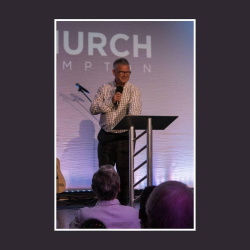
A consecrated tongue

Remember hand- sanitisers at the entrance of Church? You may still have them. We spent a long period of time in a new season. We had never done it before. The closest we came to it was making sure people wiped their feet on the doormat as they came into the Church building. But the hand-cleansing was a whole new chapter. We were rightly wanting to make sure people were clean when they came in. We didn’t seem to be too bothered for them on their way out but coming in was different. Interesting that isn’t it?!

“With the tongue we praise our Lord and Father, and with it we curse human beings, who have been made in God’s likeness. 10 Out of the same mouth come praise and cursing. My brothers and sisters, this should not be. 11 Can both fresh water and salt water flow from the same spring? 12 My brothers and sisters, can a fig tree bear olives, or a grapevine bear figs? Neither can a salt spring produce fresh water.” (James 3 v 9-12)

What needed cleansing was not only our hands but it was our hearts that God had been chasing after.

You can look clean but have a defiled heart.  What good is that?

A person can look great and acceptable on the outside but if the heart is bad then it is all a façade.

Your profile picture may look sharp but it is your texts and statuses that follow that count.

Let me caveat something here: all forms of abuse are wrong and we need to stand against it. There is no place for it in the Church nor outside it. I am not speaking about that here. But James is saying something should not be happening: praise and cursing.

Mouths of worshippers of Jesus are bringing other Christians down. We no longer need persecutors we have our own persecution department. We do it ourselves. We used to do it behind their backs but now we do it on the social media platforms. We are becoming more courageous in our cursing of each other. I was taught not to point fingers because when you do there are 4 pointing back at you. That’s not the case now. Holiness has developed a hole. For we do it and in the background is our favourite worship song. We put our hands in the air on a Sunday in the presence of God and on Monday morning we are writing to the Pastor to complain their sermon was too long, too short or had an error in it. We do it and sign it off ‘Yours in Christ’. Where is the consistency? Where is the heart-sanitiser? Where is the consecration?

Fresh water and salt water do not flow from the same spring. A fig tree does not bear olives and a grapevine does not bear figs. James appeals against inconsistencies. We may complain when we hear blasphemy but then slander a member of the family of God who bears the image of Jesus Christ in their life. It is inconsistent.

The greatest need in the Church today is heart-sanitiser not to get into the Church but for the Church as it moves into the world. Hearts that are consecrated lead to tongues that are also. For our mouths speak the words birthed in our hearts. Oh for a new day!

The untameable tongue tamed

They were not intending to swear, it just came out, they fell off the ladder, they hit their thumb with a hammer and out it came, it had a life of its own. We understand! It really does feel at times that we cannot control what comes out of our mouths.

All kinds of animals, birds, reptiles and sea creatures are being tamed and have been tamed by mankind, but no human being can tame the tongue. It is a restless evil, full of deadly poison.” (James 3 v 7-8)

In God’s creation we see Adam being given the task of taming all the animals. But what he couldn’t do after sin entered was tame his own tongue for he cursed his wife. “The woman you put here with me – she gave me some fruit from the tree and I ate it.”

Our tongue is uncontrollable. It won’t stay still for us to hold on to it. But read what James says, “no human being can tame the tongue”. Though James doesn’t say it we know God can do what man cannot. The obvious thought after James says that no human being can is that God can.

Do you want to be like Jesus? They said of him, “no one ever spoke like this man,” John 7:46.

Can you imagine if in our work, neighbourhood, family and leisure places it was said of us, ‘no one speaks like you around here’?

People would know there was something or someone who had a hold of our mouth and we would tell them that Jesus has got a hold of us. He is the Lord. He has tamed what no one could tame.

The power of the tongue

It feels like we still have a long way to go and yet every day now the media is full of the claims and counter claims of politicians as we head to our General Election. Quotes of what he and she said litter our newscasts. Every word that comes out of a politician’s mouth is scrutinised and judged. It will be a long few weeks ahead!

“We all stumble in many ways. Anyone who is never at fault in what they say is perfect, able to keep their whole body in check. When we put bits into the mouths of horses to make them obey us, we can turn the whole animal. Or take ships as an example. Although they are so large and are driven by strong winds, they are steered by a very small rudder wherever the pilot wants to go. Likewise, the tongue is a small part of the body, but it makes great boasts. Consider what a great forest is set on fire by a small spark. The tongue also is a fire, a world of evil among the parts of the body. It corrupts the whole body, sets the whole course of one’s life on fire, and is itself set on fire by hell.” (James 3 v 2-6)

The tongue how power, influence and it impacts its surroundings. It is so small and so powerful as we see with the examples of horses, ships and forest fires.

Words matter and it is right that they are scrutinised and judged. Whether coming out of mouths or on emails or media posts, they have the power to influence, to hurt and destroy, to divide or unite.

The words that I use: Is this helpful? Does it build the person up? Is it beneficial?

Everyone can criticise but we are called to construct. Building someone up isn’t to massage ego or tip-toe around issues why they may need building up. What someone wants to hear and what they need to hear can be very different. Sometimes what is needed is not a pat on the back, a sympathetic shoulder to cry on, we need a hard word set in the context of kindness, a revelatory word set in the presence of the Spirit, something spoken that hasn’t been said before but said in love.
We do need words that will move us out of a position we may be stuck in. We do need words to think the opposite. We do need words to dare to believe in the face of opposition that something just maybe true!

Choose your words carefully today. Slow your mouth down. Don’t type so fast on your social media feeds. What will flow from you today?

Our words give out energy. Negative energy or positive energy, and that energy, gets absorbed by the listener. 

What are we saying? What do our words sound like? Positive or negative? 

Building up or tearing down? Selfish or selfless? Do we boast, do we complain and whinge, are we critical and cruel? 

The tongue has the power to do damage. With our tongues, marriages are destroyed, children grow up with a poor self-image because nothing positive was spoken to them by their parents, they end up devastated and rebellious because the words they receive tear them apart. Friendships are lost, division takes root and bitterness sets in, all because of the tongue.

The tongues of the teachers

There is a language of the world and a language of the Christian and it needs to be different.

The Hunchback of Notre Dame carries the beautiful maiden high into the tower. They are talking to each other and he begins to weep. She asks him, “What’s wrong?” He replies, “I never knew how ugly I was until I saw how beautiful you are.” The vocabulary of a Christian can expose the empty words of a non-believer.

The words that flow from the Spirit-filled believer is like honeycomb, sweet to the soul and healing to the bones (Proverbs 16 v24).

When you speak, Jesus speaks. When people listen to you, they listen to Jesus.

Our responsibility is to choose words to use.

  • Foolish Words really do count and they can hurt, it is not just sticks and stones.
  • Foolish Words that are slurs outweigh the over-sensitivity of people.
  • Foolish Words lead to consequences.
  • Foolish Words build on sand where nothing of substance is formed.
  • Foolish Words come from fools who live to regret their words.

Today is Ordination Day for my denomination and we will celebrate the ministers who have shown full proof of their ministry which involves communicating the Word of God to people. I mention this because we are about to move into a passage where James speaks a lot about communication and he starts with those who teach.

Without doubt, the health of any church depends on whether the people within it from the pulpit to the pew have been able to tame their tongue. James wants to start in the pulpit.

“Not many of you should become teachers, my fellow believers, because you know that we who teach will be judged more strictly. We all stumble in many ways. Anyone who is never at fault in what they say is perfect, able to keep their whole body in check.” (James 3 v 1-2)

So why? Why should those who stand behind the ‘pulpit’ wherever that may be in a home or a church not be many? It is because ‘we all stumble in many ways’ both student and teacher. We all make mistakes. Even those who teach us how to avoid making them. We know this full well. But come the day when your Pastor is shown to have made a mistake then you realise who difficult it can be! On that day the Pastor wishes they could be anything but a person who taught what they then failed to do themselves. The truth is every person’s character is in the state of development, even those who teach others.

Those who have embarked today on a life of teaching have not reached perfection with their character nor their tongue. The price for going down this path is to be judged by God more strictly. When we stand before God we will be judged on how we encouraged the health of the Church and those we taught the Word of God to. Did we help or did we hurt?

Faith that is seen – 2

Does your world see your faith? That is what James is challenging us with by telling stories of Abraham and Rahab.

“…Do you want evidence that faith without deeds is useless? (YES!) 21 Was not our father Abraham considered righteous for what he did when he offered his son Isaac on the altar? 22 You see that his faith and his actions were working together, and his faith was made complete by what he did. 23 And the scripture was fulfilled that says, “Abraham believed God, and it was credited to him as righteousness,”and he was called God’s friend. 24 You see that a person is considered righteous by what they do and not by faith alone. 25 In the same way, was not even Rahab the prostitute considered righteous for what she did when she gave lodging to the spies and sent them off in a different direction? 26 As the body without the spirit is dead, so faith without deeds is dead.” (James 2 v 20-26)

Rahab is someone who risked it all, she put her and her family’s lives on the line for the mission. This very act showed her faith. 

In 1901 a seven-year-old Indian girl named Preena escaped from a Hindu temple and sought refuge with a Christian named Amy Carmichael, a young woman who had come from Ireland to share the gospel in India. 

According to Preena’s story, her widowed mother had dedicated her as a child to be “married to the gods,” which ultimately meant a life of prostitution. The traumatised child, whose hands had been branded with hot irons as punishment for a previous escape, had heard Carmichael talking about a God who loves everyone. 

After checking into the details behind Preena’s story of alleged abused, Amy Carmichael concluded, “Investigations not only confirmed [the child’s story], but unveiled an evil greater in its extent and more grievously unholy in its character than ever imagined.”

On the spot, Amy Carmichael made up her mind. “Since these things are so,” she said, “I must do something about it!” Later she wrote, “I mean it with an intensity I know not how to express, that … such unutterable wrongs … in the name of all that is just and all that is merciful should be swept out of the land without a day’s delay.”

For Carmichael, Preena’s escape launched a 50-year career in intercepting and retrieving girls and babies from a “life” worse than death and giving them a home. (Adapted from Carolyn Custis James, Half the Church)

We need a better now. Faith is eternal and faith is now. Faith is seen but faith sees. With faith we see and hear the pain of others. People need God now. The field is white unto harvest. The needs are endless, the cries are constant and if there is anything we can do then we must, we just have to. If there is money we can give we must give. If there are hands to hold we must reach out. If there are invitations to respond to we must go. Our faith must be seen!

Faith doesn’t stop the moment we surrender our lives to Christ and accept his forgiveness and mercy and grace. That’s just the beginning. This faith should lead us to action. In a world of pain, true faith cannot remain silent or selfish.

Sometimes we get so caught up in thinking that to be ‘saved’ means to be saved for life after death, and it’s all about eternity. 

But genuine faith is now. It is faith that the world can see. It is not focused on a pious life but around works.

What is faith if it doesn’t feed the hungry? What is faith if it doesn’t provide water? What is faith if it doesn’t house the homeless? What is faith if it doesn’t clothe the poor? What is faith if it doesn’t care for the sick? What is faith if it doesn’t visit the prisoner? (Matt 25:34-36).

How is your faith seen? When we look at the different areas of our lives, our time, energies, actions, habits, words, finances, how do these areas reveal our faith, our belief?

Faith that is seen

James asks a question and the answer is yes!

“…Do you want evidence that faith without deeds is useless? (YES!) 21 Was not our father Abraham considered righteous for what he did when he offered his son Isaac on the altar? 22 You see that his faith and his actions were working together, and his faith was made complete by what he did. 23 And the scripture was fulfilled that says, “Abraham believed God, and it was credited to him as righteousness,” and he was called God’s friend. 24 You see that a person is considered righteous by what they do and not by faith alone. 25 In the same way, was not even Rahab the prostitute considered righteous for what she did when she gave lodging to the spies and sent them off in a different direction? 26 As the body without the spirit is dead, so faith without deeds is dead.” (James 2 v 20-26)

James has 2 stories to tell and here is the first one.

He cites Genesis 15:6 in verse 23, and the Scripture was fulfilled that says, “Abraham believed God, and it was counted to him as righteousness”

The context is that Abraham has been promised a son, and many thousands of descendants as numerous as the stars, even though the natural circumstances make this impossible, when Abraham is 100 and Sarah 99!!

But Abraham believes and has faith, a faith that is apart from works, and this faith was counted to him as righteousness. 

James keeps reading Genesis and moves on to ch 22 where God tests Abraham by asking him to sacrifice his son. What does he test? 

God tests his faith. Will Abraham prove his faith? 

And James says in the proving of this faith he was considered righteous or justified v24, by what he does, by his works. What does this mean? 

Is James saying two different things here?

The Apostle Paul says we’re not justified by works. Has James got this wrong?

But what Paul did say is that from the outset of our Christian lives, no amount of works or deeds will save us, we are completely saved and justified by God’s grace, because of faith in him. 

And this is actually what James is saying too, for he says that Abraham’s faith was counted to him as righteousness from the outset, when he believed. Just like when we first believe, it’s all because of our initial faith. 

But James goes on to show how we continue to hold to the faith and have assurance that we are right with God, by stating how 12 years later, after Abraham’s belief in God’s promise, Abraham maintains his right standing with God, through his works, that display his faith. 

You see his faith displayed. It is not just merely a belief in what God has said, his faith is seen through his obedience. 

And this is what Paul confirms in Galatians 5:6, what counts is not just faith alone, but ‘faith working through love.’ Faith that justifies proves itself through love. A faith that is seen.

There is a faith that is useless.

Your cv of acts of kindness, no matter how long the list, is not in itself proof that you are a good person. For even generosity can be given for gain. But if it flows because of your belief and relationship with Jesus then it becomes a dynamic faith.

Works are not an addition to faith, they are a result of placing faith in Christ. Works are not done apart from faith, but done in faith, not done instead of faith but rather done because of faith. 

“But someone will say, “You have faith; I have deeds.” Show me your faith without deeds, and I will show you my faith by my deeds. You believe that there is one God. Good! Even the demons believe that—and shudder. You foolish person, do you want evidence that faith without deeds is useless?” (James 2 v 18-20)

  • Useless faith is unverified faith.

Works authenticate our faith. Without works, our faith is not authenticated in anyway. Works verify the faith. Authenticate it. Not works of religious rituals and routines, no, works of love. It is the Royal Law of 2 v 8. Actions that express love for others. True faith will produce fruit, John 15 v 4-5, the fruit of works comes out of relationship with Jesus.

He is the vine and we are the branches who produce good works that bear fruit.

Most nations have national symbols for example, a dragon, lion or a unicorn! Israel has the Menorah and 2 olive branches but the national symbols are also the fig tree and the vine. There was a golden statue of a vine on the altar of their 2nd Temple. Even their coins were inscribed with a vine. The vine was all around them. Jesus says the vine needs to be in them. It wasn’t strange that Jesus on walking from their Passover meal through the Kidron valley to the garden that he would talk about the vine.

At their meal there had been a traditional blessing on their 3rd cup of wine: “Blessed are You O Lord, our God, King of the Universe, who creates the fruit of the vine.”

What was strange was that the vine was never spoken of referring to an individual, but only as a nation. Plus when it was used it was always in terms of God’s judgment on His people.

Isaiah pictures Israel as a vine that has run wild, they are not what God intended. Jeremiah pictures Israel as a vine that is in a degenerate, unhealthy state. Hosea pictures Israel as a vine which is empty, it bears fruit only for themselves, not for God.

The vine, Israel and their God was the same as people who when talking of Church would think of people, a building and their God.

What Jesus says is this: I am the true vine. Not you. Me. Remain in me. Then you will bear fruit. The world will see you as my disciples and the Father will be glorified. Relationship with me not empty rituals is the key.

And so, no we’re not saved by works, we’re saved by faith, but it’s a faith that leads to works that we’re saved by. Otherwise all we have is useless faith because it is not verified.

  • Useless faith is unseen faith.

Bede the Venerable (English monk 8th century, buried in Durham Cathedral) said “Faith with love is Christian, but faith without love is demonic.” “You believe that there is one God. Good! Even the demons believe that—and shudder.”

Every Jew knows the Shema: Deuteronomy 6:4-9. It’s the first passage children recite. It is prayed twice a day and at the end of festivals. “’Hear, O Israel, the Lord our God, the Lord is one. Love the Lord your God with all your heart and with all your soul and with all your mind and with all your strength.’

It starts with the word Shema = Listen or Hear.

Understand, consider, allow the words to sink in and then decide to do something with them.

Those words are that the Lord is one. So resist idolatry. Only worship the Lord nothing else. Love God alone. Don’t give your allegiance to other gods and idols that demand your time and energy. God deserves your best, your total love. This love is not emotional only but it is an action word that demands loyalty and faithfulness. Love needs action for it to be love.

A faith that affirms truth but doesn’t change your life in any way is useless. Intellectual belief is not genuine faith, it is useless. Intellectual revelation is not enough, even the demons have that! The demonic know the Shema, they are also monotheists! The difference may not be what you think. The demons and those who have faith without works respond differently. One of them shudders/trembles at what they know and the other doesn’t! Even the unseen faith of the doctrinally pure is useless to them personally because it provokes little response.

Moses continues in Deuteronomy with laws based on our love for God. These laws which were primarily about order within community were not trying to earn God’s favour but a demonstration of our love for Him.

That’s why Jesus said the second important commandment is to love others. So the Shema is a worship prayer of declaring there is only one God for you and He is God alone. That’s faith. But it is also a faith declaration that you will demonstrate your love for Him by your love for others.

There is a faith that is useless because it is not verified and verification happens through faith being seen.

There is a faith that is dead

We are now entering the crucial part of this letter from James. He doesn’t hold back as he calls out the substandard faith that Christians have if they do not follow up with works.

“What good is it, my brothers and sisters, if someone claims to have faith but has no deeds? Can such faith save them? Suppose a brother or a sister is without clothes and daily food. If one of you says to them, “Go in peace; keep warm and well fed,” but does nothing about their physical needs, what good is it? In the same way, faith by itself, if it is not accompanied by action, is dead.” (James 2 v 14-17)

There is a faith that is dead. Faith is therefore meant to be alive. It is given for activity, production, creativity and nowhere is this more seen than in helping those in need. James’ heart is for the poor. He keeps mentioning them. This is different to the works that Paul dismisses which is the hope that our religious duties lead to salvation. James would agree with this position I am sure but his mind is this: if you confess you have faith then it needs to be seen and if not then that is a type of faith which is dead and dead faith never saves.

The ultimate is not just faith in Jesus, following Him and going to heaven.

It is also to live out that faith to those here on earth.

Imagine for a moment if every disciple of Jesus woke today with one thought only and that is to do good. To alleviate someone’s hurt, to listen to someone, to clothe and give food to the poor.

The immature enter ‘their’ church and are more interested in ‘serve us’ than ‘service’. After a while they begin to say ‘it’s not working for me here.’ NO. The church was never meant to work for you.

The mature follower of Jesus stops asking ‘who’s going to meet my needs?’ and starts asking, ‘whose needs can I meet?’

You don’t need a title or a trophy to do a good work. You don’t need training to be nice to someone, to help them smile and to make life a little easier. You just have to think less of yourself.

There is a faith that is not real. It’s not the genuine article. It believes one thing but does not act on it. It is self-centred. It stubbornly listens to the needs of the world around them and doesn’t do a thing. Faith with no deeds, no action, James tells us is dead. 

Mercy

Christians need to focus on being kind. It’s a general statement I admit but we live in a world where people are needing grace and mercy more than ever.

“Speak and act as those who are going to be judged by the law that gives freedom, because judgment without mercy will be shown to anyone who has not been merciful. Mercy triumphs over judgment.” (James 2 v 12-13)

As mentioned before James relies a lot on the Sermon of the Mount. Within that message Jesus said these words, “Blessed are the merciful, for they will be shown mercy.” (Matthew 5 v 7)

Jesus brought mercy and nowhere is that more seen than in His death.

At the cross we see justice and mercy collide. Justice poured out on Jesus and mercy poured out on the world. Mercy is not giving us what we deserve, judgment. At the cross It looked like the world had taken advantage of God. God loses and the world is free. God waits and as He waits He continues to show mercy.

On that mountainside Jesus taught the disciples in ear-shot of the crowds. Who were these people? “… people brought to him all who were ill with various diseases, those suffering severe pain, the demon-possessed, those having seizures, and the paralyzed …” (Matthew 4:24)

Would you have these people on your team?

Within those crowds were also the Religious leaders and the Roman sympathisers, ruling with oppression, judgment and condemnation.

Is this the message: blessed are the strong, those with back-bone and those who uphold the standards of God?

Who is right amongst the crowd? Is it those who don’t break any rules?

Jesus says those who are right are those who look like God. They are merciful. They look like the world has taken advantage of them. It looks like they have lost and their world has won. The world has hung a sign up saying, ‘You are not welcome here’. Happy are these people in the kingdom. Happy not because they have achieved mercy but mercy in disqualifying them from their world has opened for them the door to the blessed kingdom. This is not a list it is about being last.

Have you been taken advantage of? Walked right over? Ignored by your world? Forgotten in your brokenness? It is a mirror of God at the cross. Mercy is yours.

So if you have received mercy then James says you must give mercy. In fact if you don’t give mercy then you haven’t received mercy.

James tells us there is another law as well as the Royal Law. It is the Law of Freedom. We don’t get judged as we deserve so even though we may be law breakers, we can live under the law of freedom where God’s mercy flows free, all because of what Jesus has done for us. God acts in mercy, so we too are to do the same.

When we truly grasp that we are under the law of freedom, we too are to speak and act under that same law. Jesus came to show mercy. We demonstrate Jesus when we show mercy. This is why those who do not show mercy will not receive it – because their lack of mercy shows they have never really grasped the gospel of mercy.

The way we reveal mercy to others will indicate whether we truly know Jesus. 

So James is saying to us by being partial and showing favouritism, we’re not just breaking God’s law, but we may not have understood God’s gospel either.

The Royal Law

If there is one thing, maybe 2 things, that God wants you to focus on in your life what are they? If there are 2 things that He wants you to give your attention to then what would they be? If everything else in life pales into insignificance compared to 2 things do you know what they are? If every dispute and every division that has ever been created by Christians went through the filter of just 2 things then there actually would be no hurt from disunity ever. Of course you know what I am thinking of. Here it is, the royal law.

And one of the scribes came up and heard them disputing with one another, and seeing that he answered them well, asked him, “Which commandment is the most important of all?” Jesus answered, “The most important is, ‘Hear, O Israel: The Lord our God, the Lord is one. And you shall love the Lord your God with all your heart and with all your soul and with all your mind and with all your strength.’ The second is this: ‘You shall love your neighbour as yourself.’ There is no other commandment greater than these.” (Mark 12:28-31)

Love God alone. Don’t give your allegiance to other gods and idols that demand your time and energy. God deserves your best, your total love. This love is not emotional only but it is an action word that demands loyalty and faithfulness. Love needs action for it to be love.

Moses led God’s people with laws based on our love for God. These laws which were primarily about order within community were not trying to earn God’s favour but a demonstration of our love for Him. That’s why Jesus said the second important commandment is to love others.

The 2 things. The Royal law is to love the only one God alone and to make a commitment that you will demonstrate your love for Him by your love for others.

James speaks into this:-

“If you really keep the royal law found in Scripture, “Love your neighbour as yourself,”you are doing right. But if you show favouritism, you sin and are convicted by the law as lawbreakers. For whoever keeps the whole law and yet stumbles at just one point is guilty of breaking all of it. For he who said, “You shall not commit adultery,”also said, “You shall not murder.”If you do not commit adultery but do commit murder, you have become a lawbreaker.” (James 2 v 8-11)

James says partiality, showing favouritism, is sinful.

Moses said, “Do not show partiality in judging; hear both small and great alike.” (Deuteronomy 1:17)

The Jewish Christians would have been so familiar with this.

Partiality/favouritism is a sin, and we can’t be excused from breaking one part of the Royal Law because we are keeping all the rest. 

The Church can be so quick to show favouritism and partiality by marginalising people, when James tells us, if you fail at this, you’ve failed at all of it. 

How many times do we hear belittling comments from a Christian about another Christian or about the Church across the town or even their own Church and their Pastor? For some it just flows as natural as any words. They don’t realise that it is stopping the blessing that comes from the Royal Law.

James’ words are strong. If you do not love others within the family of God (even if they are different to you, culturally and in practice) then you are sinning and breaking God’s Law. You may not have murdered anyone or even got angry with anyone; you may not have stolen and you may be a great giver; you may not have committed adultery and in fact your eyes are pure with that regard; but if you are not loving others like you love yourself then you are not only not loving God but you are breaking His Royal Law for your life. The 2 major things that He is expecting you to do in this life. The only 2 things that really matter are being broken.

Now you can disagree and you may not have wonderful feelings towards that individual, but the love within the Royal Law is bigger than that.

That’s what God wants. This is not a Church’s position. This is God’s desire. Let us do all we can to please Him today.