
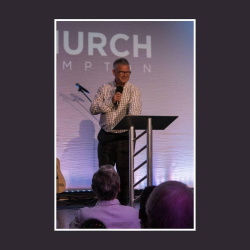
What if you are wrong? Holding on to logic.

There cannot be many more examples of clear blasphemy than these verses we have been reading. 

The only way this man has been healed and set free is the source of Jesus’ power which is God. Secondly, the only way this man was set free was because Jesus came and restricted Satan’s powers over the individual.

The offended religious leaders attributed the healing to the work of Satan. Jesus then says, “….And if I drive out demons by Beelzebul, by whom do your people drive them out? So then, they will be your judges.  But if it is by the Spirit of God that I drive out demons, then the kingdom of God has come upon you. (Matthew 12 v 27-28)

Jesus was not the only one conducting exorcisms at the time. Within the Pharisees sect they had their own exorcists. Jesus turns his attention to them, “What you say of me can be said of your own exorcists.” He is exposing their lack of logic and he goes further, “What if you are wrong?” That is the big question. “If you’re wrong and this is God then the kingdom is actually here and you are so blinded you have missed Him and what He is doing.”

It is the biggest most challenging question that we all need to use more often: What if I am wrong? What if you are wrong?

The people who will not bear the question are those who are so deeply offended and have proud hearts so fixed on dislike and discord that all possible logic is thrown out of the window.

The next time someone doubts your motive or attacks your efforts ask the question, “What if you are wrong?” Don’t automatically doubt yourself. God is using you and speaking through you more than is comfortable to those around you.

Why do we divide?

“Jesus knew their thoughts and said to them, ‘Every kingdom divided against itself will be ruined, and every city or household divided against itself will not stand. If Satan drives out Satan, he is divided against himself. How then can his kingdom stand?” (Matthew 12 v 24-26)

These words are as relevant for today as when Jesus first spoke them. In response to the accusation that Jesus was driving out demons by the power of Satan, Jesus says this is nonsensical. How or why would Satan drive himself out? No kingdom can stand if there is no unity.

On June 16th 1858 the republicans chose Abraham Lincoln to run for the US Senate. It would be 2 more years before he became President. However, Lincoln’s speech that evening was addressing the division within government over slavery. He uses these same verses to speak to the Union who were divided in their opinion: Every kingdom divided against itself will be ruined …

Kingdom, city or households are created to stand the test of time. Their greatest challenge is to deal with the division that comes its way. The city in the world known for its division more than any other city is surely Jerusalem. The Jews sound their Sabbath siren on Friday afternoons, 5 times every day the Muslims send their call out to pray and every day Church bells are ringing constantly. But as we see today, in 2021 the city and the nation is once again imploding within its division.

Look at any marriage, family, church, friendship groups etc. Division ruins what was created to stand.

So the big question is: Why do we fuel division? Do we really want to ruin something created to stand? Why do we complain and grumble? Why do we gossip and slander? Why do we attack one another?

Why so much division?

3 unintended consequences when you are offended

Church leaders and experts of this-and-that can be the ones who are the most vociferously offended when God’s grace falls. As it does the kingdom of the Church divides and declines. Most offended Christians are pointing fingers within not outside the Church.

Jesus heals the demon-possessed man who was blind and mute and the response from the religious leaders was offence.

“But when the Pharisees heard this, they said, ‘It is only by Beelzebul, the prince of demons that this fellow drives out demons.’ (Matthew 12 v 24)

Offence blinds you. The irony that the people who were still blinded were the ones who could see. They were so offended that the healing was done on the Sabbath that they missed the joy of the moment; Offended people are always miserable.

Offence will cause you to blame not applaud. They didn’t applaud God for the miracle amongst them they rather blamed the devil. Offended people find fault even when favour is raining all around them.

Offence will cause you to jump to a conclusion no matter how illogical it is. It was ridiculous thinking that Jesus was driving out demons by the leader of the demons, Beelzebub; Offended people are usually not humble enough to see their stupidity.

Could this be that? Recognising what God is already doing in you.

Some people are longing so much for God to move that they miss the fact that He is with them right now.

“Then they brought him a demon-possessed man who was blind and mute, and Jesus healed him, so that he could both talk and see. All the people were astonished and said, ‘Could this be the Son of David?” (Matthew 12 v 22-23)

Here comes a bruised reed and a smouldering wick in this one man. This demonised, blind and mute man is weary, abused and misused. After his healing the people are astonished or as Luke says, ‘amazed’. But it is their question that catches my attention, ‘Could this be the Son of David?’

This generation had been waiting for the Messiah to come as a son of David, in the genealogical line of their King.

They knew the stories of their King. Even before being made appointed he had worked for King Saul playing the harp and casting the evil spirit out. Then when he was king taking Jerusalem and making it his city, the city of David, he faced the jaunts of the Jebusites, “You will not get in here; even the blind and the lame can ward you off.” (2 Samuel 5:6) Ironically here is Jesus, the Son of David, healing the demonised blind and mute man.

Could this be that? Is this in line with that? Is there a connection? Is Jesus who we are expecting?

Who is asking these questions? The scholars? The religious leaders? No, in fact their reaction is completely the opposite.

This is the question from everyday people. The ordinary. They don’t have pride and selfishness to battle through in order to get to the question. They are not too intelligent, too spiritual or too religious. They were simply people who longed for God to move again. They were looking for their Messiah. Could this be that? Could Jesus be the one?

Do you remember when God spoke to you through the Bible or maybe a prophetic word and you wrote it down and pinned it somewhere? Has what happened to your life a fulfilment of that? Could this be that?

Look at what is happening in your life now. Look around you and within. Look at what you have been thinking. Look at the decisions you are making. Could it be that this is God? Could it be that you haven’t stopped properly to think, acknowledge and then thank God that this is Him?

Could this be that? Could this be Him? Don’t be blinded or muted to what the religious will never see.

4 things to know in becoming like Jesus.

Matthew in seeing how Jesus responded to those who were against him looks at the Suffering Servant of Isaiah (40-52).

“This was to fulfil what was spoken through the prophet Isaiah: “Here is my servant whom I have chosen, the one I love, in whom I delight; I will put my Spirit on him, and he will proclaim justice to the nations. He will not quarrel or cry out; no one will hear his voice in the streets. A bruised reed he will not break, and a smouldering wick he will not snuff out, till he has brought justice through to victory. In his name the nations will put their hope.” (Matthew 12 v 17-21)

Know who you belong to. This life will do its best to remind you that you are not good enough. Some may wake battling destructive thoughts. With a reminder to the baptism of Jesus Matthew points out that Jesus knew who he belonged to. Perhaps you need to take a few steps back in your memory also in order to receive the confirmation that you belong to God? (Here is my servant whom I have chosen, the one I love, in whom I delight; I will put my Spirit on him)

Know when to speak up and when to be silent. Or world is broken. Wherever we look, Israel and Gaza; the persecuted in Northern Africa; the slaves and dehumanised for their race and gender; the nations are broken. Individuals are broken also from disease and bereavement; mental illness and financial ruin. Speak up for the justice of others but keep quiet when it is for yourself.

(he will proclaim justice to the nations. He will not quarrel or cry out; no one will hear his voice in the streets.)

Know who to spend your time with. Isaiah’s Suffering Servant is “a shepherd: he gathers the lambs in his arms and carries them close to his heart; he gently leads those that have young.” (40:11) Far from any form of abuse, in fact this shepherd goes looking for those who have been misused and are weary from the ‘dictators’. It is these people that we will want to spend time with if we want to know Jesus.

(A bruised reed he will not break, and a smouldering wick he will not snuff out,)

Know the power of that name. It is not just a belief in the name but it is to put your whole hope in the identity of the Servant and the mission of Jesus. May the people we encounter find Christ shining through us!

(In his name the nations will put their hope)

3 things to do when you become aware people are against you

“But the Pharisees went out and plotted how they might kill Jesus. Aware of this, Jesus withdrew from that place. A large crowd followed him, and he healed all who were ill. He warned them not to tell others about him.” (Matthew 12 v 14-16)

  • Distance yourself from the problem. Take control of your diary. The difficulty serves you not the other way round. Decide you will deal with it on your own terms and at a time which is best suited for you. (Aware of this, Jesus withdrew from that place).
  • Draw people to you who are in need. Only a few follow the plotters. The majority have many needs which they need God to sort out. Don’t be fooled when people say, “Everyone is saying this about you.” It’s not true. The majority are so fixed on their own problems they don’t care what the negative people are saying. They still need your help. (A large crowd followed him, and he healed all who were ill).
  • Don’t make things worse by causing misunderstanding. There are times not to post on social media. Quietness is your strength. Don’t let people walk away from you intending to boast of who you are and what you can do but at the same time fail to understand what you are here to do and the who you will not become. (He warned them not to tell others about him).

3 questions to ask if you want a move of God.

Last evening I hosted a zoom induction service and I asked the Church receiving their new Pastor a question: Are you ready for a new move of God in your lives? They all said YES. Of course they would. It was an easy question to ask Christians. We would say the same. But are we ready to accept, change and stand against opposition for that move of God we so desire?

Having declared that He was the Lord of the Sabbath. Jesus enters the synagogue and finds someone needing a move of God in there.

 “Going on from that place, he went into their synagogue, and a man with a shrivelled hand was there. Looking for a reason to bring charges against Jesus, they asked him, “Is it lawful to heal on the Sabbath?” He said to them, “If any of you has a sheep and it falls into a pit on the Sabbath, will you not take hold of it and lift it out? How much more valuable is a person than a sheep! Therefore it is lawful to do good on the Sabbath.” Then he said to the man, “Stretch out your hand.” So he stretched it out and it was completely restored, just as sound as the other. But the Pharisees went out and plotted how they might kill Jesus. (Matthew 12: 9-14)

Maybe they planted the man with the withered hand? Maybe they went looking for a diseased man and told him to go to the synagogue and they did all this to trap Jesus?

Here are the 3 important questions:

Are you open for God to work in your life at a time you would never have expected?

This man was probably not bothered at all what the day his healing took place! Sometimes the perfect happens at an imperfect time for others and even for yourself.

What if others are offended at what they see God doing in you?

Does that matter to you? Are you more interested in your own popularity? Often you cannot have both. If you are going to stretch your hand out and do what you have not done before then you may lose friends.

Are you willing to make the necessary changes to see God work in you?

The man had to do what he and others said he could not do. He had a shrivelled hand because he could not stretch it out. The truth was when Jesus told him to stretch out his hand he found he actually could.

5 truths to living with God’s rulebook.

The disciples took the grain heads, separated the chaff from the grain and then grounded the grain in their hands as they walked along. But they were being watched. The Pharisees are always watching. They accuse the disciples of breaking the rules of resting on the Sabbath.

“Jesus answered, “Haven’t you read what David did when he and his companions were hungry? He entered the house of God, and he and his companions ate the consecrated bread—which was not lawful for them to do, but only for the priests. Or haven’t you read in the Law that the priests on Sabbath duty in the temple desecrate the Sabbath and yet are innocent? I tell you that something greater than the temple is here. If you had known what these words mean, ‘I desire mercy, not sacrifice,’ you would not have condemned the innocent. For the Son of Man is Lord of the Sabbath.” (Matthew 12: 3-8)

Jesus uses 3 examples:

  1. Abimelech the priest gave the Temple bread to David (who was not a priest) when he and his men were fleeing from King Saul (1 Samuel 22). The Temple bread was only to be eaten by priests (Leviticus 24).
  2. The priests who work in the Temple on the Sabbath are innocent of breaking the rules (Numbers 28).
  3. Hosea their prophet understood mercy is better than sacrifice.

Jesus takes the opportunity to reveal who He is:

  1. I am greater than the Temple.
  2. I am Lord of the Sabbath.

And so the remarkable amazing thing is what Jesus reveals and what we MUST understand.

5 truths to living with God’s rulebook.

  1. The rules of God are not challenged but man’s interpretation of them are.
  2. The rules serve God’s people not the other way round (David and the bread).
  3. The rules made allowances (the Temple priests who did His commanded work).
  4. The rules of God are not condemnatory but man’s rules are.
  5. The rules have at the heart of them Mercy (Hosea) and Rest (11:28-30).

What happened on that walk?

Come to me you who are weary and burdened …. Remember that? Shortly after speaking to the crowds who were worn down by legalistic rules Jesus is facing an example of that burden.  It wasn’t the commandment to keep the Sabbath holy and not to work on it which was the burden. It was the traditions of the religious leaders who told the people how to apply that commandment.

“At that time Jesus went through the grain fields on the Sabbath. His disciples were hungry and began to pick some heads of grain and eat them. When the Pharisees saw this, they said to him, “Look! Your disciples are doing what is unlawful on the Sabbath.” (Matthew 12 v 1-2)

Jesus is walking on the Sabbath. They do not accuse him of that act so he presumably was within the accepted distance for the Sabbath, about 1,000 yards.

Along the borders of the fields, grain, grapes, olives were left after the harvest so that the poor could pick them. This is all acceptable and within the Law of Moses. But the Sabbath was more important than hunger even if you were a widow, an orphan or very poor.

So the disciples took the grain heads, separated the chaff from the grain and then grounded the grain in their hands as they walked along. They didn’t work up a sweat. They were not filling bags of grain for some business. They did it within their own hands which produced a small snack!  But for the religious dictators it was work.

The Pharisees are protecting their culture, they are crying out for purity, they campaign against sin. Why? Because it was sin that cast God’s people out of the garden, it was sin that caused them to die in the wilderness and sin was breaking the rules, law codes, sacrificial offerings that are mentioned in the memorised Torah.

Without Jesus, rules become very important and worth the effort to protect them.

But when you follow Jesus then your attraction for Him may mean you cause offence to those who do not see Him like you do.

Following Jesus means you will have to let go of pleasing man and the rules that protect your status with God.

Every generation battles with the code of conduct passed down to them.

Every generation ends with having more rules than relationship.

Every generation has to ask ‘what kind of Jesus will we follow?’

Leadership is:

Leadership is all around us. From work-places to the home; the church to the community; friends to making new ones.

Today I will be filmed giving a 5 minute ‘top-tip’ for leadership which will be used at my denominations Leadership conference next month. Over the last couple of days I have been focusing on these words:  “Come to me, all you who are weary and burdened, and I will give you rest. Take my yoke upon you and learn from me, for I am gentle and humble in heart, and you will find rest for your souls. For my yoke is easy and my burden is light.” (Matthew 11:28-30)

It is here as Jesus speaks to the crowd of people burdened and tired by a religious system of leadership which was legalistic, coercive and twisted by narcissistic pharisaism that he says, ‘Come to me I am not that kind of leader. I am different to anything you have ever experienced.’

This will be my script. This is what I think Leadership is. It comes from the Leader of all leaders: I am gentle and humble in heart.

Humility

When the Apostle Paul said goodbye to the Ephesian elders in a very moving farewell speech he said these words, “I served the Lord with great humility and with tears …” (Acts 20:19)

In the culture of Paul’s day the word was always used disparagingly and often towards a slave. That attitude of the world threatens the Church even today. Being humble is obviously a trait we all believe in but it doesn’t get a huge mention and we never talk about it as something to aspire to. In fact if you were to say I am humble well that just proves you are not. But why is this so? I think we need more people in all spheres of society, in the Church and outside of it, who will stand up and say one of the hallmarks of their life, the axis of their worldview is that they are lowly in their thinking of themselves and they recognise the value of others above their own value. What’s the worst thing can happen? The response is ‘No you’re not, I can prove it.’ That will only serve the humble well as we work on being more like Christ. The humble will never fight over whether they are humble or not they will just try and be even more, for to be humble is to be like the Lord Jesus Christ.

To be humble is not to pride ourselves on our works. We also tell the stories of our failures. Paul was continually aware that he was a sinner, the persecutor of the church and of Jesus Christ, the least of the apostles etc.

Paul in his other writings from prison reminds us of how Jesus lowered himself, abased himself is a powerful word, made man, made flesh. We don’t fully realise the abasement of these words. We preach Christ crucified, we pray in our imagination to a human Jesus, a servant, the Son of Man. We carry those earthy, human images in our mind because that is true. Yet what is true is He is God!

I try to be true to the story of my life. We tend to hide our failings and talk of our successes. Our failings that are mentioned only put us in a good light as God brought good out of them. We are afraid of losing friends and fame if we mention when we had failed.

If we carry the cross in our hearts then why do we only speak of our exaltation? Of course I am not suggesting we create badges saying ‘I am humble’. But I do think when people ask us what has been the thing that has brought exaltation in your life we say it is because I became humble. (Humble yourselves before the Lord, and he will exalt you. James 4:10) But also that I am working at being completely humble and that may take some time yet!

Gentle

It’s a difficult word to translate apparently. Some translations have meekness. Paul’s use of the word is also used for the brokenness of a horse. Power that is under control. But the problem with that is the word power. How do we handle power? How do we control that?

I think where humility recognises the value of others above our own value; gentleness doesn’t even look at our own value and therefore there is no insistence about our rights in a situation.

Have you ever become cranky with someone? Of course we have. I love the word cranky but not the emotion. People do drive us crazy! Knowing how to keep one’s emotions under control is going towards being gentle.

One of the challenges of the leader is knowing how to be angry at the right time in the right way and for the right reason and that’s not easy at all! It is probably best not to try it for failure is ever before us.

How do we respond when hurt has come into our life? Bearing injuries without anger or revenge but with a forgiving spirit and truly believing that God has a purpose for this is the hallmark of being gentle.

The Amplified uses the word ‘unselfish’ to help us understand more of what it means. It is not to be impressed by the sense of one’s own importance because one thing you know, you are not that important.

This is my top-tip and what I aspire to.

It is the invitation from Jesus to follow Him who describes himself as gentle and humble in heart. May we all pursue these 2 leadership qualities.