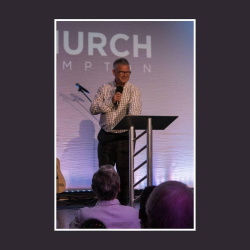
The Genesis of Jesus comes from sinful, ordinary people, like us (Part 12)

So we come to the end of Matthew’s genealogy. Matthew blasts into his gospel with the opening line: this book is about Jesus Christ who is in the line of Abraham. He belongs to our nation. He is one of us. He is also in the line of David. He is on the throne, a King in the royal line of kings.

“… and Jacob the father of Joseph, the husband of Mary, and Mary was the mother of Jesus who is called the Messiah. Thus there were fourteen generations in all from Abraham to David, fourteen from David to the exile to Babylon, and fourteen from the exile to the Messiah.” (Matthew 1 v 16-17)

Matthew’s genealogy is accurate but not complete, it was never intended to be that way. He arranges it into three sections of fourteen so that his readers can memorise them. In order for that to happen he omits some and he’s not that concerned if the word ‘fathered’ means ‘descendent of’ the person follows the other eventually and many of the historical Jewish genealogies do the same, this isn’t out of the ordinary.

A long line of kings, all sinful, even Abraham and David, some worse than others and every one of them ordinary.

Then we get to Joseph and Mary and Mathew is really clever here and we need to slow the verse down. We know what is coming and Matthew certainly does and so he sets his readers up by being careful with the grammar.

He could have said and Joseph the father of Jesus. But he doesn’t.

“… and Jacob the father of Joseph, the husband of Mary, and Mary was the mother of Jesus who is called the Messiah”

I’m not an English expert by any means but we can see the difference. Not only does Matthew switch from the father to the Mother, it is Mary who is the biological parent. But one more important thing. “Mary was the mother of Jesus.” In the NKJV it says, “And Jacob begot Joseph the husband of Mary, of whom was born Jesus who is called Christ.” The whole genealogy it is the same except in this case. The verb ‘begot’ or ‘fathered’ is in the active tense meaning that Jacob was humanly involved for the birth to happen, without him, Joseph could never have been born. However, the only occasion in Matthew’s genealogy when the verb changes so that the subject is not the person who ‘fathered’ is with Mary. Here Matthew purposely uses the passive voice so that Mary is not the subject but she is acted upon. Clearly this is not Joseph, otherwise Matthew would have said so ‘Joseph fathered Jesus’. So who was it? Mary is clearly the mother but who acted upon her to bring about Jesus? He sets himself up nicely for what will follow next.

And so after a long line of sinful, ordinary people we get to the final ordinary person, not a king, not a man, a woman who would go through an action by someone in order for the King Jesus to be born.

God is still in the business of stepping into our ordinary lives and acting upon them to bring about extraordinary moments and events. May He continue to do so, Amen!

The Genesis of Jesus comes from sinful, ordinary people, like us (Part 11)

The list of names that Matthew has chosen demonstrates that God will move into His world at a time that He decides not us. God will answer a cry when He decides not the person who calls. But the way you conduct yourself will be instrumental in you receiving His good will and purpose for your life and in you being instrumental for the will of God in other people’s lives.

At times in the prophet’s world living alongside the wicked kings and even the good ones it looked like God was not slow to act.

The circumstances of your world may suggest God is not here. Sometimes it is only later that you see the footprint of God who was there watching over you. He is not slow at all.

It seems clear that Matthew got hold of a genealogy that we simply do not have the names for anywhere in the Old Testament nor even in Jewish literature. Who are these people? We don’t know. Maybe there were genealogies lost in the destruction of Jerusalem in AD70.

What were their life-stories? They had them for sure. Were they disciples of Yawheh? Wicked or good? To us they are just names, ordinary people. Probably just like us. But not forgotten by Him.

“Zerubbabel the father of Abihud, Abihud the father of Eliakim, Eliakim the father of Azor, Azor the father of Zadok, Zadok the father of Akim, Akim the father of Elihud, Elihud the father of Eleazar, Eleazar the father of Matthan, Matthan the father of Jacob” (Matthew 1: 13-15)

The world may not know you. Ordinary, insignificant, small, but are you in line with Jesus, are you following Him, are you waiting for Him to come? Then it will all be worth it!

The Genesis of Jesus comes from sinful, ordinary people, like us (Part 10)

Is it possible that a man can change and then change his name to reflect that change? Is it possible that a man can totally repent? Is it possible that the curse on that man be reversed and he be brought into blessing? YES!!

In our next few names we see those changes.

“After the exile to Babylon: Jeconiah was the father of Shealtiel, Shealtiel the father of Zerubbabel” (Matthew 1: 12)

So is there a problem? The Chronicler (1 Chron 3:17) says Shealtiel’s father was Jehoiachin. Luke in his gospel says it is Neri and Matthew has the wicked king Jeconiah as father.

The easy bit, Jeconiah and Jehoiachin are the same person, he was also known as Coniah (Jeremiah 22: 28 KJV), a king of Judah taken into Babylonian captivity in the 6th century BC. God curses this man because he was evil, it is found in the same chapter in Jeremiah, God likens him to a signet ring he will pull off. He will be childless, never prosper and there would be no descendent ruling after him.

But where is Luke’s man, Neri?

 Both Matthew’s genealogy and Luke’s are right. The Jews would have certainly questioned these important lists if they had been wrong, they have survived the test of time. Secondly, the early readers of these lists would have known the story thread of these lives which not unlike 2020 when the story of families seem to have many twists with their being many ‘father’ and ‘mother’ figures and children being adopted into new names etc.

What could have happened very simply put is either there was a levirate marriage once Jehoiachin was taken into Babylon (his wife being permitted to take another, being Neri) their firstborn, Shealtiel, would have legally been Jehoiachin’s son; or there was an adoption process taking place, in that Neri was actually Shealtiel’s grandfather but who had no sons so was permitted to take the sons of his eldest daughter who was married to Jehoiachin. Or even the adoption took place after Jehoiachin’s death, Neri taking Shealtiel has his adopted son.

 Unless of course there is a simpler solution …!

That is that God reversed the curse on Jeconiah because he repented in Babylon. Indications of this can be found in that the ‘signet ring’ references are found down the generational line in Zerubbabel’s blessing. Plus rabbinical sources say he did! If that be the case then as was popular custom, a name change wasn’t out of the ordinary to indicate a new day, the most famous being Abram to Abraham.

Then his name was changed to mean ‘God is light’ the darkness was over, he was a changed man and actually the curse was then reversed. He did have children, he actually did prosper (2 Kings 25:27-28) and he did have descendants on David’s throne, ending with Jesus.

God is still changing lives in 2020 as much as thousands of years ago!

So who was the father? Neri, Jeconiah, Coniah or Jehoiachin? Yes, that man!

A man who God changed in captivity. He still does this miraculous work today!

Shealtiel

The Hebrew actually means “I asked El (for this child)”. Zerubbabel is an answer to Shealtiel’s prayer to God (El) for a child.

The final element of his name is El, which was the prominent Canaanite god but whose name became applied to the God of Israel, for example, Elohim which simply means God.

So did Jeconiah name him so because he had this change of heart, a change of worship from that of a god (el) to God? It could well be.

Shealtiel spent his whole life being reminded every day he was the outcome of a request to God for his life from a father who had a changed heart.

Do you have someone who appreciates you that much?

May be you can begin to list names: your parents, grandparents even, that close friend who has always been there and has prayed for you through it all, your spouse, your Church leader, the list can go on. But you have names of people who either prayed for your life or prayed for you to live in this life. Thank them today.

 Zerubbabel

Born in captivity after his parents had been exiled into Babylon he finds himself the governor over Judah and sent back to Jerusalem to begin to build the Temple.

He found no excitement whatsoever from the people. He faced major opposition from God’s people, it was unbelievable! Fifteen years passed by and he had to be empowered by the prophets Haggai and Zechariah to commence the Temple rebuild.

I end this blog with the words that we all need to carry in our hearts. Change of heart comes from the Lord. It is not by pressure from peers or programmes and events, it is the Spirit’s work. One day the prophet said to him: “This is the word of the Lord to Zerubbabel: Not by might, nor by power, but by my Spirit, says the Lord of hosts.”  (Zechariah 4:6)

A verse we all know and still pray for.

Who needs a change of heart in your family, friendship circle etc? These kings remind us it can happen!

The Genesis of Jesus comes from sinful, ordinary people, like us (Part 9)

Jesus though the King of all Kings, didn’t come down to earth in the way we might have expected him to. The Immortal and Eternal King came down in the form of a baby born in humble circumstances. The picture of Christmas is a picture of humility. Many are talking of the difficulties we will have this year and it is true; it will be a sad time for those who have lost loved ones; it will be a lonely time for those isolated; there will not be so many at the parties; it will be a humble event and perhaps a little more like what it represents.

Jesus was born into a line of kings which we are reminding ourselves about in Matthew’s opener:

“Hezekiah the father of Manasseh, Manasseh the father of Amon, Amon the father of Josiah, and Josiah the father of Jeconiahand his brothers at the time of the exile to Babylon.” (Matthew 1 v 10-11)

Throughout the genealogy we see kings who humbled themselves before God and others who didn’t.

Manasseh

He was 12 years of age when he became king and his reign lasted 55 years in Jerusalem. In that time he became the cruellest of kings. Every type of perversion Manasseh practiced and promoted. The evil he committed is described in 2 Chronicles 33 and it is horrific. The Chronicler says ‘The Lord spoke to Manasseh and his people, but they paid no attention.” (33:10) The erecting of the Asherah pole in the Temple where God had promised that Israel would not be taken from the land so long as they ‘do everything that I commanded concerning all the laws, decrees and ordinances given through Moses’ (v8) was a final spit in the face of God. Manasseh and God’s Word appeared to be a million miles apart. Yet God’s Word was closer than he realised and God’s judgment fell on Manasseh just as God had said it would. He was taken into Babylon humiliated with a hook in his nose and shackles around his feet. And yet it was in his distress that his heart began to turn back to God and mercy fell on him. God can still be found in the dungeons of life. God brought him back and Manasseh reformed the nation from its perverse ways.

Amon

Manasseh had humbled himself and started many reforms but it never impacted his son. Amon was like the early Manasseh in terms of being an arrogant and evil king. The Chronicler says in 33:22 ‘Unlike his father he did not humble himself before the Lord.’ His reign was short. His closest loyal officials showed they were not who he thought they were and killed him. All that is written about him is to be found according to 2 Kings 21:25 ‘in the book of the annals of the kings of Judah’. This historical book is lost just as Amon was. Lost and forgotten. His chance to humble himself gone.

Josiah

It was in his 18th year as king and as the temple repairs were still going on that a book had been found excavated from underneath the rubble. This book was not the historical annals of the kings. It was so much more than that. It was the book of the Law of Moses, most probably Deuteronomy.
Josiah was known for being the reforming king. But this find was the greatest event of his life. What was his response? The humbling of himself before the Lord.

2 Chronicles 34:27 “Because your heart was responsive and you humbled yourself before God when you heard what he spoke against this place and its people, and because you humbled yourself before me and tore your robes and wept in my presence, I have heard you, declares the Lord.”

Kings who lived by God’s Word in humility and Kings who ignored God’s Word at their peril. That’s what happened in the family line of Jesus as they waited for the Word to arrive.

What place have you given the Bible in your life?

The Jews always stand when the Torah is lifted up. When it is carried around the congregation they turn towards it but it is never touched. In the 16th century a Jewish mystic described the Torah in this way, “When one carries holy books, one should act as though one is carrying the clothes of the king before the king” (Sefer Reshit Hokhmah).

If a Torah book falls to the ground by accident then many Jews will fast or will give money and not just the person who accidentally dropped it but even someone who witnessed the fall.

Muslims perform a ritual washing of their face, hands and feet before they read the Qur’an which is wrapped in cloth. They learn parts of it by heart with the goal to be able to recite the entire Qur’an and take the title Hafiz.

I have seen in other nations of the world the Bible being handled by Christians in a reverent way. Often kept in a high place of the home or church and wrapped in a beautiful cloth. If it falls to the floor it is picked up, kissed and placed carefully back on the high shelf.

The kings teach us that God’s Word should not be ignored or lost. For when we humble ourselves before it and allow the Bible to read through our lives then God will be leading us into His blessing. The Bible is our defence and our guide.

The Genesis of Jesus comes from sinful, ordinary people, like us (Part 8)

In 1616 a phrase appeared in a book of proverbs by Thomas Draxe called ‘Bibliotheca Scholastica Instructissima’. Though it wasn’t the first time it was used and a variant of it appears in Ezekiel’s book in 593-571 BC (Ezekiel 16:44).

Yet even though the whole world knows the phrase, it isn’t true for everyone as this next verse shows us: “Uzziah the father of Jotham, Jotham the father of Ahaz, Ahaz the father of Hezekiah” (Matthew 1 v9)

The phrase?

‘Like father like son’.

In the family line of Jesus are:

Sons disappointed in how things turned out for their father

Maybe you are reading this and you think of your parents, they may have died a long time ago but it feels like yesterday. You remember how disappointed you were to witness the wrong decisions they took in their life. They didn’t finish well. If you know something of this then spare a thought for Jotham who at 25 years of age took over from his father as King of Judah.

Eight of the sixteen year reign was spent as the administrator to his father who was in isolation with a skin disease because of God’s judgment on his pride.

Uzziah was a loved King but he was cut off from the prime of his leadership with unfinished projects, buildings and temple extensions which Jotham had to pick up.

Sons so wickedly opposite to their fathers you struggle to believe they are sons.

Ahaz was twenty years old when he succeeded his father Jotham as King of Judea. He has to be the most evil king in the Old Testament. He even made his son walk through the fire for Molech, the god of child sacrifice.

The prophets Obed and Isaiah failed to turn Ahaz back to God. He turned to Syria for his help and not Yahweh. But his downfall, like his grandfather, had to do with the Temple and again pride was the sin. He had gone to Syria to thank them for their help and in Damascus he saw an altar that he liked. He had it copied and sent to Jerusalem for placing in the Temple. On his return he brought a sacrificial offering and forced the priests to do so.

When he died a strange thing happened with the weather. During the day the sun shone for only two hours so that his funeral had to be rushed through quickly. Maybe it was heaven giving their disapproval?

Sons who inherit a nightmare from their dysfunctional fathers

So how do you follow Ahaz the wicked king in the Old Testament?

If your name is Hezekiah then you know all about it.

He inherited disorganisation; debt to other foreign nations because of wrong allegiances; threats of war; spiritual deadness; God’s people looking like they weren’t; neglect and poverty; prophets like Isaiah and Micah calling for a return to God but falling on deaf ears; a closed and defiled Temple; Hezekiah must have shaken his head at what his father had left for him. But he began the reform and was a good king. No greater chapter in his life for the favour God had on him is found than when he was granted a 15 year extension to his life. God had told him he would die. Hezekiah pleaded and God relented with more years for him. Hezekiah promised God that the Temple would be kept clean and pure and that he would teach the next generation the songs of the Temple.

That is amazing isn’t it?

However, good intentions and all that!

Hezekiah gets some visitors, from Babylon, intrigued by the story that a king was due to die but recovered. Hezekiah showed them all his wealth, in fact the Bible says there wasn’t anything Hezekiah didn’t show them with pride. Isaiah comes to him and pronounces the judgment that Babylon will come again and take everything and everyone into exile. Why? His pride.

Pride had slipped through the generations.

Maybe in every generation there is the strong possibility that the sin of the previous can sneak through to the next. Maybe like father like son, like mother like daughter cannot be helped or needs even more careful attention than we thought.

Who can stop this? Who will come that will prevent sin breaking through? We need a better king? He is coming soon!

The Genesis of Jesus comes from sinful, ordinary people, like us (Part 7)

Being a friendly kind of a person one of the things that has consistently been said to me at the start of a piece of news I am going to receive is this: “I know you’re a friend of his but let me tell you something …” Do you know that experience? The person is worried that the friendship will blind you from the truth.

Of course being a friend of someone does help. I received a call from someone recently who brought a complaint about their Pastor. I was able to say “I know him for longer than you. I have never ever seen him in the way you describe him.” Of course it isn’t proof that the Pastor was wrong but my friendship helped.

Paul quoting a Greek poet says in 1 Corinthians 15:33, ‘Bad company corrupts good character.’ It is true that we need to keep a watch over people we walk with so that they do not influence us negatively. Sometimes it is essential that you stop meeting that person for coffee because their friendship is spoiling you.

We are going to see this in the next section in Jesus’ family tree.

“Abijah the father of Asa, Asa the father of Jehoshaphat, Jehoshaphat the father of Jehoram,

Jehoram the father of Uzziah” (Matthew 1 v 7-8)

Asa was a good king, a reformer who removed the majority of the idols from the land. However, he didn’t finish well. On being confronted by the prophet Hanani, regarding his friendship and alliance with King Ben-Hadad, he threw the prophet in prison. He died from a disease simply because his alliance with the Lord had stopped and he didn’t enquire of Him.

Jehoshaphat was one of Israel’s best kings and known for further reforms of the land bringing people back to Yahweh. But again his friendship was the big mistake of his life. He was reproached by the prophet Jehu for his alliance with King Ahab which ended disastrously for him and his people.

Jehoram was a wicked king. When his grandfather allied with the North to fight the Syrians, Athaliah, the daughter of Ahab (and possible his chief wife, Jezebel) was given to Jehoram in marriage. This alliance in marriage was the undoing of his kingship and God’s people. He took his wife’s religion (an alliance of Baalism with worship of Yahweh) and forced it onto the nation.

Matthew leaves out 3 kings and goes down the line to Uzziah. The word ‘fathered’ can mean descendent anyway. Why he does that is probably because he wants to give a birds-eye view as he races to the entrance of Jesus the King. The interesting thing for us is that there is a connection for us in our group of kings. Uzziah was a good one. He was successful. He had substantial achievements. His fame spread far and wide. He built towers across the land to protect his people and he built cisterns to provide for them. However, his alliance with the Lord would disintegrate. His pride led him to want to take the priestly office and he was struck with leprosy but for such an arrogant presumption of which he died from it and wasn’t even buried amongst the kings. Only in Jesus do we see the role of King, Prophet and Priest.

Not only do we need to be careful with our friendships we must keep connected with a healthy alliance to the Lord.

That may be what the readers are seeing in Matthew’s genealogy.

The Genesis of Jesus comes from sinful, ordinary people, like us. (Part 6)

It is so easy to skip past the genealogy either in Luke or here in Matthew’s gospel.

Matthew decides to open up with his and it is his genealogy. This was never intended to mention all the names, he omits some, probably to help his readers memorise them and definitely to help them see his message. The message is that our tragedies of life have become God’s tragedy; the sadness and the failure of our stories are heading to one person who can absolve all of the world’s pain. That is of course, Jesus.

So here’s some more:

“David was the father of Solomon, whose mother had been Uriah’s wife, Solomon the father of Rehoboam, Rehoboam the father of Abijah” (Matthew 1 v 6-7)

Matthew does it again. Having already mentioned Tamar, Rahab and Ruth; he doesn’t even have to mention her name, everyone knows as soon as he says Uriah’s wife: Bathsheba. Why does Matthew mention this, he doesn’t need to? Why doesn’t he allow his readers to focus on the Kingship of David? In fact it is interesting to see the whole verse, we read part of it yesterday:

“and Jesse the father of King David. David was the father of Solomon, whose mother had been Uriah’s wife”

See how Matthew first records David as King and then removes the title in the next sentence stressing his ordinariness.

That’s the point Matthew is making. “I don’t want you to focus on how special he was but how sinful and ordinary he was. This is not about your superstars of history but about one King, the only King!”

Matthew doesn’t even give Solomon the title King, he was Israel’s third and last. He doesn’t mention how Solomon (the 10th son of David and 2nd son of Bathsheba) had divine wisdom or gives no reminder of building the Temple. He simply with a few words reminds us of the immorality.

In the Message translation of Psalm 51 as David writes his feelings in song, he says, “God, shape a Genesis week from the chaos of my life”, v10.

And that’s exactly what God does for us.

There is nothing God cannot make good and welcome into the kingdom, not even Israel’s greatest sex scandal.

Let’s take in 2 further kings but of the line of Judah. Rehoboam, Solomon’s son, was a wicked king and the 10 tribes abandoned him and so he is known for Israel dividing under his reign. He reigned in Jerusalem only, his servant Jeroboam led the 10 tribes.

Matthew then takes us down the line of the kings of Judah and it seems that he does so alternating between wicked and good. So Rehoboam and Abijah are the wicked kings followed by the good. But we will get to them next.

2 Chronicles 12: 1 “After Rehoboam’s position as king was established and he had become strong, he and all Israelwith him abandoned the law of the Lord.”

1 Kings 15: 1-3 “In the eighteenth year of the reign of Jeroboam son of Nebat, Abijah became king of Judah, and he reigned in Jerusalem three years … He committed all the sins his father had done before him; his heart was not fully devoted to the Lord his God …”

There are people in this genealogy of Matthew who never changed their ways. There was no redemption story. They were appointed by man, sometimes stealing and killing their way to the top and God doesn’t do anything about it, seemingly. He just watches from afar and permits a cruel story being played out during their tenure.

Don’t you ever wonder why God doesn’t step in more often than He does especially to sort out the injustices?

This is the message. He brings all things whether evil or good under the Lordship of Jesus. There are things and people that God never appointed. But He will take the sex scandals and the wicked injustices and weave them into His scandal and take on His injustice of the treatment of Himself in Jesus. Sometimes you simply cannot sugar coat the event. It is what it is. It only calls for a Saviour to come and to come soon.

The Genesis of Jesus comes from sinful, ordinary people, like us. (Part 5)

Some families seem to go through the most traumatic of experiences. Yesterday I was reflecting on a house fire that was reported on a few days ago where 2 small children lost their lives, their parents survived. How do you get over that? Many in the world have to try. Every day is a struggle.

We are working through some names but they are chosen for a specific reason by Matthew and he gives small indicators to help us see what he is reminding us of in his genealogy of Jesus.

“Boaz the father of Obed, whose mother was Ruth, Obed the father of Jesse, and Jesse the father of King David.” (Matthew 1 v5-6)

Ruth was a Moabite and she fell in love and married Mahlon, an Israelite whose family had come to Moab as refugees escaping the famine in Bethlehem. She settled to this new life of marriage. It was upsetting when Mahlon’s father died but they took care of the mother, Naomi. Then after 10 years tragedy strikes, a double-blow. Both Mahlon and his brother die. Naomi is left with neither a husband nor sons. Ruth is a widow. The future is bleak indeed. Naomi returns home and after an argument, Ruth accompanies her. They return and they have one person to blame and it is God. God has wrecked their lives.

The story of Ruth is one of redemption but let us never forget the tragedy that she had to go through. That was steeped in their family story. Obed was born to a mixed-race parentage. However, there could have been an even more cruel twist if the Jewish Midrash is correct. “Boaz was 80 years old and Ruth 40 when they married (Ruth R. 6:2), and although he died the day after the wedding (Mid. Ruth, Zuta 4:13), their union was blessed with a child, Obed”

Family tragedy continues into the next generation with the arrival of Jesse who had 8 sons. But the youngest he never had any thoughts for, it would seem. He considered this son as the runt of the pack. He overlooked him and rejected him. Even though God chose and appointed him can you imagine the pain of that rejection for that son?

Then we come to not just David but King David, the second King of Israel. His name means ‘beloved’ but he found throughout his life that he was certainly not loved by everyone, even the closest of people. His adopted father, Saul, turned on him. David’s Psalm (59) is a song he wrote recollecting his thoughts of the time when Saul sent men to capture him and he fled and escaped through a window. His own son wanted him dead. His own family spent years jostling for power. Not to mention the external strife from the north and southern kingdoms, David just spent years of his life escaping or fighting. He is also remembered for some of his errors of which we will see next.

Can you see this genealogy of Jesus? Stories of tragedy, bitterness, rejection and family strife.

Jesus was born into that family line. If you were to share a story from your family tree. Even if you were to share your own personal story, He knows, because He has stories too.

And that is what is so brilliant about the genealogies!

The Genesis of Jesus comes from sinful, ordinary people, like us. (Part 4)

Within 3 generations there can be a story that is hard to hide because everyone knows what happened.

We don’t need to remind ourselves of the quality that this next 3 generational family as they are mentioned elsewhere in the Bible and the Jewish Talmud. Matthew records them,

“Nahshon, the father of Salmon, Salmon the father of Boaz, whose mother was Rahab, Boaz the father of Obed, whose mother was Ruth,” (Matthew 1 v 4-5)

Nahshon was the divisional leader of the tribe of Judah and would always go first when the Israelites broke camp (Numbers 10:14). The Talmud says he was the first to plunge into the Red Sea as Moses lifted his staff to part it; Salmon marries Rahab (more of that next); Boaz is well-known as the kinsman-redeemer of Ruth (more of that next).

Those are the positive aspects of their lives. However, this family became known for these 2 stories and the reason why Matthew included the names of Rahab and Ruth.

Rahab makes the hall of faith in Hebrews 11 but nonetheless, she was a prostitute and a Canaanite (Joshua 2). It is hard to fully describe the hate that God’s people had for the Canaanites whose culture was pure evil involving child sacrifice to the god Molech. They were evil and proud of it and to bring one into the family line was shocking. But that’s what happened, the daughter-in-law of the important tribal leader was a Canaanite prostitute. They had a son and not only was one family story shocking enough they would eventually have two! Ruth seduced Boaz and he became her husband (Ruth 3) but Ruth was also a Gentile, more than that, she was from Moab. It is hard for us to understand how the Israelites viewed the enemies such as the Moabites. They detested them. Matthew makes sure that everyone knows that this 3 generational family had 2 stories of mixed marriages from an impure and evil culture.

So you may look into your past or even your present and think your family are far from perfect. They may have made decisions that look foolish. They may have chosen partners that you would never have chosen for them.

Nothing changes. Not even the ability of God to weave the broken stories into a divine family line where He makes all things good! If that is your family then this will encourage you and/or make you extremely thankful!

The Genesis of Jesus comes from sinful, ordinary people, like us. (Part 3)

The English word ‘genealogy’ is the translation of the Greek word, ‘Genesis’. This is how Matthew starts his gospel announcing a new beginning. We have had one Genesis already but this is the beginning of the incarnation of God on earth.

Though we don’t read these lists of names normally, they are there as a reminder that Jesus was born into a family line that was as human and ordinary as our own. So let’s continue …

“Perez the father of Hezron, Hezron the father of Ram, Ram the father of

Amminadab,” (Matthew 1:3-4)

This genealogy of four generations which cover 450 years is also found at the end of the book of Ruth.

Hezron

He is mentioned in the list of people who took an arduous journey from Canaan to Egypt when Jacob took the 70 family members down to meet Joseph who had been found alive. The list in Genesis 46:12 looks normal except there are brackets ((but Er and Onan had died in the land of Canaan). Judah’s grandchildren had come under God’s judgment. It was a blight upon the family tree and Hezron along with Hamil are drafted into the line as a replacement, a substitute and they may have even been born in Egypt and are mentioned in the list of those going down as those who were to be born.

“Hezron” means a “walled place” or “enclosure”. Behind this enclosure is a story of shame which Hezron lives with all his life.

Ram

Hezron named his son Ram, born in a place which was not the Promised Land, Egypt. His name means ‘to be raised up’ or simply ‘high’. Maybe living in this high and mighty place had something to do with the name he chose. The Greek translation has the name Aram which then introduces the picture of the nation of Aram (modern day Syria) who would relentlessly rise up and attack Israel.

Today you may wake to a rising ‘enemy’ over your life. They arrogantly overshadow your life. Perhaps this enemy is relentless. Maybe it feels like one man or even a nation of soldiers coming against you.

Amminadab

His name means ‘my people is willing or generous.’ The Israelites now in Egypt had prospered that nation. But this generation of Amminadab was the tearful people as they saw a dynasty arise within Egypt who had forgotten their history of Joseph and what he had brought to the nation. Amminadab’s generation was heading towards slavery and a darkness that they had never known. Maybe Amminadab never saw the Exodus. Perhaps all he knew was hardship.

Past prisons of shame; bouts of fear that grip as an enemy; trapped by debt and heading into slavery. Is that your family line?

This is the family line of Jesus.