
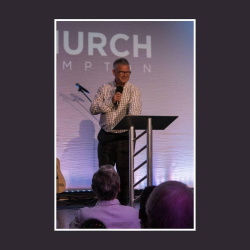
So you want to be a leader? So you want to follow a leader?

It is probably around AD64. The previous year Paul had been released from his first imprisonment and visited Ephesus leaving Timothy there to lead the work. This is his personal letter to his son in the faith. This is his mentoring, coaching, leadership course all bound up in this letter. It is treasure to every Christian but especially those who lead others in all capacities.

“Paul, an apostle of Christ Jesus by the command of God our Savior and of Christ Jesus our hope, To Timothy my true son in the faith: Grace, mercy and peace from God the Father and Christ Jesus our Lord.” (1 Timothy 1 v 1-2)

From these 2 verses I am thinking of leaders and those who follow leaders. I see this:-

  1. Follow and lead from a divine calling and a divine purpose. Run away from self-promotion and resist the temptation to think about yourself in terms of what you think you deserve. True authentic leadership serves someone greater. It is not a desire for a bigger stage but it is to serve the One who has the biggest stage for all time. Pride destroys ministries. Don’t grab and if you see grabbing don’t copy it for it may be packaged as divine but underneath the wrapping is just pride.
  2. Follow and lead from the foundation of hope. Jesus is our hope. Listen to the words. In difficulty or disappointment is the sound that of hope? Is this hope eternal and unchanging? In the uncertainty of life authentic true leadership inspire confidence and stability because they speak hope.
  3. Follow and lead from the place of investment in others. My true son in the faith. Beautiful words. How many times does the leader speak of themselves? How many times do they start with ‘I’ or ‘we’? Does the leader have genuine friendships? Not Facebook friends. Not friends who are only boosting their ego. Does the leader invest in the younger generation who will continue the work after them or is it all about what they are doing now?
  4. Follow and lead from Grace giving people opportunity to take risks, make and learn from mistakes and to grow without condemnation.
  5. Follow and lead from Mercy that pours compassion onto the face of failure. Mercy demonstrates that the value of people is not determined by what they have done or not done but who they are in Christ.
  6. Follow and lead from Peace which creates the culture for spiritually healthy churches and environments for people to have good well-being.

It is easy to be a leader. It is easy to gather a crowd. You can be a successful leader in the eyes of many. However, it isn’t so easy to be the leader Christ has called you to be. This needs work and it needs humility. This letter is going to help us walk in that humility that we may become the leader that God desires for us and for us to follow.

The ending of 2 Corinthians is an explosive theological and powerful reality for everyone

Here it is, the closing sentence on an emotionally charged letter. I am sure we can all say he saved the best till last. Countless believers all over the world have declared these words which have become the beautiful Trinitarian benediction for generations since Paul first penned them.

“May the grace of the Lord Jesus Christ, and the love of God, and the fellowship of the Holy Spirit be with you all.” (2 Corinthians 13 v 14)

Written to a Church that was questioning his authority, he has had to defend his ministry, expressing his deep love for the Corinthians, despite their divisions and has pleaded for their reconciliation. How will he end his letter? “Mark my words!” Or perhaps some other final rebuke? No. He ends with the Trinity. This is not just a blessing. This is the declaration of each divine attribute which is the blessing.

The Grace of the Lord Jesus Christ.

The unmerited favour that flows from His redemption. The transformational power that enables believers to live in relationship with God. Grace makes all things possible. Grace cost everything. Grace is freely given.

The Love of God
This is the love that initiated redemption, the love that sent the Son, the love that never fails or diminishes. This love isn’t earned or deserved; it’s the very nature of who God is.

The Fellowship of the Holy Spirit
The Greek word “koinonia” suggests partnership, participation, and shared life. This fellowship is both vertical (our communion with God through the Spirit) and horizontal (our unity with other believers through the Spirit’s indwelling presence). The Holy Spirit is the one who applies the grace of Christ and the love of the Father to our lives. He’s the divine person who makes the Trinity’s work real and personal in our daily experience.


This verse isn’t just meant to be read or recited; it’s meant to be experienced. In our fractured world, Paul’s benediction offers hope and healing. Churches facing division can find unity in this shared blessing. Individuals struggling with doubt can find security in these unchanging realities. Believers overwhelmed by life’s challenges can find strength in this divine provision.
When we hear or speak these words in corporate worship, we’re not just reciting a formula or performing a ritual. We’re participating in a reality that has been true since before the foundation of the world and will continue throughout eternity. The grace of Christ, the love of God, and the fellowship of the Holy Spirit aren’t just pleasant concepts—they’re the very substance of our faith and the source of our hope.
May this ancient benediction be more than words to us. As Paul blessed the Corinthians, so this blessing continues to flow to all who call upon the name of the Lord.

So as we end these blogs on 2 Corinthians I declare over all who read this:-
“May the grace of the Lord Jesus Christ, and the love of God, and the fellowship of the Holy Spirit be with you all.”

The Welcome Time

I always had one. A few minutes within the Church service for people to go and greet others. I remembered often it was hard to get people to come back to the formality of the service because they were so engaged with one another. It gave others the opportunity to go to the toilets!

But it was an important part of the service.

It seems the apostle also believed in greeting one another.

“Greet one another with a holy kiss. All God’s people here send their greetings.” (2 Corinthians 13 v 12-13)

So wherever you are reading this from in the world you might have a different way to greet one another.

A Tibetan? You might be sticking your tongue out!

An Indian? You might be kneeling and touching the feet of the other.

From South East Asia? You could be touching noses.

A European? Depending on the country you will be doing some air-kisses from one, two or even three times!

The Apostle has a European flavour but it has to be a holy one!

Why?

It seems Paul is wanting them to physically connect. To know the power of touch.

He wanted them to have something tangible happen in their greeting.

“Give each other a big hug” or if you’re a more conservative Christian, “Give each other a hearty hand-shake”.

A cursory look online at the traumatic sad stories of feral children raised with little or zero human contact and you realise the power of touch.

Greet one another not only with words but make sure you all know the feeling of being loved, appreciated and wanted. The power of touch heals, restores and connects us into a wholesomeness of our well-being. Perhaps Paul was on to something which we now know is vital for our lives. So go hug someone today or pucker up so long as it’s holy. If you’re nervous, sanitise your hands for a really good handshake. Bear in mind some people will struggle with any kind of cultural touch. They will much more appreciate a greeting that is sent rather than felt. The point is everyone should be included.

5 commands for healthy Churches. 

Throughout this letter Paul has been defending his leadership from false teachers who undermined his apostleship and at the same time has had to address serious divisions abs conduct in the Church. He now draws things to a close. 

“Finally, brothers and sisters, rejoice! Strive for full restoration, encourage one another, be of one mind, live in peace. And the God of love and peace will be with you.”

‭‭2 Corinthians‬ ‭13‬:‭11‬

His final words to his loved Church are encouragements still today. They are the basis for any Christian community. 

Let there be joy.

This isn’t some superficial happiness. But it is knowing God is present in everything we face. 

Mend broken relationships.

Restoration never just happens over time. It requires effort, humility and commitment. 

Encourage everyone. 

It means to come alongside someone to comfort, exhort or strengthen them and even a community marked by division can begin to do this. 

Keep the main thing the main thing.

Having one mind means to let go of secondary issues that will divide and focus on the same fundamental perspective and purpose. 

Actively pursue harmony. 

Living in peace is not simply the absence of problems and conflict. It is to live in such a way that though we are all different we compliment one another in the sight of God. 

When those 5 commands are in the Church then there is a powerful promise: 

“And the God of love and peace will be with you.” 

It’s time to strip away every bit of power-seeking.

In the final sentences of this amazing letter Paul once again turns worldly leadership on its head. We don’t need any more demonstrations of human strength, achievement and control. These have to go. They have to leave the Church and Christian ministries. Here’s what he says:-

“We are glad whenever we are weak but you are strong; and our prayer is that you may be fully restored. This is why I write these things when I am absent, that when I come I may not have to be harsh in my use of authority – the authority the Lord gave me for building you up, not for tearing you down.” 2 Corinthians‬ ‭13‬:‭9‬-‭10‬ ‭

Paul rejoices in his weaknesses. We remember what he said in 2 Corinthians 12 v 9 regarding God’s power being made perfect in weakness. So his joy is because his weakness has created the space for God’s power to be manifest in the Corinthian Church. Something the proud and mighty never understand.  

Knowing this Paul also knows the impact of God’s power in their lives, restoration. It’s the heart of every Pastor to see their people not dependent on them but completely whole, mature and dependent on God. 

Being joyful in weakness, creating space for God and seeing Christians fully restored, this is the heart of Paul.

His ministry was not to be the lord and master of people, not to discard people, but to build people up. His was a ministry of construction not demolition. 

The Church today needs leaders who will:-

  • Be unafraid of weakness.
  • Be vulnerable. 
  • Invest in building up other people not themselves.
  • Serve rather than be served.

The Church needs deconstructing from every powerful castle that houses its strong power-seeking leaders. Authority climbs down and builds up rather than climbs up and pushes down. 

Leadership is not dominance. It does not throw stones. It does not condemn. It does not speak ill of other people and churches whether vocally or in written form on the many social platforms. The goal isn’t to be needed or to become more powerful. But it is to see others grow to become who God purposed them to be. 

Can you appear to be wrong?

For the truth – can you appear to be wrong?

Some leaders when facing criticism or challenges to their authority are tempted to seek to defend themselves. They need to be vindicated, so they think, when actually they don’t.

“Now we pray to God that you will not do anything wrong – not so that people will see that we have stood the test but so that you will do what is right even though we may seem to have failed. For we cannot do anything against the truth, but only for the truth.” 2 Corinthians‬ ‭13‬:‭7‬-‭8‬ ‭

What I have learnt in life and these verses support it, is this:

  • I don’t need to prove my critics wrong.
  • I will appear to be wrong in the eyes of people even when I’m not … and that’s okay.
  • The welfare of others is more important than my own reputation, “you will do what is right even though we may seem to have failed.”
  • “For we cannot do anything against the truth, but only for the truth” this is Paul saying he cannot manipulate truth to serve his own purpose, he is not the master of it but the servant and he cannot work against it for his own reputation.

There are times because you are a lover of the Church and importantly a lover of truth that you will choose the path of appearing to be wrong even when you know you’re not.

It’s called the cross. 

Are you merely going through the motions?

I have in my mind a church member of many years ago (she’s with the Lord now) who was known to stand with her hands in the air in worship and at the same time be able to look around the church to see where people are sitting and what they are doing! Is that synergy? Well probably not! It did look like she was just going through the motions of worship.

For myself there have been many seasons where I’ve found myself not as engaged as I had been previously. On examination I have had to renew my spiritual disciplines and this has kept me in the faith.

As we continue into this final chapter we see Paul urging the Church to be the best they can be. 

“Examine yourselves to see whether you are in the faith; test yourselves. Do you not realise that Christ Jesus is in you – unless, of course, you fail the test? And I trust that you will discover that we have not failed the test.” 2 Corinthians‬ ‭13‬:‭5‬-‭6‬ ‭

Like a physical medical or even more, a testing of metals, this is not just a gentle look but a rigorous spiritual audit of our life.

So what is that test? Is it like me and my spiritual disciplines? No. It is this one thing that Paul says: Christ in you. 

Christ in you.

Let those 3 words dwell for a moment.

Christ in you.

  • Are you becoming more like Christ? The fruit of the Spirit check-list is helpful.
  • Why do we do what we do? What are the gains? Selfish or Serving Him?
  • What are people saying of us? Paul wanted the Corinthians to look at his life.

Do you not realise that Christ Jesus is in you? Let that question fill your mind and heart. Let it hang over you for a moment. Once again let it penetrate every aspect of your life. Let it shape you, your thoughts and words, your decisions and work. Christ is in you. 

It will certainly help you not to go through the motions. 

How to handle people

The best of leaders are those who can have the most awkward and difficult of conversations with courage and compassion. This paradoxical position is beautiful when it is witnessed. The ability to show strength within weakness and authority through serving is sometimes missing from churches and leaders. Let me use those four words again: awkward and difficult …. (We’ve all witnessed one of those conversations) …. with courage and compassion. That’s how to handle people.

“This will be my third visit to you. ‘Every matter must be established by the testimony of two or three witnesses.’ I already gave you a warning when I was with you the second time. I now repeat it while absent: on my return I will not spare those who sinned earlier or any of the others, since you are demanding proof that Christ is speaking through me. He is not weak in dealing with you, but is powerful among you. For to be sure, he was crucified in weakness, yet he lives by God’s power. Likewise, we are weak in him, yet by God’s power we will live with him in our dealing with you.” 2 Corinthians‬ ‭13‬:‭1‬-‭4‬ ‭

This is a final appeal to a divided church of which had welcomed or if not had certainly allowed infiltrators into their community who worked at rubbishing Paul’s authority and credibility. He plans to visit them again but he is concerned about that visit.

We have here some of the most beautiful words that Paul used. Christ was “crucified in weakness, yet he lives by God’s power.” Similarly, Paul acknowledges his own weakness while affirming that God’s power will be evident in his dealings with the Corinthians.

This paradox lies at the heart of Christian leadership and discipleship. True spiritual authority doesn’t emerge from human strength, eloquence, or impressive credentials. Instead, it flows from a deep dependence on God’s power, often manifested through what the world perceives as weakness.

His reluctance to exercise disciplinary authority reflects the character of God himself. Church discipline, when properly administered, is always redemptive in purpose.

Paul’s approach in these verses offers several important principles for contemporary church leadership:

  • Paul doesn’t ambush the Corinthians with sudden discipline. He has warned them repeatedly and is giving them one final opportunity to respond appropriately. Effective church discipline requires clear communication and fair process. 
  • Dependence on Divine Power: Paul’s confession of weakness coupled with confidence in God’s power reminds leaders that human wisdom and strength are insufficient for spiritual work.
  • What makes this passage so powerful is the vulnerability Paul displays. He’s not a distant authority figure issuing threats; he’s a pastor whose heart has been broken by the spiritual condition of his spiritual children. His warning comes not from a desire to prove his authority but from a desperate hope that the Corinthians will respond before more drastic measures become necessary.

That’s how we should handle people whatever position of life we are in.

The concerns of a church leader.

Actually these are concerns for every Christian. 

Paul is defending his lengthy writing around his apostleship. He is anticipating the church thinking he was just trying to vindicate himself. He wasn’t. This wasn’t his main concern there were others.

“Have you been thinking all along that we have been defending ourselves to you? We have been speaking in the sight of God as those in Christ; and everything we do, dear friends, is for your strengthening. For I am afraid that when I come I may not find you as I want you to be, and you may not find me as you want me to be. I fear that there may be discord, jealousy, fits of rage, selfish ambition, slander, gossip, arrogance and disorder. I am afraid that when I come again my God will humble me before you, and I will be grieved over many who have sinned earlier and have not repented of the impurity, sexual sin and debauchery in which they have indulged.”

‭‭2 Corinthians‬ ‭12‬:‭19‬-‭21‬ ‭

Paul’s main concerns and what should be for every Christian but especially leaders are these:-

  • Constructing the church. “for your strengthening” – the word means to build/construct. That has to be one of the greatest concerns. Is how we are speaking and acting encouraging the church? 
  • Corruption. “Selfish ambition”. Some were using the church for their own benefits and for the needs of others. 
  • Communication. “Discord” etc. Some churches have rifts that last years and then wonder why they’re not growing. Slander and gossip whispered through the atmosphere of the church.
  • Compromise. “Have not repented”. The boundaries between church and culture have become blurred. 
  • Calling. “may not find you as I want you to be” One of the major concerns should always be that the church’s members are fulfilling their calling and that applies to the leader of the church also. Pastors (or whatever title) need to know they are being true to their calling. Their effectiveness is directly  linked to the church’s spiritual health and do naturally they are rightly concerned. Which leads nicely to the final element. “you may not find me as you want me to be” is Paul saying his effectiveness is linked to their spiritual health. 
  • Condition of the people’s heart. “I will be grieved.” The ministry is done with tears. There is an emotional investment that isn’t easily put down or distance created from it. 

Paul was right to be concerned. This was healthy concern. We need hearts that will break over the condition of our churches. 

Leadership that leads from the ground. 

Paul’s response to accusations about his authority and motives wasn’t what was expected and neither does it align with some leadership styles today.

Hows was an upside down leadership model .

“Now I am ready to visit you for the third time, and I will not be a burden to you, because what I want is not your possessions but you. After all, children should not have to save up for their parents, but parents for their children. So I will very gladly spend for you everything I have and expend myself as well. If I love you more, will you love me less? Be that as it may, I have not been a burden to you. Yet, crafty fellow that I am, I caught you by trickery! Did I exploit you through any of the men I sent to you? I urged Titus to go to you and I sent our brother with him. Titus did not exploit you, did he? Did we not walk in the same footsteps by the same Spirit?” 2 Corinthians‬ ‭12‬:‭14‬-‭18‬ ‭

Paul’s leadership model was:

  1. People over profit, v14 “what I want is not your possessions but you”. This is not the attendance figures but the development of the character of people. This kind of leader is not trying to gain for themself in any way, financially, social status or any advantage personally. 
  2. Parental approach, v14 “children should not have to save up for their parents, but parents for their children.” The big question is always this: are you developing people to surpass you, to carry the baton further than you, or are you simply wanting to create dependency on you? 
  3. Pour out your life, v15, “So I will very gladly spend for you everything I have and expend myself as well.” This leader gives everything, nothing is wasted, they pour out their lives as an offering. In doing so they become even more influential.
  4. Pure love, v15, “If I love you more, will you love me less?” Authentic leaders love regardless whether it is reciprocated or not. Their motivation is pure. It does not wait for applause. 
  5. Preemptive transparency, v16-18, “Be that as it may, I have not been a burden to you. Yet, crafty fellow that I am, I caught you by trickery! Did I exploit you through any of the men I sent to you? I urged Titus to go to you and I sent our brother with him. Titus did not exploit you, did he? Did we not walk in the same footsteps by the same Spirit? Paul addressed potential issues before they became a reality. Even before he needs to he is inviting scrutiny into his leadership.

This is not about being a better leader but about being a different kind of leader. An upside down leader.