
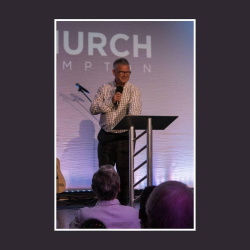
7 commands for Christians: Know what to reject.

Packed into a few sentences Paul manages to give 7 treasured finds of what he believes God wants for our lives.

How should I live? It is in these 7 points.

They are straight to the point, no in-depth explanation and certainly no negotiation.

Here they all are:-

  1. Rejoice always.
  2. Pray continually. 
  • Give thanks in all circumstances.
  • Do not quench the Spirit. 
  • Do not treat prophecies with contempt but test them all.
  • Hold on to what is good.
  • Reject every kind of evil, (1 Thessalonians 5 v 22)

Half-way through my tenure as a Pastor I received a letter from a member. It was this, ‘The Lord would say you should leave the church’. It didn’t give me any more instructions than that. Presumably the Lord wasn’t too bothered on what happened next so long as I left the church. He also helpfully provided the name of the person who would take my place! It was someone loved by the person giving me the prophecy. I called the member to acknowledge the letter and I was then given further instructions ‘not to shoot the messenger’. I obviously didn’t shoot the messenger but I did tear up the message because it fell within the instruction of verse 22.

Discernment is needed. There are times obviously when God does tell people to move on from a Church. But in the testing of how this was done, the context of bringing in another to replace me and because it came from a troubled member at the time I rejected it as an evil.

I have had to learn the hard way with testing and discerning God’s voice. We all do. There are times when God speaks and it is for our protection. Remember Agabus bringing God’s message about a severe famine in Acts 11? The famine happened during the reign of Emperor Claudius. It takes courage to bring such a ‘negative’ word.
Around 7 years before my message to leave the church we were in a wonderful move of God in the church. It was the last Sunday of January 2000 and I was facing a packed congregation during the evening service. They had come to see a special event from a para-church organisation led by a man who had recently joined our church with a ministry that reached out to the vulnerable of society. I had not seen the church so excited for a long time. Even the usual negative people were ultra-positive! God was with the church and leading us into a whole new season. It was all I could have hoped for. 

Then I began to receive a message from God during the last song:

“I believe the Lord is saying that this relationship is like an engagement, tonight is that engagement but it is going to get better for it is leading to a marriage.” However, that is not what the Lord gave me to say. I changed it. I had kept the singing going for longer, for I was battling with the actual word that was given me, a repeated verse of the song may give me time for clarity. If members only knew that they have sung so many extra songs because the Pastor was just trying to work out what to do!

You see the actual word was: “I believe the Lord is saying that this relationship is like a marriage, tonight is the wedding but it is not going to last for it is leading to a divorce.” But I was surely wrong. The signs all around would indicate this was God. He was moving in the church. So I changed it. I could not give such a negative word. I truly believed God wouldn’t give such a word, it must be me. I was making this up. A prophetic word is for edifying and encouraging, right? What I didn’t realise is not every message is for sharing publicly.

I got home that night and after repenting and with tears I promised God I would never change a message He gave me ever again. If He would be gracious to use me with words again I would be honourable to them. The following Sunday graciously the Spirit spoke to me again, again it wasn’t a ‘nice’ word, it was a warning but I was ready to say it exactly as I was hearing it: “The Church would have to walk past a snarling dog but we must know it is chained. The dog is only barking it will not hurt us.”

The next morning I was recording that message through the PA system of the church. I felt I needed to keep it. Though I was on my own I was soon joined by the leader of the para-church organisation. With the sound of my voice going through the speakers I became embarrassed and went to turn it off, but the leader said for me to leave it on. So there we were, me and this man in the church on our own listening to a message about a snarling dog and the Church not to be afraid. 

Within 3 months that man was taking me and the church to the Employment Tribunal. It became the worse 9 months of my life and I nearly ended my pastorate. We won the case but it was a very difficult season. We however walked past the snarling dog, there was much slander, but it was just noise and we survived. We went on to experience a further 13 years of tremendous church growth and amazing things that God did for people.

How did I get through this? How did I lead the church through this season? It was because of the original word that God gave me, even though I had changed it. The word actually wasn’t an evil to be rejected. God had told us it would end in divorce and it had. He then told us we could walk past the slander. The word prepared me and the church, we survived because of the word. I survived because of grace.
Sometimes our message from God isn’t all lovely and exciting and positive. It can be quite difficult to receive. It can look like an evil but it may be a warning. However, we must stay true to what He is telling us. Prophecy encourages, strengthens, comforts and edifies. But sometimes He wants to tell us about a famine to come.

So how do we know it is an evil to be rejected?

  1. Does it sound like the Word of God? Does it sound like Jesus?
  2. Do trusted ‘others’ receive it well?
  3. Does it tempt me away or bring me closer to Jesus?
  4. Does it love with a sacrificial love/agape?
  5. Did it come true (if it contains some prediction)?

7 commands for Christians: Keep hold of the good prophecies

Packed into a few sentences Paul manages to give 7 treasured finds of what he believes God wants for our lives.

How should I live? It is in these 7 points.

They are straight to the point, no in-depth explanation and certainly no negotiation.

“Do not treat prophecies with contempt but test them all; hold on to what is good,” (1 Thessalonians 5 v 20-21)

“If you build for me then I will build for you”. That was the prophetic message that my church that I was pastoring held on to for several years. We were seeking after a bigger building and all our thoughts were on that when presented to us was a particular need in Zambia. The year was 2001 and the challenge put to us was to partner with another organisation in the UK and to buy a building for a church in Ndola, the 3rd largest city of Zambia. But was this wise? We needed our own building so was this a distraction? In a prayer service the prophecy came. If you build for me then I will build for you. God was going to look after us as we looked after His people in Ndola. So we did. We raised the funds and we gave sacrificially despite needing our own place. But we had the prophecy you see and it was a good one! I went to open the building in Zambia holding on to ‘what is good’ knowing that God would do what He said He would do. It would be 10 years later but He did it and the prophecy came true. During those 10 years we held on and the church grew and we saw the most amazing moves of God. It was the best of times. There were moments when I thought would we ever get the building (but we persevered because we had a prophecy. It was a good one and we were holding on to it until the came when we had our grand opening of the new building for the church. God had done it just like He said He would.

And what about you?

There have been lots of prophecies that I have heard in my life so far. But Paul commands us to hold on to what is good. It is because prophecy keeps you on the right path, encourages you when struggling and gives you a cause to passionately work towards.

Hold on to the good prophecies of your church and life! Write them down, talk about them, let them shape your life, pray over them, what God said He will do He will do!

7 commands for Christians: Don’t abuse prophecy

Packed into a few sentences Paul manages to give 7 treasured finds of what he believes God wants for our lives.

How should I live? It is in these 7 points.

They are straight to the point, no in-depth explanation and certainly no negotiation.

“Do not treat prophecies with contempt but test them all” (1 Thessalonians 5 v 20-21)

Prophecy is the speaking to people through supernatural revelation. Whereas the Prophet may well be used outside the Church, prophecy is for within the church (but can also speak to the unbeliever who is present) and comforts and edifies the whole Church. With this in mind we should be desiring this gift and excel in it for who doesn’t want to build up the church?

There are many conferences and church programmes helping us all on how to prophesy. I am certainly not going to teach anything here in this short devotion on how to prophesy. But very simply this is what I do, it is simply this: a) asking God to speak to you about the person/church; b) At the same time remind yourself of all that God has done and is doing for them; c) As your mind focuses on those things and may even speak them out let your heart connect and feel God’s heart of love for them; d) stay in that place of God’s love for them and silently again ask God what He wants to say; e) be confident that God will speak and it may start with a word or subject matter, a picture in your mind or something the person is wearing will cause an understanding not seen before

It is possible that prophecy was being held with contempt, hence the command of Paul. It is still true today. We are called to test prophesies and not despise them. Again this might help some but there are great books and resources for this. This is my measurement in no particular order: a) the opening line is not ‘This is the Lord speaking …’ but rather something like, ‘I believe the Lord is saying this’ b) is it in alignment with the Bible? c) does it build up? d) is it bringing me nearer to God? e) does it set me free or tie me up?

This does not mean prophecy is always clear at first hearing. It is sometimes carried within the mystical which needs prayer and discussion with loved ones to determine what is being said.

Satan wants us to despise the supernatural gifts of the Spirit. He wants to remove them from the Church and our lives and in some places he has managed to do so. It is true that some abuse the gifts today. There are still the doom-sayers today within the church and deception is never far from us. If he can remove faith and replace it with fear then he has won. This is the command Paul is speaking about. Let us not kill off prophecy. Whenever we meet together as Christians there is an opportunity for God to speak through the Written Word and the Spoken Word of prophecy.

7 commands for Christians: Do not quench the Spirit who is wanting to work in and guide your life.

Packed into a few sentences Paul manages to give 7 treasured finds of what he believes God wants for our lives.

How should I live? It is in these 7 points.

They are straight to the point, no in-depth explanation and certainly no negotiation.

Here is the fourth command: “Do not quench the Spirit.” (1 Thessalonians 5 v 19)

But let’s see the whole of the 7 for a moment:

  1. Rejoice always
  2. Pray continually
  3. Give thanks in all circumstances; for this is God’s will for you in Christ Jesus.
  4. Do not quench the Spirit. 
  5. Do not treat prophecies with contempt but test them all; 
  6. Hold on to what is good
  7. Reject every kind of evil.

It sits right in the middle. I think it helps us see what it means to quench Him.

Be joyful, prayerful and thankful = not quenching Him.

Receive prophesies with discernment, seek the genuine and reject the counterfeit = not quenching Him.

To quench is obviously to put out the fire of the Spirit. Fire is a familiar image of the Holy Spirit throughout Scripture. Looking at the list above it reveals how we can create the environment for the Spirit to work and lead us, or we can do the opposite. We can do that in our own lives and in the lives of other people. So these commands are not isolated ones rather they all work towards a purpose and that is not to be indifferent to the Spirit, nor reject Him or doubt Him, for if we have no activity of the Spirit in our lives or churches then what good will we be anyway?

7 commands for Christians: Be thankful in all

Packed into a few sentences Paul manages to give 7 treasured finds of what he believes God wants for our lives.

How should I live? It is in these 7 points.

They are straight to the point, no in-depth explanation and certainly no negotiation.

Here is the third command: “give thanks in all circumstances; for this is God’s will for you in Christ Jesus.” (1 Thessalonians 5 v 18)

The word for thanksgiving is eucharistia where we get our Lord’s Supper/Eucharist from.

We have no choice but to bring thanksgiving, it comes from the sacrifice. His sacrifice of love forces such a response.
When you know you are saved you are thankful.

Thankfulness is missing when we are arguing over what we feel is rightfully ours.

Thankfulness is missing when we complain about our circumstances.

Thankfulness is missing when we devalue people because we hold them responsible for our circumstances.

Thankfulness is missing when we are dismissive of people as not helpful to changing our circumstances.

Thankfulness is missing when the gospel story is not played out in our lives.

Remember the feeding of the multitudes? When the head of the Church gave thanks for what was in HIS hand you knew something was going to happen.

When the Church gives thanks for what it has and who they are and the town and city they belong to then something is going to begin to happen.

Stop complaining. Try thanking. It just may work!

7 commands for Christians: Pray continually!

Packed into a few sentences Paul manages to give 7 treasured finds of what he believes God wants for our lives.

How should I live? It is in these 7 points.

They are straight to the point, no in-depth explanation and certainly no negotiation.

Here is the second one: God wants you to talk to Him all the time, without ceasing, persistently, to “pray continually” (1 Thessalonians 5 v 17).

My granddaughter is starting to talk, I don’t know exactly what she is saying sometimes, but she seems to be talking continually. She talks about all kinds of things and I wonder what she is thinking about it. But now that she has found her voice it seems she intends to use it. The highlight is when she is talking to me for then my heart is full.

Pray. Continually. Constantly. However this doesn’t necessarily mean you use your voice. But it is to remain in connection with God throughout the day and even in the night when you wake. You don’t need to use your voice and you don’t need to be kneeling down. You don’t need to be in the church building and you don’t need to wait for the church service.

Never stop praying. If you have, start it up again. Make a determined effort to pray every day and throughout the day. Stay up late and pray. Get up early and pray. Spend the night in prayer. Fast things so you can pray more.

For when you are praying you are hoping. You are waiting. You are expecting God to answer. When you are praying you are focused on Him. Prayer keeps your eyes lifted upwards even when your heart maybe heavy. When we pray we are acknowledging that we are not alone in this life but there is another presence, the Living God.

7 commands for Christians: JOY!

Packed into a few sentences Paul manages to give 7 treasured finds of what he believes God wants for our lives.

How should I live? It is in these 7 points.

What does God want me to do in life? It is in these 7 points.

7 hallmarks of a disciple; 7 acts of obedience; 7 proofs of genuineness.

They are straight to the point, no in-depth explanation and certainly no negotiation.

Here is the first one: God doesn’t want gloomy, negative, non-smiling Christians!

Rejoice always, 17 pray continually, 18 give thanks in all circumstances; for this is God’s will for you in Christ Jesus. 19 Do not quench the Spirit. 20 Do not treat prophecies with contempt 21 but test them all; hold on to what is good, 22 reject every kind of evil.” (1 Thessalonians 5 v 16-22)

I couldn’t understand why after all the brutalisation from men she was so joyful. “God was with me throughout my suffering” was her answer. I then understood again that joy for the Christian isn’t about being happy with circumstances and things which change like the wind. But it is about being happy in the fact that God is present.

This is an act. To rejoice. I choose to do this. I don’t have to. But I do it because He is with me and He is with me in this situation and condition I find myself in.

Because He went through dark days yes I will walk through valleys.
BUT
Because He rose …I also … will rise! How do I know this? Because the Christian knows ‘God was with me’

So ask a friend what they see and no matter what is going in your life if they don’t see joy then begin to acknowledge that God is with you and start to rejoice about that fact.

In the good times and the bad times I will be joyful.

The members every Pastor wants (or 10 things that make a great church) part 3.

“Hold them in the highest regard in love because of their work. Live in peace with each other. 14 And we urge you, brothers and sisters, warn those who are idle and disruptive, encourage the disheartened, help the weak, be patient with everyone. 15 Make sure that nobody pays back wrong for wrong, but always strive to do what is good for each other and for everyone else.” (1 Thessalonians 5 v 13-15)

So here are the 10 things that make for a great church and what every Pastor wants of their members!

  1. They hold their Pastor in the highest regard because of their work.
  2. They get along with their Pastor.
  3. They warn those who are the ‘freeloaders’.
  4. They warn those who are trying to cause division.
  5. They encourage the disheartened.
  6. They help the weak.
  7. They are patient with everyone.
  8. They make sure no one tries to get even.

So here are the final 2 things that make for a great church and what every Pastor wants of their members!

  • They strive to do good for each other.

Goodness is a life where you look like God, especially in front of your enemies. They may be ungrateful and they may not recognise what you do but He sees. God can see you identify with Him for this is who He is and what He has done and does today. This is the Church. Called by God for people, others before me, people ahead of me, serving, reaching, others all the time, every time. The Church never entertains the thought, ‘Well what about me? What about what I want? How do I feel?’ for these are destructive thoughts.

Some churches are marked by destruction and others by goodness. The fall-outs, the bickering, the gossip, the self-centred victim mentality all destroy. The members every Pastor wants are the ones who are striving for the good not the bad.

  1. They strive to do good to those outside the Church.

A church that is united is a church where community is important, where people matter. But it is not just the community of those who attend church. But those who are yet to do so. We live in a world that is closer together than it has ever been and yet driven apart at the core. The incarnational God left His safety, His glory and got caught up with our mess and failings and history. He did it because He cared. Doing good to those outside the Church means we will leave our comfort zones, our glory and get burdened and involved with the problems of the world. Their problem becomes our problem.

The goodness of the gospel tells of the sacrifice of the Father to send the one He loves to people who are rejecting Him.  It is also the sacrifice of the son to be sent. The Father sends and the son dies. The church wants to live, God wants the church to die for the world. That’s the gospel.

Richard Wurmbrand was 14 years in a communist Romanian prison, he said, “A man really believes not what he recites in a creed, but only the things he is ready to die for.” Come to Jesus and he will fix all your problems is not the gospel. The love from a sacrificial life is a cause, a purpose which needs devotion, focused and disciplined Christians.

In the story of the prodigal Son the father ran to his returning son to get there before the judging community. A Church that believes in the goodness of the gospel runs and embraces the offensive sinful people before the religious condemn them.

You would think that is the prerequisite for a Church. We can all love people who we like or who are similar to us. But doing good to the unlovable is another thing completely!

  1. They hold their Pastor in the highest regard because of their work.
  2. They get along with their Pastor.
  3. They warn those who are the ‘freeloaders’.
  4. They warn those who are trying to cause division.
  5. They encourage the disheartened.
  6. They help the weak.
  7. They are patient with everyone.
  8. They make sure no one tries to get even.
  9. They strive to do good for each other.
  10. They strive to do good to those outside the Church.

The members every Pastor wants (or 10 things that make a great church) part 2.

“Hold them in the highest regard in love because of their work. Live in peace with each other. 14 And we urge you, brothers and sisters, warn those who are idle and disruptive, encourage the disheartened, help the weak, be patient with everyone. 15 Make sure that nobody pays back wrong for wrong, but always strive to do what is good for each other and for everyone else.” (1 Thessalonians 5 v 13-15) The Message says, Overwhelm them with appreciation and love! Get along among yourselves, each of you doing your part. Our counsel is that you warn the freeloaders to get a move on. Gently encourage the stragglers, and reach out for the exhausted, pulling them to their feet. Be patient with each person, attentive to individual needs. And be careful that when you get on each other’s nerves you don’t snap at each other. Look for the best in each other, and always do your best to bring it out.”

So here are 3 more things that make for a great church and what every Pastor wants of their members!

  1. They help the weak.

They called Australian retired salesman Don Ritchie “the watchman.” Each day, he sat in his favourite chair at his cliffside home, he would look up and scan the precipice that took the lives of approximately 50 suicide jumpers each year, trying to discern the intentions of visitors.

When somebody seemed to be lingering too long at the cliff, he walked out to talk to him.

“You can’t just sit there and watch them, you gotta try and save them. It’s pretty simple.”

According to official estimates, Ritchie and his wife Moya saved 160 lives during the 45 years they lived near the Gap Park, a famous cliff frequented by sightseers that affords a beautiful view of the Sydney Harbour. However, the unofficial tally is closer to 400, according to newspaper reports.

Although he occasionally used force over the years, his usual approach was friendliness and persuasion, which often ended in an invitation to join himself and his wife at their home for a cup of tea. A former salesman, he saw himself in a different line of sales at the Gap.

“I used to sell kitchen scales and bacon cutters, then I was state manager of a life insurance company,” he told a reporter. “At the Gap I’m trying to sell people life.” Ritchie didn’t pry or preach, but rather smiled and listened, a technique that often worked, though not always. He lost many to the cliff, but saved more than he lost, and didn’t suffer feelings of guilt for his failures. “You can’t do much about it,” he said.

Although it was difficult for him to remember all of the faces he had seen at the cliff during his decades of residency there, he often recalled a woman who had taken off her shoes and had scaled the small fence bordering the ledge, where she sat with a look of confusion on her face. After talking to her and inviting her in for tea, the woman explained that she suffered from depression, and that the medication she had been given was not working. Ritchie and his wife suggested that she ask for a second opinion. Months later, she sent them a bottle of French champagne, and then a Christmas card thanking them for their help.

For his decades of effort to prevent suicides, Ritchie was awarded the Order of Australia, which is the country’s second highest honour, in 2006, and he and his wife were named citizens of the year by the local city council.

Dianne Gaddin, an anti-suicide activist whose daughter killed herself at the cliff in 2005, thought Ritchie may have talked her daughter out of previous attempts and told a reporter, “It takes an enormous amount of courage just to go up to a person who is going to jump. Don has a charisma about him. He makes people feel safe, secure, and calm. I really think he is one special man.” Don carried on being ‘The Watchman’ until his death in May 2012.

The weak are all around us and the Church needs its members to help them.

  • They are patient with everyone.

A woman rushed up to famed violinist Fritz Kreisler (1875-1962) after a concert and cried: “I’d give my life to play as beautifully as you do.” Kreisler replied, “I did.”

If you plant a Chinese bamboo seed, it will sit in the ground for five years and appear to not be making any changes. Then, over a six-week period, it will grow 90 feet.

There is a giant Himalayan lily which spends most of its life looking like nothing at all but then after 5-7 years it grows to 9-10 feet tall and produces the most amazing delicately shaped flowers.

However, discouragement is never far away from most people. Many are knocked off course. They are waiting for help. Many have become side-tracked, wandering and drifting and they actually accomplish very little. But the church needs members to dust them down, pick them up and help them to make good decisions.  

  • They make sure no one tries to get even.

Do you remember when Jesus said something like give your other cheek to be slapped; give the shirt-stealer your coat as well; if you are forced to go an extra mile then go two? It is the upside down Kingdom that the Church belongs to and who its members focus on which make the church great! This new culture says something like this: “I will not do life like you do life. I belong to a different kingdom to you. I choose a higher level. Not out of arrogance or pompous attitude but simply because I will not stoop down to a level of the world which says I should retaliate by ‘hitting your cheek or saying NO to my shirt, that mile, that ask or the loan. Look down on me, make me look unequal to you and my response to you will show the world that we are indeed not equal. Make my life hard and I will expose your injustice by making your life easy. Make me look like some cattle carrying your bags for a mile (the Romans practiced conscription amongst the citizens) and I will show you I will not be demeaned for I will go the extra mile. My generosity will defeat your conscription. Humiliate me but I will not be humiliated in my heart. My humanity will expose your violent humanity by revealing a bigger heart than what is being shown. I will fight within the Kingdom of Jesus not within your kingdom.” Can you imagine being in such a church?!

For those who don’t want to be like a doormat then decide to be a shoe polisher as well and you will turn the demeaning kingdom upside down!

The final two tomorrow!

The members every Pastor wants (or 10 things that make a great church)

Last night I had a zoom call with a Church Leadership Team at the invitation of their 2 Pastors who were not there. It was to hear of the development of the leadership of the church in the years to come but it was done in this way so that I could ask questions freely and no one would be able to say decisions were unilaterally forced through. Speaking with them one thought was running through my mind and it was this: “I want to be part of this church!” The things that I will write this morning I could see the majority in these people. It isn’t the advertisements on social media and elsewhere that will attract newcomers to the Church. Nor will it be the online services or the events that take place. But it definitely will be the members and how they speak of their church. It is their attitude and responses to life; their kindness and fondness for people, especially their church. Paul has something to say on this matter having spoken on what a Pastor does (they work hard, they care and they admonish).

“Hold them in the highest regard in love because of their work. Live in peace with each other. 14 And we urge you, brothers and sisters, warn those who are idle and disruptive, encourage the disheartened, help the weak, be patient with everyone. 15 Make sure that nobody pays back wrong for wrong, but always strive to do what is good for each other and for everyone else.” (1 Thessalonians 5 v 13-15) The Message says, Overwhelm them with appreciation and love! Get along among yourselves, each of you doing your part. Our counsel is that you warn the freeloaders to get a move on. Gently encourage the stragglers, and reach out for the exhausted, pulling them to their feet. Be patient with each person, attentive to individual needs. And be careful that when you get on each other’s nerves you don’t snap at each other. Look for the best in each other, and always do your best to bring it out.”

So here are the 10 things that make for a great church and what every Pastor wants of their members!

  1. They hold their Pastor in the highest regard because of their work. Just because there are examples of bad leadership where people have been hurt does not take from the fact that the majority of Pastors are loving, caring and work hard for God’s people. I find some of the other cultures of the world who are now sitting in the same church as my own culture are more honouring of their Pastor and are quite shocked when they hear and disrespect or dishonour being spoken. They ‘overwhelm with appreciation and love’ because of the position and the work of their Pastor, something that my own culture sometimes doesn’t do. Thank God that today in most churches we have the cultures of the world to help us!
  2. They get along with their Pastor. When I was leading a church we used to have the Imams of the town come into part of the service to see what we were doing. I remember one day an Imam staying for the whole service and afterwards asked if I could help him and the other 10 town Imams bring unity in their mosques and between each other. He had experienced the culture of our people and wanted the same. I explained to him the difficulty for him was that he didn’t believe in what was the conduit for this peace in the church!
  3. They warn those who are the ‘freeloaders’. One thing I have noticed recently is that the Church are crying out for members to volunteer for a whole bunch of things. A small number of people (sometimes very small!) are doing all the work and the majority are enjoying the fruit of their labours. Further to this where in the past perhaps their thought was that they were paying for this (a wrong approach to tithing) it can now no longer be said. I have never met a member who didn’t believe in tithing but gave more than 10% to the church they attended. It isn’t the job of the Pastor to warn the idle but Paul says it is the member’s task.
  4. They warn those who are trying to cause division. The last 12 years of my Pastorate I developed a group of members who were in retirement, I called them ‘Calebs’ (many of them younger than him granted). I met with them every month for around 4 hours and we prayed together and I shared my life with them, we went on day trips and 5 day holidays, I taught them and presented my dreams for the church with them. What I didn’t realise was that this group of around 20 people became the security guard for my life and the church. They quickly stamped out disruption. They were the ninja bodyguards of the church. Why? They loved what God was doing in the community of the church and they didn’t want it to be destroyed in any way.
  5. They encourage the disheartened. For all kinds of reasons on the fringe of any church are the stragglers. It is the members who can play the encouraging role where miracles can happen even for the ‘straggler’. There was a beautiful and powerful moment in Paul’s life when the members were used by God to bring healing to his life. He was in Lystra and had seen God move powerfully with miracles and then this happened: “They stoned Paul and dragged him outside the city, thinking he was dead. But after the disciples had gathered around him, he got up and went back into the city.” (Acts 14:19-20) In the minds of the Jewish crowd Paul was finished, his mouth shut for good, his missionary journey ended, he was dead. That’s what the enemy loves to do with people. Can you imagine what would have happened if Paul was on his own? Of course, he would have died. What makes for a great church are the members who will watch out for those who are alone. They embrace the straggler. They look for those on the edge. They speak to the discouraged and those who have lost heart, those who are dying inside and they gather around them so that they make a full recovery. That’s what makes for a great church.

I will pause there. That’s enough for one day. I will look at the other 5 on the list tomorrow.