
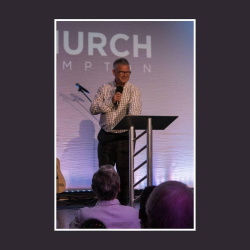
Legacy building

Are you leaving a legacy? 

I’m not asking about an inheritance of money or property but something far more than that. 

I am thinking of the relationships we nurture; parental obviously but also an auntie to her niece and the many relationships where the nurturing of values shape people most closest to us. 

There are so many legacy examples; professional legacies, community legacies, those in education between teacher and student

The most sustainable legacies often aren’t about monuments to ourselves, but about enabling others to flourish. It’s not about being remembered but more about the future generations own lifestyle, being even better than yours. 

This can be seen in these verses:-

“I am reminded of your sincere faith, which first lived in your grandmother Lois and in your mother Eunice and, I am persuaded, now lives in you also.” 2 Timothy‬ ‭1‬:‭5‬ ‭NIV‬‬

Faith didn’t begin with Timothy—it flowed through his grandmother Lois to his mother Eunice, and finally to him.

This was sincere and genuine faith. In chapter 3 we will read how Paul reminded Timothy he had learnt the Scriptures as an infant. Even before she became a Christian, as a Jewess she was sharing her Abrahamic faith and the Old Testament stories with Timothy. She made known the Holy Scriptures till Timothy owned them himself.

This wasn’t performance faith —it was authentic, lived-out faith that shaped daily decisions and character. This kind of faith is so compelling that it naturally influences the next generation. 

Your faith matters more than you might realise. 

Lois and Eunice probably had no idea that their names would be recorded in Scripture as examples of faithful influence. The faith you live out daily—not just the words you speak—creates a legacy that can impact generations.

We are all part of a great chain of faith that stretches back through generations and forward into the future. The faith we’ve received from others carries with it the responsibility to pass it on faithfully to those who come after us.

God works through ordinary people—grandmothers, mothers, mentors, and friends—to accomplish His extraordinary purposes.

Paul’s words to Timothy echo across the centuries to encourage us: the sincere faith that lives in us today connects us to a story much larger than ourselves. We are recipients of an ancient faith and stewards of a timeless truth. What we do with that faith—how we live it, share it, and pass it on—matters not just for our own lives but for generations yet to come.

Whether you’re sitting in a prison cell like Paul, facing the challenges of raising children like Lois and Eunice, or simply trying to live faithfully in whatever circumstances you find yourself, remember this: sincere faith, lived out consistently and shared authentically, has the power to change not just individual lives but entire family lines and communities.

Memory

I love how in these next few verses Paul reveals how he remembered those important to him and the experiences he had with them.

Memory can be a beautiful thing.

 “I thank God, whom I serve, as my ancestors did, with a clear conscience, as night and day I constantly remember you in my prayers. Recalling your tears, I long to see you, so that I may be filled with joy. I am reminded of your sincere faith, which first lived in your grandmother Lois and in your mother Eunice and, I am persuaded, now lives in you also.” (2 Timothy 1 v 3-5)

Paul says he “constantly” remembers Timothy in his prayers – this wasn’t occasional or sporadic, but a regular, ongoing mental habit. We can weave people into a spiritual rhythm of our lives.

He specifically remembers Timothy’s tears, likely from their last parting. This shows Paul didn’t just remember facts about people, but carried their emotional moments with him. The deep impressions that people have made either In the goodbyes or other experience can remain etched in our minds forever.

Paul recalls the faith lineage – grandmother Lois, mother Eunice, and now Timothy. We can hold similar multi-generational stories in our minds, seeing patterns and continuity across time, thinking of those no longer with us but who laid their footprint in the lives of others.

We can carry people with us in a way that shapes our prayers, emotions, and a sense of God’s faithfulness across generations. Our memories can become a bridge connecting past experiences with present prayers and future hopes.

What can you remember today?

Timothy, the ‘son’ of Paul.

This is the second letter to Timothy. The relationship was obvious.

“To Timothy, my dear son: Grace, mercy and peace from God the Father and Christ Jesus our Lord.” .” (2 Timothy 1 v 2)

The letter presents Paul as facing imminent death and writing what appears to be his final words to Timothy, who was leading the church in Ephesus. It reflects a time of persecution and challenges facing early Christian communities.

Of course Timothy wasn’t his son yet their relationship went beyond blood ties. Paul had invested his life, wisdom, and ministry into Timothy and he had proven himself faithful to Paul through years of service and hardship.

Paul’s paternal language toward Timothy didn’t happen overnight. Their relationship began when Paul first encountered Timothy in Lystra (Acts 16:1), where the young man already had a reputation for faithfulness. Over the years that followed, Timothy became Paul’s trusted companion, fellow labourer, and eventually his successor in ministry.

What made Paul a spiritual father wasn’t merely his age or authority—it was his willingness to pour his life into another person. He shared not just his knowledge but his struggles, his victories, and his very heart. This is the essence of spiritual mentorship: the generous giving of oneself for the development of another. That can come from a biological or spiritual father.

Timothy’s role as a “dear son” speaks to his character and response to Paul’s investment in him. He didn’t just learn Paul’s methods; he caught his heart. The relationship worked because Timothy proved himself worthy of the trust placed in him.
He endured hardships, faced opposition, and carried on Paul’s ministry even when it meant personal sacrifice. His loyalty and dedication earned him not just Paul’s respect, but his deep affection.

You may have similar relationships and if you do then you are as blessed as Paul and Timothy were.

Paul was proud to speak of his ‘dear son’.

“I have become a father and I have a son (Timothy). Now imitate me as I imitate Christ.” (1 Corinthians 4 v 16-17). Timothy was not an apostle like Paul. He was a sent minister, a missionary and importantly a dear son or a beloved son (NASB)

For this reason I have sent to you Timothy, my son whom I love ..” v17

His use of language in his letter to the Church in Corinth and here to Timothy are clearly revealing of God the Father and God the Son.

  • The Church needs more Fathers who send and more sons who go. John 20:21 “As the Father has sent me, I am sending you.” There are trapped sons today. The fathers will not send, they keep to themselves, they want to build empires, to preserve their name. Sons want to honour but they want to go.
  • The Church needs more Fathers who love and more sons who know they are loved:

You are my Son, whom I love; with you I am well pleased” Luke 3:22. This is sacrificial love. The sacrifice of the father to send the one he loves to people who are on the verge of rejecting Him.  The sacrifice of the son to be sent. The Father sends and the son dies. The church wants to live, God wants the church to die.

The ministry of Jesus was to reveal the Father. As people looked at the lifestyle of Jesus, saw his personality and character, they saw the beauty of the Father. Do people see the Father in us? Christ’s passion hasn’t changed now that he is in heaven. It is still his desire for our lives that we know the Father. What kind of Father do people experience from the Church? From you and me?

Who is your Timothy? Who is the one you have poured your life into? Who is your Paul?

Celebrate them today. Thank God for them.

Live today in such a way it defies everything that stands against you.

Start your day with knowing who you are; make your first words you communicate, whether by conversation or by message, be the truth of what you know and not what others think they know about you. 

“Paul, an apostle of Christ Jesus through the will of God, according to the promise of the life which is in Christ Jesus, to Timothy, my beloved child: Grace, mercy, peace, from God the Father and Christ Jesus our Lord.”

‭‭2 Timothy‬ ‭1‬:‭1‬-‭2‬ ‭

Until the day he was martyred; no matter the slander thrown at him, nor the situation of the prison he was in; he’s been beaten, whipped, stoned, shipwrecked, he’s suffered many dangers and hardships; but he knows who he is and he know whose he is, an apostle of Christ Jesus. 

This is not ordered by himself. This is God’s will for his life. 

There are times when we need to talk about who we are not what is containing us. 

Your older now; your situation of life maybe more complicated; it could be that you have less time ahead of you than what has gone before; but your calling is still there because the promise never fades. 

Look at those words again. The ‘promise of life’. What is this life?

The word refers to spiritual life- abundant life, eternal life, starting from the first day of meeting Christ. Death looms large, yet Paul begins by emphasizing life. This isn’t denial but defiance—a declaration that even impending martyrdom cannot diminish the reality of the life promised in Christ. Never let your predicament stop your ministry. 

The filter of grace: the beginning and the end of everything

I couldn’t close down this first letter to Timothy without highlighting the last 5 words of Paul. He starts the letter with grace and he ends with it.

“Grace be with you all.” (1 Timothy 6 v 21)

Between the start and the finish the letter contains compelling truth. It hasnt pulled any punches. It is a letter dealing with truth, character, leadership, humility, separation from the world, warnings after warnings about false teaching, spiritual dangers which he lists are many and now he ends with grace.

This is essential.

Truth without grace becomes legalism. Grace without truth becomes sentimentalism. The gospel holds truth and grace in perfect tension.

It should be the hallmark of our Christian lives. We defend the faith not with arrogance but with humility, knowing we too rely entirely on the grace of God for our lives. We always hope for restoration more than compliance or victory.

We ourselves are products of grace. Like Timothy we were called, chosen, equipped and sustained by God’s grace.

Paul didn’t tell Timothy to get into an argument with the dividers of the faith. He told him to turn away, to be kind, to win their hearts not the argument.

Paul doesn’t write these 5 words to be polite. This is theology at its heart. The gospel isn’t about rules to be followed but it is about grace.

Are we known more for our principled lifestyle than our gracious one? Do people encounter a defender of truth or a releaser of grace?

Put this day through the filter of grace and watch what happens to your world.

Hold on to what you know

“Timothy, guard what has been entrusted to your care. Turn away from godless chatter and the opposing ideas of what is falsely called knowledge, which some have professed and in so doing have departed from the faith. Grace be with you all.” 1 Timothy 6:20-21

We have been given a precious message and an important treasured possession; the gospel and its transformational power.

Every one of us. Not just those in the pulpit but also in the pew.

We have been entrusted with it. 

In Paul’s final instructions, that’s what he tells Timothy and he says, “don’t change a thing of what you have been given and don’t let Church members be deceived by what is hidden.”

So what does that mean? 

I heard a prophecy that was given in a picture form of a foot with a sock on it. All looked fine on the outside but when the sock was taken off the foot was festering and weeping. I’ve never forgotten it. 

What Paul says about the early Gnostic ideas were beginning to infiltrate Christian communities. These teachings promised secret wisdom and elevated spiritual understanding but ultimately led people away from simple faith in Christ. It was the sock that looked fine but masked a disease underneath. 

Paul isn’t anti-intellectual—his own writings demonstrate profound theological depth. But Paul believed in holding out against those who offer something that isn’t true and moves them away from what was originally given to the Church.

The challenge for us is the discernment of what is being presented as true, good and successful. Many can be deceived to the point of losing their relationship with the Lord, 

We have to be on our guard with what has been given to us. Let us not be the generation that messes it up. Guard and turn from, that’s what we need to do. 

Being wealthy

I can’t read the following verses without thanking God for a group of friends I have who have given over £100,000 so far this year for mission projects and people around the world. They are ordinary and wonderful people who God has blessed and they are taking that blessing and blessing many others.

We are moving into Paul’s final instructions to Timothy in this first letter.

Command those who are rich in this present world not to be arrogant nor to put their hope in wealth, which is so uncertain, but to put their hope in God, who richly provides us with everything for our enjoyment. 18 Command them to do good, to be rich in good deeds, and to be generous and willing to share. 19 In this way they will lay up treasure for themselves as a firm foundation for the coming age, so that they may take hold of the life that is truly life.” (1 Timothy 6 v 17-19)

To those with wealth:-

  • Your wealth hasn’t made you a better person. It has made you a steward with greater responsibility than most.
  • Your wealth doesn’t give you security. God is your provider.
  • Your wealth means you can bring a positive impact into lots of situations.
  • Your wealth means you can choose a generous lifestyle.
  • Your wealth means you can actively pursue need and opportunities to give rather than wait to be asked.
  • Your wealth mirrors God’s nature.
  • Your wealth when released brings a return of true life marked with purpose, joy and eternal significance.

To those without wealth (so you think):-

  • Where is your true trust? Is God your provider and how are you proving this?
  • Are you known for your generosity?
  • Generosity doesn’t have to involve money.
  • Look around at your ‘stuff’ and ask how you can bless someone with it.
  • To be rich is not to grab and to be willing to give.

Keep going, it is worth it!

Paul’s instructions to his protégé are as important to us today as for Timothy. There are many times when we need to keep looking away from temporary kingdoms of this world that simply compete against each other, to an eternal throne, to the King of Kings, who sits in total victory because He has competed and won everything there is to win. It is there at the throne where we receive our purpose, our orders and where we find our ultimate hope.

“Fight the good fight of the faith. Take hold of the eternal life to which you were called when you made your good confession in the presence of many witnesses. 13 In the sight of God, who gives life to everything, and of Christ Jesus, who while testifying before Pontius Pilate made the good confession, I charge you 14 to keep this command without spot or blame until the appearing of our Lord Jesus Christ, 15 which God will bring about in his own time—God, the blessed and only Ruler, the King of kings and Lord of lords, 16 who alone is immortal and who lives in unapproachable light, whom no one has seen or can see. To him be honour and might forever. Amen.” (1 Timothy 6 v 12-16)

We fight with purpose. Our battle isn’t flesh and blood. It isn’t people. This is a spiritual battle we are in. Our daily choices and interactions reveal this.

We hold in our minds our past declarations of faith. Whether that be our baptisms, our testimony opportunities or even in the most difficult of times, like Jesus before Pilate, we declared who we were and what our purpose was. We bring that to our memory and we move forward on that declaration.

We know time is short. Struggles are temporary. There is a plan and it involves the appearing again of the King of Kings.

We worship God. As we magnify His attributes our problems are placed into perspective.

  • He is the blessed and only Ruler. He is Sovereign. All authority comes from Him.
  • He is the King of kings and the Lord of lords. He is supreme over everything. Every President, leader, monarch answers to Him.
  • He alone is immortal. Our immortality comes through His nature which is immortal.
  • He lives in unapproachable light whom no one has seen or can see. The brilliance of His light cannot be survived to the state and being of humanity.

This is fuel for our fight, the good fight. It makes everything worthwhile. Our problems are temporary for we serve the eternal God with eternal purposes.

And so we declare confidently and victoriously, AMEN!

But you … are different.

Paul has been writing about people who have been destroyed by what they pursued. But you …!

Paul has written about the love of money. But you …!

Paul has told of how people have wandered from the faith. But you …!

Paul has said of how people have pierced themselves with many griefs. But you …!

Paul is speaking to you and me. But you …!

“But you, man of God, flee from all this, and pursue righteousness, godliness, faith, love, endurance and gentleness.” (1 Timothy 6 v 11)

There is a stark contrast. While others may be consumed by materialism and greed, Timothy is called to a different path entirely.
Paul’s choice to address Timothy as “man of God” is both tender and weighty. This title, used throughout the Old Testament for prophets and spiritual leaders, reminds Timothy of his calling and identity. It’s not just what Timothy does that matters, but who he is—a person set apart for God’s purposes.
This designation serves as both encouragement and accountability. Timothy isn’t just another church leader; he’s God’s representative, called to embody divine character in a broken world.

But you …  are different! You are not like anyone else. You are a man or a woman of God.

So get out from all this nonsense. Flee. Run away from anything that competes with your devotion to God.
Run away but run after also. Paul provides a list and says ‘get these things’.

In doing so, we discover that this isn’t merely about moral improvement—it’s about being the people God created us to be.

You can’t take it with you

I am sorry for starting with a joke! But it’s Saturday!

An old miser, due to his terrible cheapness, had no friends nor family. Just before he died he called his doctor, his lawyer and a minister to come see him. They complied, and gathered together around his bed. “I always heard you can’t take it with you, but I am going to prove you can,” he said. “I have £90,000 cash hidden underneath my mattress. It’s in 3 envelopes of £30,000 each. I want each one of you to grab one envelope now and just before they throw the dirt on my grave,  you throw the envelopes in.” Weeks later, the three attended the funeral, and true to their word, each threw in their envelope into the grave. On the way back from the cemetery, the minister said, “I don’t feel so good about this, I am going to confess, I desperately needed £10,000 for a new church we are building, so I took out £10,000 and threw only £20,000 in the grave.”  The doctor said, “I, too, must confess. I am building a clinic and took £20,000 and threw in only £10,000.”  He looked ashamed.  The lawyer said, “Gentlemen, I’m surprised, shocked and ashamed of both of you. I don’t see how you could in good conscience hold on to that money. I threw in a personal cheque for the entire amount.”

We are born empty-handed and we die empty-handed. Paul knew this and he declares a sobering truth:

For we brought nothing into the world, and we can take nothing out of it. 8 But if we have food and clothing, we will be content with that. 9 Those who want to get rich fall into temptation and a trap and into many foolish and harmful desires that plunge people into ruin and destruction. 10 For the love of money is a root of all kinds of evil. Some people, eager for money, have wandered from the faith and pierced themselves with many griefs. (1 Timothy 6 v 7-10)

In a world obsessed with accumulating wealth, status symbols, and material possessions, these four verses from Paul’s letter to Timothy cut through the noise like a sword. 

If everything we own is temporary, how much energy should we really invest in accumulating more?

Contentment is not settling for less; it’s recognising when we have enough. 

The pursuit of wealth creates opportunities for compromise. How many people have cut ethical corners, neglected relationships, or abandoned their values in the name of financial gain?
The love of money breeds other destructive appetites—for power, recognition, control, and pleasure. These desires often lead us away from what truly satisfies the human soul.
Ultimately, the relentless pursuit of wealth can destroy not just our finances, but our relationships, our integrity, and our spiritual lives.
Perhaps the most misquoted verse in this passage is verse 10: “For the love of money is a root of all kinds of evil.” Notice Paul doesn’t say money itself is evil, but rather the love of money. The Greek word used here suggests an intense affection or desire—making money an idol.
When we love money, it becomes our master rather than our tool. It shapes our decisions, priorities, and relationships. It promises security, significance, and satisfaction—but these are promises only God can truly fulfil.
Paul notes that some, “eager for money, have wandered from the faith and pierced themselves with many griefs.” The imagery is striking: people impaling themselves with sorrows in their pursuit of wealth. The very thing they thought would bring happiness becomes the source of their deepest pain.
We entered this world with nothing, and we’ll leave with nothing. But in between, we have the opportunity to find true contentment not in what we accumulate, but in the One who provides all that we truly need.