
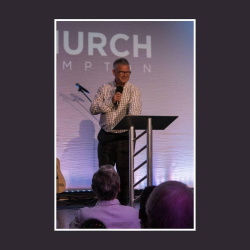
That one thing.

That one thing.

Luke 18: 39-43 “Those who led the way rebuked him and told him to be quiet, but he shouted all the more, “Son of David, have mercy on me!” 40 Jesus stopped and ordered the man to be brought to him. When he came near, Jesus asked him, 41 “What do you want me to do for you?” “Lord, I want to see,” he replied. 42 Jesus said to him, “Receive your sight; your faith has healed you.” 43 Immediately he received his sight and followed Jesus, praising God. When all the people saw it, they also praised God.”


And He asks you also, “What do you want me to do for you?”

It may be obvious. You’d think He would know the answer. He does.

But He wants you to know what that one thing is?

Do you know it?

Tell him.

– It is what it is –

– It is what it is –

Luke 18: 35-43

As Jesus approached Jericho, a blind man was sitting by the roadside begging. 36 When he heard the crowd going by, he asked what was happening. 37 They told him, “Jesus of Nazareth is passing by.” 38 He called out, “Jesus, Son of David, have mercy on me!” 39 Those who led the way rebuked him and told him to be quiet, but he shouted all the more, “Son of David, have mercy on me!”

‘It is what it is’ is a phrase that has been developed in our lifetime, voted as the number 1 cliché phrase in 2004, it continued to be used a lot so that now there is hardly a day goes by without hearing it from someone.

It usually means, ‘I cannot fix it, it is out of my control, I cannot change it, it is immovable.’

Jesus with his disciples and a large crowd were approaching Jericho on their way to Jerusalem.  They are about to pass by a man who has not until today found a way to deal with the major issues of his life.

We all have something that needs to be overcome and in some cases it may well remain with us all our life.  Sometimes they are hidden from most people and at times, like with this man, they are not.

Beggars were often seen outside either the Temple or the city gates. It was there that they were best able to capture the passing traffic, hoping for some coins, some alms-giving.

This was just another ordinary day for the beggar. However, he was ready for his day to change. He had lived with hope even beyond hope. He had never given up the thought that his sight would be restored. It was this that had moved him to become a seeker of the Healer.

You must never allow your problem to set your pace and plot your course. ‘It is what it is’ does not have to be said over your situation.

When the beggar is told who it is who is passing notice what he does not say: ‘Can anything good come out of Nazareth?’ Something that Nathanael probably lived to regret saying.

It was to Nazareth, a remote tiny Galilean town that angel Gabriel came to a young virgin girl named Mary. To Nazareth, a town so insignificant it wasn’t even included on the census lists of that time. It was here that  Gabriel announces: “Greetings, Mary, you who are highly favoured!” Mary of Nazareth was chosen for a unique role.

A blind beggar on the roadside of Jericho at the feet of a man from Nazareth. It is what it is. NO!

That’s not the picture that the man has in his mind. That’s not how he is going to let it end.

It doesn’t matter where you have come from (Nazareth) nor where you are now (the Jericho roadside) it doesn’t have to be the place you remain at.

Get over yourself.

And then: Magnify God in your life.

Somehow this man turned his attention from ‘Jesus of Nazareth’ to ‘Jesus Son of David’. At some point he had come to know that Jesus was more than just a man. He was the Messiah and as such He would open blind eyes to prove that He was indeed the Anointed One.

Magnify God in your life. He is bigger than your situation and circumstance. Don’t pronounce ‘It is what it is’ when He is bigger than you can ever imagine.

It is what you accept. So what will you not accept today? Especially when Jesus is passing this way.

_

When your friends don’t get it …

Luke18:31-34

Jesus took the Twelve aside and told them, “We are going up to Jerusalem, and everything that is written by the prophets about the Son of Man will be fulfilled. He will be turned over to the Gentiles. They will mock him, insult him, spit on him, flog him and kill him. On the third day he will rise again.” The disciples did not understand any of this. Its meaning was hidden from them, and they did not know what he was talking about.

Alone. Aside with Jesus. Again.

This is the third time that they have heard this and still they don’t understand.

The meaning for the reason of the coming of Christ was hidden from them by their prejudice and belief that they would conquer with Him. They knew their Scriptures of the glorious impact of the Messiah but their hope and excitement of his glory blinded them to the necessary suffering. They just couldn’t see it.

This is the approach, vulnerable, like a child.

This is how you give up everything.

This is the path of Christ.

There are times when you have to face the fact that no matter how many times you tell people, they don’t understand. Sometimes it’s a lonely path to be true to who God wants you to be. Even people who love you and follow you may think differently about the direction you are taking. Their desire for you may blind them to your path.

They have plans for you.

Plans for your prospering, to do well in life, to be happy.

They want you ‘settled down’ (whatever that means).

A friends ‘everything’ is always too much to give.

You need to learn to navigate this.

It is harder to take people with you who don’t fully understand where they are being taken. That’s leadership.

My children’s desire for a move of God and my parents self-denial which just may prompt one.

My children’s desire for a move of God and my parents self-denial which just may prompt one.

Luke 18:25-30

“ Indeed, it is easier for a camel to go through the eye of a needle than for a rich man to enter the kingdom of God.” Those who heard this asked, “Who then can be saved?” Jesus replied, “What is impossible with men is possible with God.”

Peter said to him, “We have left all we had to follow you!” “I tell you the truth,” Jesus said to them, “no-one who has left home or wife or brothers or parents or children for the sake of the kingdom of God 30 will fail to receive many times as much in this age and, in the age to come, eternal life.”

As opposed to the ruler who wouldn’t create the lack in his life for Jesus, Peter and the disciples had.

They had left all for Jesus and he knew it. He knew they had left their homes and their families for Him.

But He also knew that they would gain in this life, ‘in this age’, new homes of fellowship and new families filled with wonderful relationships.

As a child in the Salvation Army I remember a mission fund-raising term though I have only vague recollection of it. ‘Self-Denial week was held once a year and my parents having been Officers (minsters) for many years entered into this whole-heartedly. Throughout my life I have noticed self-denial being part of their life. Even after they left the Salvation Army and came into the Elim Pentecostal Church, self-denial followed them. They have given away practically everything they have ever bought to either the church, someone in need, a mission project or a neighbour next door.

There is a lot of talk on discipleship today. But I don’t hear a lot of talk of leaving things behind, of self-denial.

Last night I spent the evening talking with my children about the modern day ‘revivals’ that have happened but that how they occurred as the church people gave up many things, they surrendered their lives to host the presence of God but also they were willing to serve the crowds from around the world that came to their daily services. They weren’t in church for their own interest. They were not clock-watching, tithe-robbing, gossip-spreading, murmuring members of the church. They had left all. They had surrendered all. They had given all to Jesus. Maybe if we could see more of this in the nations churches then we would have more sovereign moves of God. Maybe.

But one more thing. Our eternal home and our life there seems to be impacted by our deposit in our life on this earth. Perhaps we should live more in the light of that fact than we do. What we give up now for the kingdom will be restored to us in our eternity. One day, surrounded by eternal riches (whatever they are) we might be able to say, “We have left all we had to follow Jesus!” It will be so worth it!!

There’s no approach to Jesus without lack.

Luke 18: 20-24

“You know the commandments: ‘Do not commit adultery, do not murder, do not steal, do not give false testimony, honour your father and mother.'” “All these I have kept since I was a boy,” he said. When Jesus heard this, he said to him, “You still lack one thing. Sell everything you have and give to the poor, and you will have treasure in heaven. Then come, follow me.” When he heard this, he became very sad, because he was a man of great wealth. Jesus looked at him and said, “How hard it is for the rich to enter the kingdom of God!”

Luke positions this story immediately after Jesus saying we can only enter the kingdom as little children. The contrast of the children and this ruler is huge. You would have thought he would have no problems as a leading figure in the Jewish community and most probably the Temple.

Jesus mentions the 5 commandments that are focused on relationships with people. He has kept and is keeping these commandments of God but he still lacks assurance.

I believe Jesus does this for a reason.

He could have mentioned the other 5 commandments: You shall have no other gods before Me; You shall make no idols; You shall not take the name of the Lord your God in vain; Keep the Sabbath day holy; You shall not covet.

But he doesn’t.

Jesus focuses on the commandments that deal with people.

If this man had walked into many churches we would have got him saved and certainly a tithing member as soon as possible! However, Jesus seems to purposely offend this man and to make it so difficult for him.

Jesus doesn’t say “repeat the sinners prayer and you’ll get eternal life,”

He says this and it is all pointed towards the commandments he has kept in reference to people.

You have everything

You have done everything

But you lack one thing

There is no lack in your life.

In the one area where you are rich the most, in your relationships, here is what you must do.

This is not another commandment for you to accomplish perhaps using your riches as a crutch.

Sell everything.

Give to the poor.

Lay your life down.

Come to me with lack.

Come to me with nothing.

This is how you follow me.

With lack.

Total reliance on me for your salvation and eternal life.

The response of the man was that the earthly actually mattered more than the heavenly and Jesus knew it.

It is hard for those who have it all because they have no lack, no desperate need, no longing. They are full.

If only the ruler had been like the little children!

When we come before Jesus it is what is not in our hands that is important. We cannot carry our qualifications, titles or our achievements. They are as Isaiah says ‘filthy rags’.

We come with nothing, with lack, with the vulnerable need to be with Him.

Jesus is God

Jesus is God

Luke 18:18-19 “A certain ruler asked him, “Good teacher, what must I do to inherit eternal life?””Why do you call me good?” Jesus answered. “No-one is good-except God alone.”

Luke again sets this story in the whole context of humility, character and discipleship.

Here comes a ruler. He is probably a Jewish leader in the synagogue, certainly has a status in the community, a respected authoritative figure.

The other gospels set this towards the end of Jesus’ ministry and even here in Luke after the account, Jesus is telling his disciples they are going to Jerusalem.

Mark says the ruler ran and fell on his knees. It’s an interesting detail that Luke doesn’t provide but because of the context shows is this is the rulers last chance to deal with the uncertainty in his life. The question he asks isn’t like any other from the Pharisees. He was genuine. His main concern was what happens after he dies.

In the dirt lay a ruler before the King asking about eternity.

It’s where we all end up at some point: Worshipping from the position of dirt;

Realising there’s nothing much we can do to guarantee where we have never travelled before;

Needing someone beyond us who can lead us further than any other.

And he asks the confusing question. Well actually the response from Jesus is more confusing unless you see it like this:

Response from Jesus: “what are you saying? Only God is good. Are you calling me God?”

He wasn’t. But Jesus brilliantly handles this situation which leaves us with a smile on our face. He does it a lot.

The power of humility for the kingdom

The power of humility for the kingdom

Luke 18:15-18

“People were also bringing babies to Jesus to have him touch them. When the disciples saw this, they rebuked them. 16 But Jesus called the children to him and said, “Let the little children come to me, and do not hinder them, for the kingdom of God belongs to such as these. 17 I tell you the truth, anyone who will not receive the kingdom of God like a little child will never enter it.”

Luke alone places this event after the parable of the Pharisee and tax-collector and before the encounter with the rich man. Matthew and Mark also position it before the rich man but after Jesus answering the trick questions of the Pharisees.

Why is this important?

Placing this story highlights the importance of the power of humility. Little children in the other gospels and Babies here in Luke. The word means small children. The picture is of noise, fun, a not very orderly occasion!

Parents would bring their children to the religious leaders for a blessing prayer on special occasions of the year.

So what is Jesus teaching here. It is the power of humility. Before Jesus that day was:

1. Potential without pride.

2. Innocence without importance.

3. Desire without duty.

4. Calling without coldness.

5. Hunger without hesitation.

These are the requirements for the kingdom and these are what will keep you out of it.

Self-awareness leads to honour

Self awareness leads to honour

Luke 18:13-14 “13 “But the tax collector stood at a distance. He would not even look up to heaven, but beat his breast and said, ‘God, have mercy on me, a sinner.’ 14 “I tell you that this man, rather than the other, went home justified before God. For everyone who exalts himself will be humbled, and he who humbles himself will be exalted.”

God is silent. He doesn’t praise the Pharisee and He doesn’t condemn the tax-collector. We don’t know what God thinks. Left to our own judgment on who God is pleased with the most, we may side with the Scripture-believing, spiritual leader who desires to please God. He seems a nicer man. He hasn’t committed sin. He paints a nice picture of himself. A man of thankfulness.

Yet this tax-collector is the opposite. He cannot even get close to the altar. He cannot look to heaven. He has nothing to give thanks for. All he can say is ‘sorry’ and he really does need to do that!

But neither of them know.

They may think they know.

The Pharisee probably banks on it being him.

The tax-collector knows it’s definitely not him. (At the time of Jesus these people were viewed by the Jews as thieves and betraying their own people for fraudulently collecting taxes.)

The difference between these 2 men is actually self-awareness.

Self-awareness is needed in the Church from the pulpit to the pew.

We tend to believe what people say about us which may be outdated, a dose of flattery or of course the reverse, something cruel),

We may think we are a very loyal and committed friend, this is a high value to us. But without self-awareness we may misread certain events even if we have made a mistake towards that friend as not our fault and certainly not contrary to our identity as being very loyal to our friendships. We lack self-awareness.

Pleasing God involves self-awareness. But within that self-awareness in the presence of God there lies the miracle of provision.

Self-awareness can be lacking in the one place you would expect to find it the most.

The good are not that good.

The bad are not that bad.

Jesus ends the parable with the result.

One man will be honoured eventually.

Self-awareness leads the way.?

It’s not what you think. It never is.

The humble brag

The humble brag

Luke 18: 11-12 “ 11 The Pharisee stood up and prayed about himself: ‘God, I thank you that I am not like other men-robbers, evildoers, adulterers-or even like this tax collector. 12 I fast twice a week and give a tenth of all I get.’

The humble brag. Don’t you just get tired of it? I see it a lot in ministry circles:

“It was a privilege for me to lead 500 people to Christ tonight, thank you for the invite.”

How wonderful to stand and open up the prayer with thanksgiving?

However …!

He prayed about himself. When will we stop praying the same prayers? Can we grow in our praying? Will we ever turn away from ourselves?!

The humble brag: “Thank you for what you have done for me. In that, I am better than most. Especially than the man next to me”.

Being the better man is not about what you do or don’t do. It’s about who you are.

Yet every humble brag is about what we do. It means very little in the bigger picture of the kingdom.

You may not rob people or God as you give a tithe of your income.

You may even have such self-control you are able to fast twice a week as opposed to those who just have to have it all, the greedy and the unfaithful.

The humble brag deceives you because it points you to your activity and not who you are. For example it will show you of an act of kindness that you did but hides that your heart is unkind. The act of kindness means nothing when your heart is unkind to the man standing alongside you, even if he is a tac-collector.

The craziest thing is that the humble brag happens before God. He knows!

May we speak of Him and less of us.

On the surface

On the surface

Luke 18:10 “Two men went up to the temple to pray, one a Pharisee and the other a tax collector.”

A parable regarding those who considered themselves righteous and looked down on others.

2 men. Both equal in sex.

1 Temple. Both share the same place of worship.

1 purpose. Both equally going to pray.

They are equals. But not really.

I wonder who is most righteous?

I wonder who is lesser than the other?

It’s obvious isn’t it?

Only if you understand the parable.

On the surface the tex collector is the lesser.

The Pharisee is the righteous one.

The surface can be wrong.