
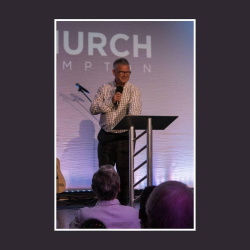
Palm Sunday – we are not fickle we are established!

We celebrate today on this Palm Sunday when Jesus rode into Jerusalem to the crowds cheering but who had totally misunderstood the scene. Jesus’ response was this: ‘I’m not that kind of hero’. I’m here as a different king to the one you are used to.” They missed it then and some still do. At the start of the week the people were cheering Jesus and by the end of that same week they were jeering Him. The people were fickle.

Daily we make the choice not to approach life the way the world does and not be governed by the desires and the longings that humanity has. We now know ‘the man on the donkey’ moment could well be God in Humility, the Suffering Servant and so we don’t dismiss or try to misinterpret what we see. For we train ourselves away from the domain and sphere of humanity to that of the Holy Spirit. In doing so we step into the atmosphere of the Spirit where He breathes, moves, lives and acts through our lives, as we align ourselves with Him.

We are not fickle but we are established in Him. This is the message of Paul.

“Now it is God who makes both us and you stand firm in Christ. He anointed us, 22 set his seal of ownership on us, and put his Spirit in our hearts as a deposit, guaranteeing what is to come.” (2 Corinthians 1 v 21-22)

So we celebrate the fact that today:

  • You are anointed for service, empowered to go, be and do. As we see the great men and women in the Scriptures who were anointed we see a mirror of ourselves today.
  • You are sealed. You belong to God. The Spirit is on you and He protects you and sets you apart. You are different.
  • You have a guarantee. The best is yet to come. Greater things are coming.

That ride into Jerusalem would be the start of our lives being changed forever!

Hold on to who you have become today!

Never doubt the promises of God

Paul was accused of being unreliable for changing his travel plans. His response isn’t only to defend himself but he takes the opportunity to teach the most wonderful truth. If he hadn’t faced such accusation we would never have received such inspiration by the Spirit.

“But as surely as God is faithful, our message to you is not “Yes” and “No.” 19 For the Son of God, Jesus Christ, who was preached among you by us—by me and Silasand Timothy—was not “Yes” and “No,” but in him it has always been “Yes.” 20 For no matter how many promises God has made, they are “Yes” in Christ. And so through him the “Amen” is spoken by us to the glory of God.” (2 Corinthians 1 v 18-20)

So what does Paul say? What do you perhaps need to hear this morning?

  • Paul was not being fickle because he aligned himself with the reliability of God. He and the team had preached the reliability of God so how could they not in turn be unreliable? They preached and they practiced what they had experienced.
  • God is faithful. We can trust His promises.
  • God’s promises are found in Jesus Christ. Our relationship with Him is vital for those promises.
  • God can be trusted. So we say ‘so be it’ or ‘let it be’ or ‘truly’ or indeed Amen! This is not some passive response but an active participation. We are stepping up to walk in the shadow of those promises.
  • God will never let you down.

Are people just unreliable or are we just too rigid?

Paul was bring accused of being unreliable because though he told them about him coming to see them he actually changed his mind. How annoying!

What happened was this:-

  • Paul promised to visit, After I go through Macedonia, I will come to you—for I will be going through Macedonia” (1 Cor 16 v 5)
  • Paul did visit but it was a difficult one, “So I made up my mind that I would not make another painful visit to you.” (2 Cor 2 v 1)
  • Later he was slandered by a man and we will see this later in 2 Cor 2 v 5-10.
  • Paul changed his mind and decided it best not to visit again.

“Now this is our boast: Our conscience testifies that we have conducted ourselves in the world, and especially in our relations with you, with integrityand godly sincerity. We have done so, relying not on worldly wisdom but on God’s grace. 13 For we do not write you anything you cannot read or understand. And I hope that, 14 as you have understood us in part, you will come to understand fully that you can boast of us just as we will boast of you in the day of the Lord Jesus. 15 Because I was confident of this, I wanted to visit you first so that you might benefit twice. 16 I wanted to visit you on my way to Macedonia and to come back to you from Macedonia, and then to have you send me on my way to Judea. 17 Was I fickle when I intended to do this? Or do I make my plans in a worldly manner so that in the same breath I say both “Yes, yes” and “No, no”? (2 Corinthians 1 v 12-17)

The Corinthians cynicism said this, “Paul you say this but you don’t mean it. You said you would come but you never intended to do so. Out of your mouth comes Yes and at the same time No.”

Paul is defending himself and in doing so he teaches us about this challenge of being reliable but also not rigid in our decisions. He is saying to them he never had hidden motives. He is committed to his relationship to them with integrity and sincerity which means that even when circumstances change I will remain committed to my relationship with you. But here is the key: our relationships must contain the flexibility so that wisdom, love and especially the Holy Spirit can guide our decisions. It means that integrity in relationships isn’t necessarily about unchanged plans but being consistent to the values of that relationship as circumstances change.

There are times in all our lives when after making commitments, circumstances change that we never saw come nor did we create those changes, they just happened and the wisdom of the Spirit releases us from being stuck to them. This is not using flexibility as an excuse for unreliability. But it is allowing for freedom to change original plans because wisdom says so.

Trust in times of suffering

We don’t know what Paul’s suffering was but we know it was bad. It could have been the “wild beasts” in Ephesus (1 Corinthians 15:32), or how he described later the 39 stripes after being brought before a Jewish court (2 Corinthians 11:24), or the riot at Ephesus (Acts 19:23-41) or some physical harm from disease. In these next sentences he calls for us all no matter what we are going through to trust God.

“We do not want you to be uninformed, brothers and sisters, about the troubles we experienced in the province of Asia. We were under great pressure, far beyond our ability to endure, so that we despaired of life itself” v8. Trust is knowing that the gauge for what God wants us to go through is not our ability to cope.

“Indeed, we felt we had received the sentence of death. But this happened that we might not rely on ourselves but on God, who raises the dead” v9. Trust begins when we are no longer in control of a circumstance; it does not mean we will not be defeated, but if we are then it means we will re-emerge.

“He has delivered us from such a deadly peril, and he will deliver us again. On him we have set our hope that he will continue to deliver us” v10. Trust is based on our past experience giving confidence to our present situation leading to us knowing that in the future He will do it all over again.

“ …as you help us by your prayers. Then many will give thanks on our behalf for the gracious favour granted us in answer to the prayers of many” v11. Trust is fuelled by the prayers of others.

(2 Corinthians 1 v 8-11)

The Power of Paraklesis

This morning we are reading one of the most profound passages on the power of paraklesis. It means to call near. It can be used to comfort someone who is hurting but it can be directed to God when I am hurting and I need Him. Incredibly it can be directed to us from God also.

“Praise be to the God and Father of our Lord Jesus Christ, the Father of compassion and the God of all comfortwho comforts us in all our troubles, so that we can comfort those in any trouble with the comfort we ourselves receive from God. For just as we share abundantly in the sufferings of Christ, so also our comfort abounds through Christ. If we are distressed, it is for your comfort and salvation; if we are comforted, it is for your comfort, which produces in you patient endurance of the same sufferings we suffer. And our hope for you is firm, because we know that just as you share in our sufferings, so also you share in our comfort.” (2 Corinthians 1 v 3-7)

I highlight the word because you are never going to read a few verses in the New Testament with such repetitiveness. Why does Paul repeat it so much? He does it because of the suffering that Christ endured on the cross. As we approach this Easter season let us again be reminded of the power of Christ’s sufferings for us. In whatever way you might be suffering it doesn’t need to be senseless, empty and the total focus of your life. Through Christ your suffering can become paraklesis, you can ‘call near’ and He will come. The suffering can be abundant but also the comfort can abound.

These verses are written from someone who knows. He isn’t specific yet but we read between the lines and we know that this is a person who has suffered. He knows what he is talking about. Now if all he and us have known is suffering then our talk is negative, complaining and depressing. But it isn’t. For we have been to the cross of Christ. More than that we have prayed the paraklesis prayer and we have known this comfort. We have something positive to declare other than, “Me too!” Don’t you find it annoying that when you share your story of suffering that someone in reply says ‘oh I know you should hear what happened to me!” This isn’t that.

In fact for Paul he sees that his paraklesis life is not only testifying but it is leading others to have the same life. He is teaching others to carry the cross as he does for as we do we hear the paraklesis call to come near to Christ.

In whatever way you are weak and suffering today make sure you enter into paraklesis for He is near. Where He is, there will be all the encouragement and comfort you need as He comes alongside you.

The Paraklesis prayer is simply this: Come near!

He is here. With you. In your suffering. Holding you. Understanding you.

And that is comfort.

Do you know these 5 truths today?

So we turn the page from 1 Corinthians to the second letter so easily and we can miss the gap and the context which are so important. We will get to those as we continue to read over the weeks to come. The Holy Spirit will speak through the verses we read.

“Paul, an apostle of Christ Jesus by the will of God, and Timothy our brother, To the church of God in Corinth, together with all his holy people throughout Achaia: Grace and peace to you from God our Father and the Lord Jesus Christ.” (2 Corinthians 1 v 1-2)

From 1 Cor 5:9 the first letter was lost. Paul had written to the Church not to associate with those who claim to be Christian. The Holy Spirit did not preserve that letter which had been misunderstood. Paul had to write again (1 Corinthians) which was re-addressing what he had meant.

We will read later how he decided to make a visit to the Church in Corinth which didn’t go down too well and so he writes a third time and this was a severe letter (again we will get to that). Now this letter seemed to do the trick because there was improvement in the Church (again we will get to that) and so he begins to write his fourth letter (2 Corinthians).

Paul realises every word is scrutinised and so every verse is important for us. In fact in the opening 2 verses we have 5 important truths for us to know. Whether a new or seasoned Christian these are so important for us all.

  • Know your personal divine calling and commission. Paul, an apostle of Christ Jesus by the will of God – our identity isn’t found anywhere else but in the fact that we have a purpose, a calling and that it comes from God alone. Never let anyone diminish that in your life. Never be robbed of this. Even if circumstances change and though you may go through many challenges never give up on this truth, He called you and commissioned you.
  • Know you’re not alone. and Timothy our brother. Your life is meant to be lived collaboratively. It doesn’t mean you have to travel with people with the same callings, Timothy wasn’t an apostle, but do make sure you have people who also know God’s calling and commission. Surround yourself with people who believe in you and your purpose. Find that friend and they become far more, they become your brother/sister.
  • Know the Church belongs to God. To the church of God in Corinth. We think we know it but right now especially in the Western Church this appears not to be so. Knowing the Church belongs to God means we will never abuse it. It doesn’t mean leaders are not strong, in fact Paul did send a severe letter, but they don’t crush, they don’t mistreat or belittle. At the same time we as believers must know we belong to God. We are not our own. So we live for Him. We don’t self-abuse.
  • Know that we belong to a larger Church. together with all his holy people throughout Achaia. This was the Roman province which included all of Greece, a large area. If all you know is your own culture then you will not know much of God. We are so blessed in the Western Church that the nations of the world have come to us and they give us a global view of who God is and what He does.
  • Know the power of blessing. Grace and peace to you from God our Father and the Lord Jesus Christ. Be blessed and be a blessing is the key. We live in a world of anger and condemnation. It is so important that we know a) the unmerited favour of God as the foundation of our life (grace) and b) the reconciled relationship with God (peace).

If you really loved Jesus ….

The behaviour of some Church people today is questionable just as it was in the days of Paul. The Corinthian church was fractured by divisions, the toleration of serious moral failures and struggling with theological confusion.

“If anyone does not love the Lord, let that person be cursed! Come, Lord! The grace of the Lord Jesus be with you. My love to all of you in Christ Jesus. Amen.” (1 Corinthians 16 v 22-24)

Yes a stern word. If you really loved Jesus you wouldn’t be like this, is the meaning behind it. The stark contrast of anathema (cursed) meaning separated from God and Maranatha (Come Lord) stands poles apart. Paul knows that genuine love for Jesus is seen in obedience. Yet this urgent plea for the return of Christ was in the minds of all the believers as they longed for Christ to come and make everything right again.

More grace is needed says Paul and he ends with his love for them all.

What he leaves us with after what has been a strong but loving letter is the fact that an unwavering conviction, boundless grace, firm correction and genuine love is to be found in the Christian community who love Jesus. If you really loved Jesus. We do. Held in that complexity is the threat of being separated from God’s presence, the longing for the return of Christ, unmerited favour and above all, agape love.

Putting my name to this

We are nearly at the end of this letter to the Church in Corinth. Paul co-wrote it with a man known by everyone, Sosthenes, or perhaps he transcribed as Paul dictated his letter (1:1). Here we see something interesting:

“ I, Paul, write this greeting in my own hand.” (1 Corinthians 16 v 21)

Paul makes a deliberate choice to put his name on the letter by personally signing it.

In doing so he brings authentication, personal connection and also emphasising his own personal desire and investment into their lives.

It encourages us in our walk of faith:-

  • Just as God became flesh in Christ and Paul embodied himself into the truth of this letter by signing it, the gospel isn’t only something we believe but we carry in our hearts, we speak with our mouths and we carry out actions with our own hands. We put our name to the gospel.
  • By signing his name Paul stands by everything he has had written and even the rebukes he has given. He wasn’t hiding behind Sosthenes and we don’t hide either. We don’t hide behind what the Church believes or because we were brought up this way. No we have put our name to the gospel.
  • Paul bridges the gap by signing this letter. They are distant geographically but he wants to draw near. We know small gestures do carry weight. The most meaningful acts of kindness are usually the smaller ones even those that mean you put your name on the letter.

The Bible isn’t a book of doctrines it is a divine inspiration fueled through living communications.

Church Kisses

“Greet one another with a holy kiss.” (1 Corinthians 16 v 20)

So wherever you are reading this from in the world you might have a different way to greet one another.

A Tibetan? You might be sticking your tongue out!

An Indian? You might be kneeling and touching the feet of the other.

From South East Asia? You could be touching noses.

A European? Depending on the country you will be doing some air-kisses from one, two or even three times!

The Apostle has a European flavour but it has to be a holy one!

Why?

It seems Paul is wanting them to physically connect. To know the power of touch.

He wanted them to have something tangible happen in their greeting.

“Give each other a big hug” or if you’re a more conservative Christian, “Give each other a hearty hand-shake”.

A cursory look online at the traumatic sad stories of feral children raised with little or zero human contact and you realise the power of touch.

Greet one another not only with words but make sure you all know the feeling of being loved, appreciated and wanted. The power of touch heals, restores and connects us into a wholesomeness of our well-being. Perhaps Paul was on to something which we now know is vital for our lives. So go hug someone today or pucker up so long as it’s holy. If you’re nervous, sanitise your hands for a really good handshake.

Your Church leaders have a story to tell

They didn’t just become a church leader. Your leader has a story. Ask them.

“The churches in the province of Asia send you greetings. Aquila and Priscillagreet you warmly in the Lord, and so does the church that meets at their house. 20 All the brothers and sisters here send you greetings.” (1 Corinthians 16 v 19-20)

Can you imagine these churches that met in the homes of believers? What did they do? They probably shared meals together, worshipped together and supported one another through the challenges of life. It was probably far more than a 90 minute service on a Sunday. But these church leaders had a story. It was one of determination and passion to serve Jesus despite their circumstances. I wonder if they shared their stories with their church? I am sure they did.

Paul names the couple. Do you remember this verse? “Greet Priscilla and Aquila, my co-workers in Christ Jesus. They risked their lives for me. Not only I but all the churches of the Gentiles are grateful to them. Greet also the church that meets at their house.” (Romans 16 v 3-5)

Aquila originated from the south shore of the Black Sea and had settled in Italy with his wife Priscilla until the Emperor expelled all the Jews from Rome in AD 49. So they arrived into Corinth as refugees where they met Paul who stayed with them and then later they travelled together to Ephesus. They became so close Paul calls them co-workers. (Acts 18:2 “There he met a Jew named Aquila, a native of Pontus, who had recently come from Italy with his wife Priscilla, because Claudius had ordered all Jews to leave Rome.”) This couple became church leaders and were influential with Paul in the planting of churches in Corinth and Ephesus.

The Emperors were often involved in such ethnic cleansing. Claudius was no exception, he was a racist and he increasingly became intolerant of the Jews.

Aquila and Priscilla had suffered, they went through this evil purging feeling like dirt in such wicked circumstances. No doubt they experienced every fear and doubt. But through it all unbeknown to them God was working it all out. Their message was surely that and I like to think they taught from their experiences, that your greatest catastrophe can be your greatest opportunity. What wonderful church leaders they must have been who had survived such horrendous times.

In AD 54 Claudius died and presumably it was then that the couple returned to Rome along with other Jewish/Christian refugees. Again they had their own church in Italy, presumably planted by them. But one thing they had come to know is the stability of God. No matter what turbulence we go through God is always there holding us in that storm. Paul sends their greetings back to Corinth.

We can so easily overlook some verses in the Bible and this is one of those.

And we can also overlook that our Church leader has a testimony of God’s grace which we can learn so much from. Ask them.