
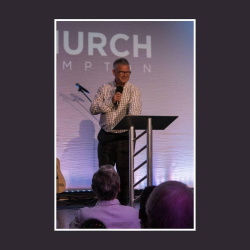
Outside the camp 2 – We have an altar

There is an altar that does not find itself in the familiar places of religious activity. It has not been built by human hands and neither can it be destroyed. It is outside the camp of social acceptance and cultural norms. It offends the wise and shames the strong.

“We have an altar from which those who minister at the tabernacle have no right to eat.” (Hebrews 13 v 10)

Not everyone has the right of way to this altar. This altar is totally exclusive and you cannot serve at another altar whilst being at this one. You could try but you have to leave the man-made to come to the divine altar. You cannot be outside the camp and inside the camp, you have to choose.

Once people were barred from the old altar because they were sinners and culturally offensive. But this our altar bars those who don’t think they are sinners and who think they are better than they really are.

Yes, we have an altar, it is outside the camp.

The sacrifice on this altar is the final act whereas on the other altars of this world the acts need to continue.

Our altar isn’t understood by those who have made their own altars. We don’t have to go to a physical place; we don’t have to take anything with us; we don’t have to eat anything or abstain from anything; we don’t have to perform anything religious; in fact we don’t have to do anything at all; because Jesus has done it all for us.

So these Jewish Christians must resist the temptation to go back to activity because it is no longer necessary. And so we also must keep close to our altar of ‘it is finished’ rather than the altar of ‘try harder, do it again and again’. We cannot refashion this altar to make it fit our lives. We submit or we don’t. There is no room for martyrs on this altar, ‘look at what I have brought’ or even ‘look at who I am giving my all’ for Jesus has already laid Himself on it and it was enough. So today we bow down, we fall down, we lay ourselves down at the foot of the altar because of Jesus who laid on it for us.

We are altar people but it has absolutely nothing to do with us and what we have achieved. It is all of Him.

Outside the camp, part 1

This next section as we head to the close of this book of Hebrews is once again an attempt by the author to challenge those being tempted to return to Judaism. Within the Hebraic regulations for sacrifice those items of the sin offering that were not required to be placed on the altar they were taken outside of the camp to be burned. The author links that practice with the fact that we should follow Jesus who was led to be crucified outside the city/camp. We as followers must join Him there. We must leave the regulations of the ritual and we can add into our context that we must leave the rules and regulations as a means to a relationship with God. We must throw our whole lives onto the grace and mercy of Christ who was killed outside the city. There are several verses in this section:-

“Do not be carried away by all kinds of strange teachings. It is good for our hearts to be strengthened by grace, not by eating ceremonial foods, which is of no benefit to those who do so. We have an altar from which those who minister at the tabernacle have no right to eat. ”The high priest carries the blood of animals into the Most Holy Place as a sin offering, but the bodies are burned outside the camp. And so Jesus also suffered outside the city gate to make the people holy through his own blood. Let us, then, go to him outside the camp, bearing the disgrace he bore. For here we do not have an enduring city, but we are looking for the city that is to come. Through Jesus, therefore, let us continually offer to God a sacrifice of praise – the fruit of lips that openly profess his name. And do not forget to do good and to share with others, for with such sacrifices God is pleased.“ Hebrews 13:9-16

We cannot have a foot in both camps. We cannot see duty as the means to relationship in one hand and the grace and mercy of Jesus’ sacrifice as the only way to the Father in the other hand.

We are living in unprecedented times for spiritual belief. We have organisations discussing the themes of the Bible and implementing them as their values even though they do not realise that’s where they originally came from. That is good surely. But also what we have is a plethora of new teaching about God which is aimed at the ultimate desire of human beings to be their own gods. No it isn’t actually new with that regard. But it seems that teaching that draws away from our orthodox position of what Christ has done and what that means for how we live is growing. We hear of teaching and beliefs that are progressive suggesting they are better but actually it is progressing people away from the truth of God’s Word in the knowledge that ‘God just isn’t like that person we have portrayed Him to be for 2,000 years.’

And so this is the same problem that the author faced. Nothing much changes in terms of progression. There are many ‘strange teachings’. But we exist outside the camp. It will increasingly become a place of shame, it always was, you see, people have made their minds up about Jesus and they don’t want an outside-the-camp Jesus.

But it is there where Jesus is.

My leaders

I am confident that the Lord is my helper and He will help me be all that I can be and do all that He wants me to do. I have the baton in my hand passed down to me by many special people.

The author calls the church to look back and remember the impact that their leaders have made on them.

”Remember your leaders, who spoke the word of God to you. Consider the outcome of their way of life and imitate their faith. Jesus Christ is the same yesterday and today and for ever.“ Hebrews 13:7-8 .

So I choose to remember some of my leaders:-

David and Jean Hudson – my parents, demonstrating what it is to give everything for the work of God.

Graeme Parkins – my first Pastor who carried an enthusiasm for God that was infectious for me when I was a teenager.

Jim Dick, Keith Warrington, Peter Davies, Neil Hudson (my brother), Malcolm Hathaway, Julian Ward and several others who were lecturers at the Bible College I lived at for 3 years, they taught me how to handle God’s Word.

Brian Grist – my senior when I became a minister in training, he was in Carlisle and I was leading a church plant nearby, in Penrith. He taught me how a Pastor needs to have an equal heart for the lost as well as the found.

Mick Reynolds – my Regional Leader who taught me the importance of reading the Bible as the main book of my life.

David Tinnion – my mentor and friend who lit a fire in my heart to search for God in other cultures of the world.

There are many more leaders I could list.

But these were my leaders who had direct connection with me through large periods of my life to a few years only.

They all spoke the word of God to me. They all walked out their faith in front of me and I have tried to imitate them in many ways throughout my life.

And yet they all had feet of clay. I applaud their strengths and faith but to a person none were perfect.

Do you remember your leaders? Do so.

The author almost reveals that these leaders were not perfect by writing what is now one of the most famously quoted verses of the Bible: Jesus Christ is the same yesterday and today and for ever.

How can we receive the help we need to accomplish the tasks before us? It is through Jesus who has not changed. He was, He is and He will always be.

So whether by myself moving on, or their retirement, ill health or death, where they are no longer leading me, Jesus is. Where their influence is not as strong as it was, Jesus hasn’t changed.

I am so grateful that God gave me these leaders and so many more at the right time of my life. But I am more grateful that Jesus has stuck with me through every season, every success and every failure. He just doesn’t go away. He never leaves. He is here with me now and with you as you read this. How wonderful and what such great confidence that brings.

Jesus my leader.

Our helper our confidence

So how do we love others, strangers, prisoners, marriages and how do we stay content, not loving money?

It’s not easy at times. The enemy of our soul will seek all he can do to minimise our confidence that we can do these things. He attacks our self-belief that we can keep on going, being, doing.

”So we say with confidence, ‘The Lord is my helper; I will not be afraid. What can mere mortals do to me?’“ Hebrews 13:6

Look back. How far? As far back as you can remember.

He has helped you. Slow those words down.

Perhaps today should be a day of confidence not weakness as you recall the daily help you have received. The One who has helped is helping you right now.

Maybe these Scriptures will benefit you as you mediate on them:

Isaiah 41: 10 So do not fear, for I am with you; do not be dismayed, for I am your God. I will strengthen you and help you; I will uphold you with my righteous right hand.

Psalm 121: I lift up my eyes to the mountains—where does my help come from? 2 My help comes from the Lord, the Maker of heaven and earth.

John 14:27 Peace I leave with you; my peace I give you. I do not give to you as the world gives. Do not let your hearts be troubled and do not be afraid.

There is one further thing that I’m thinking on – what can mere mortals do to me? The fear of man can be as hindering as the love of money. In the age of social media when we are geared more and more to thatwhat people think of us we know the dangers of wondering indeed on what they can do to us. They can impact our popularity. It doesn’t matter how old you get, inside all of us is a little boy/girl asking the same question, ‘what do they think of me?’

The promise is that of help that gives us confidence to be all that we can be and do all that He wants us to do. Amen.

Be happy with what you have

The antithesis of loving one another, loving strangers, loving prisoners and loving marriages is basically this … love yourself and what you can gain.

”Keep your lives free from the love of money and be content with what you have, because God has said, ‘Never will I leave you; never will I forsake you.’“ Hebrews 13:5

In The Testament of Judah, ancient Jewish texts from the patriarch’s last words to his children, he says these words, “My children, the love of money leads to idols; because, when led astray through money, men make mention of those who are no gods, and it causes him who has it to fall into madness. For the sake of money I lost my children…” (The Testament of Judah 19).

How many families and lives are broken because of the love of money that drives work to dominate the lives of the parent so that the children are starved of the greatest commodity of love.

We should be content with what we have and if we gain more we give more.

The truth is we all like money. Most of us would like more. The reason being is obvious, we like what it does, what it gives us, where it takes us. But it is dangerous because of all of that. It can demand our attention and our desperation, our worship and our servitude.

Are you worrying about money?

Are you wanting some retail therapy today?

When was the last time you gave some money in just an act of generosity and not your tithe?

Do you tithe? Do you give more than your tithe?

Are you free from the power of money? Are you happy?

The reason for contentment is because God is with us. He will not leave us whether we have much or in need. I will never leave you. That is the promise we hold on to and that is the promise that makes us be happy with whatever we have.

Love marriage

Love the church, love strangers and love prisoners. That’s what we are reading as this book comes to a close and now …

”Marriage should be honoured by all, and the marriage bed kept pure, for God will judge the adulterer and all the sexually immoral.“ Hebrews 13:4

God loves you loving one another. God loves you loving strangers. God loves you loving prisoners. God loves you loving marriages.

We don’t know why this is in the list. Was there some problem taking place within the church or was it because of the church living within a sexualised society? What is clear is that the adulterer and the sexually immoral threaten the honour and purity of marriage.

We all know the tragic consequences of where love has broken down. You may know the pain yourself. You may have contributed to someone else’s pain in your past. What good is it to strive for Philadelphia (family) love within the church if one’s own physical family is devoid of love?

When 2 people commit to a life friendship of love is there anything more beautiful? And yet when either or both don’t honour that commitment is there anything more tragic?

Self-less, sacrificial, this pure love is unconditional. “Love is patient, love is kind. It does not envy, it does not boast, it is not proud. It does not dishonour others, it is not self-seeking, it is not easily angered, it keeps no record of wrongs. “Love does not delight in evil but rejoices with the truth. It always protects, always trusts, always hopes, always perseveres.” If you have found such love then don’t let go of it. If you had such love then be thankful for it. If you have an opportunity to give this love then do it.

Sexual immorality is not that. Sexual immorality is selfish and does not sacrifice. It grabs and takes and goes for what it can receive from that other person not what it can give. It has an agenda which is to gain for its own pleasure. It will pay for it or manipulate or deceive the other or themselves to ultimately get what it wants. It will appear as activity but it commences in the heart. It is not love. It is not God and He will judge the sin of the heart.

Someone has to care about others

Keep on … do not forget … and now …

”Continue to remember those in prison as if you were together with them in prison, and those who are ill-treated as if you yourselves were suffering.“ Hebrews 13:3

The church had been doing well and the author is now writing to them to continue to think of those who are worse off than themselves. This is probably referring to those who are in prison because of their faith and worse, they have been abused maybe in the prison.

It is clearly commanding not just to think of these people; what good is thinking going to do compared to being proactively involved?

But it is the words, ‘ … as if you were …’ that are speaking loudly to me this morning.

• It is not only about you. You need to step way from your world to enter someone else’s.

• Never think someone else’s difficulty is beyond ever reaching you.

• It is not sympathy that is needed but it is empathy, there is a difference. Pity is being thankful we are not in the same position. But those suffering need to know someone understands.

• When we step into the shoes of the sufferer then we begin to truly understand incarnation and as such we come closer to Jesus.

• To remember someone suffering is to act on that memory; a visit, provision, prayer.

• Though prison ministries are needed and God is using them, there are many contained and isolated: captives are everywhere.

• Though the persecuted church need our resources and prayers and it is vital we support them, there are many who are abused and ill-treated in your neighbourhood.

• Do unto others what you would want them to do to you. Someone very important said similar words to that!

Someone has to do it!

Strangers in your home.

I was in Niger overseeing famine relief in 2005 and was staying in the home of a Pastor and his wife. There was only one bucket of water available a day and they gave it to me! There was literally nothing in the shops. The animals were dying and there was little vegetation. But I remember being given a curry that the wife had made from whatever vegetables were left in her small garden. When I left they gave me gifts of cloth.

“Do not forget to show hospitality to strangers, for by so doing some people have shown hospitality to angels without knowing it.” (Hebrews 13 v 2)

In Niger it was I who felt like an Angel. The honour they gave me as you can see has stayed with me for all this time.

The instruction to the church builds on Philadelphia love because we have moved from loving people with family love into the home of the family.

They have been doing this but they are being instructed to not forget to continue. It’s another ‘keep on’ encouragement.

There are reminders here of that hot sunny day when suddenly the Lord appears to Abram in the form of three men, Himself and 2 angels. Abram takes them into his room and shows hospitality and the result is the promised blessing that would come to him (Genesis 18).

Maybe (like for me travelling through Niger and staying in a home for a few days) the church in the 1st century had been receiving into their homes evangelists and teachers passing by. They may not have known them but they were loving strangers.

Jesus highlights the importance of hospitality when he says when we bring people no matter who they are into our homes and take care of them then we are doing it to Him (Matt 25).

The incentive is that if you only show hospitality to people you know then there won’t be an unexpected benefits but inviting people into your care that you don’t know opens up the possibility of surprises for God does want to bless you.

Love drives us to the wounded soldier

This last week I attended a leadership conference which was outside of the usual faith sector that I comfortably move in. The delegates were CEO’s and senior leaders from all walks of life including the British Army. It was an honour and privilege to be there. One of the many highlights was to hear how within the regiments of the Army they are teaching and fostering the importance of love. If a fellow soldier is wounded on the battle field the reason why you should go and rescue them is because you love them and not only because it is your duty to do so.

Hold that thought!

We have nearly finished reading this book of Hebrews. As we do we move into what appears to be a usual list of demands and calls to obedience. It sounds like the lists that the Apostle Paul wrote in his other letters and has led many to think he is the author here. But refusing to be distracted with that we press on and read the first on the list and appropriately it is love.

”Keep on loving one another as brothers and sisters.” Hebrews 13 v 1

The word used is philadelphia and it was used for the love amongst the family. Don’t stop having tender family love towards others in the Church.

In the desire for a church to grow we must also continue with the same desire to build a family that knows how to keep on loving each other.

We can all think of examples where we are devoted to that Church member with love. We can also think of those people who we struggle with. They are the people who hurt you, spoken against you and who do not even like you never mind reciprocate any love you might have for them. It’s difficult.

God consumes altars.

Fire in the burning bush; fire in the wilderness guiding the Israelites to the Promised Land; Abraham and Moses both saw the fire. One of the symbols of Christianity is fire. If the Bible regards fire as the supreme need of the Church and the final gift of God. If the prophets of old associated fire with the Messiah. If our God is a consuming fire. If the gift of the Holy Spirit is a baptism by fire. If Christianity is a religion of fire. If we are saved by fire. If fire is so important then we definitely need it.

“for our “God is a consuming fire.” (Hebrews 12 v 29)

We must remember that the fire of God is coupled with the altars of man. He consumes altars with fire.

 Elijah built an altar, “Then the fire of the LORD fell, and consumed the burnt sacrifice, and the wood, and the stones, and the dust, and licked up the water that was in the trench. And when all the people saw it, they fell on their faces: and they said, The LORD, he is the God; the LORD, he is the God.” 1 Kings 18:38-39

Solomon built an altar, “When Solomon finished praying, fire came down from heaven and consumed the burnt offering and the sacrifices, and the glory of the Lord filled the temple. The priests could not enter the temple of the Lord because the glory of the Lord filled it. When all the Israelites saw the fire coming down and the glory of the Lord above the temple, they knelt on the pavement with their faces to the ground,” 2 Chronicles 7:1-3

The fire came because there was an altar.

The final altar was the cross of the sacrifice of God’s Son, Jesus Christ. As He ascended to heaven he sent the fire from heaven.

At Pentecost we have to see beyond the phenomena, the noise, the violent wind, the tongues of fire, speaking in tongues, drunken-like behaviour. If we do then we will then see men and women whose lives were saturated with the Spirit of God. The passion of God possessed them with an intensity of a fire. They burned and they shone for Jesus. A holy passion for righteousness, a consuming enthusiasm for the salvation of the lost. They were sold out for Jesus.
The fire of God is unique.
The fire of God is not sent for a few emotional experiences. The fire of God brings power. Power to go and power to be.

Today give your heart to Jesus, prepare an altar and invite Him to come to you and He will. God consumes altars.