
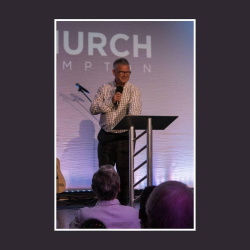
Blinded to the end

What is challenging your total committed and undivided heart?

Not only does it demand your allegiance it blinds you to the consequences of giving it.

We are going to read that as Assyria comes in to take the people God has firstly removed their king and then the altar which was a symbol of cleansing for many years but then taken over by idolatry is now condemned. The result is that God’s people will look to the hills and the mountains which in the past were symbols of God’s protection but now instead of repenting they will want to die holding on to their sin.

“Samaria’s king will be destroyed, swept away like a twig on the surface of the waters. The high places of wickedness will be destroyed—it is the sin of Israel. Thorns and thistles will grow up and cover their altars. Then they will say to the mountains, “Cover us!” and to the hills, “Fall on us!” (Hosea 8 v 7-8)

It is hard to imagine anyone preferring to hold on their own sinful way of life willing to suffer the consequences of doing so instead of repenting and losing that sin.

It is Samaria that is cut off, the capital, the central place for economy and business, the headquarters and the mother church, where all the pomp and ceremony is displayed. When God moves in judgment He starts at the top and works downwards.

These words in Hosea’s day are parallel to what we see from Luke’s gospel and then the Revelation.

As Jesus was nearing the cross, “Jesus turned and said to them, “Daughters of Jerusalem, do not weep for me; weep for yourselves and for your children. For the time will come when you will say, ‘Blessed are the childless women, the wombs that never bore and the breasts that never nursed!’ Then “‘they will say to the mountains, “Fall on us!” and to the hills, “Cover us!”’ (Luke 23 v 28-30)

Just as Hosea was looking to the shadow of Assyria descending on God’s people, Jesus had the Roman aggression on the city of Jerusalem in AD70 when death and destruction reigned bringing everything to the ground.

And the Revelation?

“Then the kings of the earth, the princes, the generals, the rich, the mighty, and everyone else, both slave and free, hid in caves and among the rocks of the mountains. They called to the mountains and the rocks, “Fall on us and hide us from the face of him who sits on the throne and from the wrath of the Lamb! For the great day of their wrath has come, and who can withstand it?” (Revelation 6 v 15-17)

Is the Revelation pointing to something of such a grand scale it is nuclear? Maybe. But the parallel teaching is the same whether in Hosea, Luke or the Revelation. And it is this.

When judgment falls will we be okay? Will we stand ready for what is next in sure and certain hope of our resurrection or will we be so consumed by idolatry that even though our world falls in on us we will still not repent. The world leaders that come toppling down whether Presidents, Prime Ministers or Priests often do so holding on to their lies that have consumed them. Very few apologise. Most do not repent.

Undivided hearts

The glory of the idol is gone. Everything fades but the Lord.

Even though they acknowledge their unfaithfulness in v3 ‘we did not revere the Lord’ and they have made (false) ‘promises, oaths and agreements’ (v4) they soon begin not to mourn their sinfulness but their losses. They do not grieve of the loss of God’s presence but their idols especially the calf-idol.

“They make many promises, take false oaths and make agreements; therefore lawsuits spring up like poisonous weeds in a plowed field. The people who live in Samaria fear for the calf-idol of Beth Aven. Its people will mourn over it, and so will its idolatrous priests, those who had rejoiced over its splendour, because it is taken from them into exile. It will be carried to Assyria as tribute for the great king. Ephraim will be disgraced; Israel will be ashamed of its foreign alliances.” (Hosea 10 v 4-6)

Repentance does not necessarily lead to reformation as it can be very shallow. ‘We did not’ soon gave way to sadness over the loss of their idol.

Bethel (house of God) the place for worship for the pilgrims had been renamed by the prophet Beth-Aven (house of iniquity). It teaches us of the divided heart.

Teach me your way, Lord, that I may rely on your faithfulness; give me an undivided heart, that I may fear your name.” (Psalm 86 v 11)

Here are some popular prayers, “Hear me … Answer me … Look after me … Save me …”

We know all these and have said all these prayers at some point.

 So had David and he uses them all in Psalm 86. But he also uses this prayer which isn’t as popular: Teach me, give me an undivided heart.

 What is God teaching you at this moment of your life?

 What are you reading that has caused growth to happen?

 Where have you been corrected?

 The most exciting prayer that you could pray is: Teach me. Give me an undivided heart.

Chase after the true KING

In the words of Bob and Larry of Veggie Tales:

Bob the Tomato: “Larry, how much stuff do you need to make you happy?”

Larry the Cucumber: “I don’t know. How much stuff is there?”

When we move away from King Jesus and chase after ‘stuff’ and make other things kings of our life then when God decides to topple over those thrones we end up having no king at all. Our idols are broken and we have lost His presence.

“Then they will say, “We have no king because we did not revere the Lord. But even if we had a king, what could he do for us?” (Hosea 10 v 3)

Assyria was a shadow, they were coming and in 722 BC they took the land and they took their king. There was nothing they could do. They had lost everything because of their unfaithfulness to the true and only King.

Don’t chase after ‘stuff’ to satisfy your soul when only King Jesus can do that.

How did we get here?

Easy.

It is possible to appear to be loyal to God and yet bow down to idols.

It is possible that what happens on the public stage is not mirrored with what the private life is like.

It is possible to claim many things and yet they not be a reality.

For a time.

“Israel was a spreading vine; he brought forth fruit for himself. As his fruit increased, he built more altars; as his land prospered, he adorned his sacred stones. Their heart is deceitful, and now they must bear their guilt. The Lord will demolish their altars and destroy their sacred stones.” (Hosea 10 v 1-2)

The Church grew numerically and they had a harvest with abundance of blessings, there were many testimonies, stories of transformation. They became prosperous and bought buildings and extended their staff, their community work was amazing, their ministry became known around the world and yet the leadership having admired the success, enjoyed the benefits of it and began to idolise what they had received.

The GIVER and the GIFTS had become separated.

They continued and more success came their way as they began to teach others the keys to their growth. “You can be like us”; “We will show you how we got these gifts”; “If you do this ABC principle then you will receive what we have”.

That’s not why the GIVER gave the GIFTS.

So God began to topple down that what was built. He broke down the idolatry by exposing it and all that was successful fell down. The success become the failure it always was.

And someone asked, ‘How did we get here?’

And the reply came.

“Easy”

Good leaders

Thank God today for the leaders of your church who teach and lead you along the right path.

“Because of all their wickedness in Gilgal, I hated them there. Because of their sinful deeds, I will drive them out of my house. I will no longer love them; all their leaders are rebellious. Ephraim is blighted, their root is withered, they yield no fruit. Even if they bear children, I will slay their cherished offspring.” My God will reject them because they have not obeyed him; they will be wanderers among the nations.” (Hosea 9 v 15-17)

Good leaders honour what God did in the past and encourage others to make the same commitments their ancestors did. (Gilgal was the place that the Israelites first encamped after the miraculous crossing of the Jordan River but which later became the centre of idolatry).

Good leaders are continually calling people from drifting from the presence of God (these people would soon be driven from His home and into exile).

Good leaders are not focused on their own gain but are focused on the legacy that they leave behind (difficult to read perhaps but the One who forms us in our womb will lift His protection on future generations).

Good leaders teach the Bible in a way that it must be obeyed (they were rejected because the people didn’t obey).

Good leaders teach the Old testament history in light of a New testament covenant which is of course so much better (because of Jesus’ blood there is no hate, no being driven away, no blighting of the future, no withering, no fruitlessness, no slaying, no rejection and no more wandering, thank you Jesus!)

Consequences of lost glory

There is always a price to pray when we walk away from God.

I have seen Ephraim, like Tyre, planted in a pleasant place. But Ephraim will bring out their children to the slayer. Give them, Lord—what will you give them? Give them wombs that miscarry and breasts that are dry.” (Hosea 9 v 13-14)

When the glory of God is exchanged for idolatry then fruitlessness is the result. Growth is hindered because blessing has stopped and the potential (because Ephraim means doubly fruitful) is not fulfilled. Ephraim who lived in a pleasant place had enough things to look at to think they will be okay. They were surrounded by blessings and yet even pleasant places can experience the slayer.

God has stepped back.

Whenever we move from the Creator to the created for our satisfaction we lose.

Hosea cries out with a prayer asking for God’s help. But then realises that actually it is more merciful to cut off the future generation because of what is coming from the Assyrian nation.

Is that applicable to us in 2023 if we lose the glory of God?

Paul in Romans says to us the wages of sin is death meaning there are consequences to walking from God. This is why the enemy of our soul is working to redefine sin and to make sin more acceptable. To water down the Bible. To make sure Churches create false fire so that the deception is created that God is fine with idolatry. He is not. The consequences that Hosea realised remain today. Judgement continues to fall on the House of God. Celebrity heroes continue to fall and more will do so. Legacies are robbed and cut off. But not all. For those who return there is hope. Amen.

A tangible decline

Those are the words that were spoken to me yesterday about a financial situation. ‘There has been a tangible decline’. I looked at the figures and sadness came over me as I saw how what used to be is no more. It is a very difficult situation to live under when there are just echoes of what used to be.

Israel started out like with fruitful potential, like ‘grapes in a desert’ God found her. But she chose a lifestyle of idolatry and as a result … Ephraim’s glory will fly away like a bird—no birth, no pregnancy, no conception. Even if they rear children, I will bereave them of every one. Woe to them when I turn away from them!” (Hosea 9 v 11-12)

Israel’s glory is their population and it will diminish. Being moved into exile their numbers will decline

The word ‘glory’ in the Bible means ‘weighty, heavy’ and refers to the presence of God.
Nothing can change the presence of God. Nothing can affect His glory. It is unchanging. He will be where He wants to be. However His glory is not what is under scrutiny, it is our glory.

Our glory is the original condition mankind was created with.
Adam lost it because he wanted to be somebody else instead of being happy with who God created.
Adam lost it for us and Jesus gave it back to us but we keep on losing it because we want to be somebody else other than who God made.
We want to be and we want to have and we pursue this at all costs even if that cost is our glory.
We exchange our glory for idolatry. Hosea has taught us so much about idols. They exist in our world and they are the one reason for losing our glory.

The question is always this: is that image the image of Jesus? If it is not, then you are in danger of losing your glory.

Keep your glory: it is who you are created to be.

The potential of the early years

What will you become when you get older? It is the question of every child. And then life goes by in an instant and you become older. Did we become that man and woman we longed to become? Did we fulfil the potential within us? Do we still walk with Him?

“When I found Israel, it was like finding grapes in the desert; when I saw your ancestors, it was like seeing the early fruit on the fig tree. But when they came to Baal Peor, they consecrated themselves to that shameful idol and became as vile as the thing they loved.” (Hosea 9 v 10)

God found Israel as a faithful and fruitful people. I have never found grapes in a desert though I would imagine it would be a wonderful thing. I have grown things and got excited at the early signs of the fruit or the vegetable poking up out of the ground. I know what this means. It is exciting and hopeful.

Sadly I also know that those early signs can come to nothing. I know that as a below-average gardener and I know that as a Church Pastor.

Baal Peor was a watershed moment. The reason being is that it is one of the last sinful acts of their ancestors which led to the death of that generation. It is found in Numbers 25. It is similar to the golden calf in Exodus and has the same consequences because the wages of sin is death not because God enjoys punishing but sin has its consequences.

It is never how you start but it is always if you are still running the race when you are at the end.

Consequences of sin

Hosea is the prophet that no one liked.

Did he want people to like him and align to his prophetic message? I’m sure he did.

“The days of punishment are coming, the days of reckoning are at hand. Let Israel know this.
Because your sins are so many and your hostility so great, the prophet is considered a fool, the inspired person a maniac. The prophet, along with my God, is the watchman over Ephraim, yet snares await him on all his paths, and hostility in the house of his God. They have sunk deep into corruption, as in the days of Gibeah. God will remember their wickedness and punish them for their sins.” (Hosea 9 v 7-9)

In the eyes of these people Hosea was a fool, a maniac and though he was their watchman they set traps for him because the prophetic message drew attention to their sins. They were not happy hearing that punishment was at hand for the depth of their sinfulness. Hosea draws their attention to the wickedness of the people in the time of the Judges in Gibeah. God’s people in Hosea’s day had sunk to the same all-time low as with the Judges. The sin in Gibeah is found in Judges 19.

This is a hauntingly powerful story of a woman from Bethlehem. She was a concubine. In a fit of anger she ran away from her master and owner to her father’s house in Bethlehem of Judah. The man found her and wooed her back.

 On the way back to his home in the hill country of Ephraim, it became late in the evening and they needed a place to stay. They depended on the hospitality of the people of Gibeah, but there was no hospitality forthcoming. Finally, an old man offered them a place to stay in his home.

 That night a set of townsmen knocked on the door. They demanded the body of the male visitor. In order to appease the sexual hunger of the men outside, the old man grabbed the concubine and threw her out and shut the door.

The crowd outside gang-raped her, abused her all night. When dawn broke they left her lying on the ground. When her husband came out he saw her lying dead at the door of the house with her hands on the threshold.

It is a horrible story told in Judges 19 and there is no mention of God. Does He not care? Was it too shameful to even make an appearance or speak a word?

Her memory calls out. It calls out to the psychological numbness of those around her, and it calls out to us down the centuries to amplify her silent cries.

There are people crying today because of acts that are too shameful to even mention where the presence of God seems remote. We need to speak up and out. We need to step into the shame and feel the dirt and the pain and we need to stand for justice. For the greatest shame is on those who turn away from that cry.

You may be called fool and a maniac and traps may even be set for you if you travel this path. But will we speak up for those who have been impacted by the sin of God’s people? Or do we just want people to like us?

Ghost town-believers

Recently I was walking through a railway station that was once the centre of activity. Today it has display boards with pictures showing what it used to be like. People leaning out of the windows of the trains; the platforms filled with passengers waiting to board; the ticket office with a queue of excited people. Smoke, noise, atmosphere has been replaced by an uneasy silence. It looks like a railway station but the best days are gone.

“What will you do on the day of your appointed festivals, on the feast days of the Lord?
Even if they escape from destruction, Egypt will gather them, and Memphis will bury them.
Their treasures of silver will be taken over by briers, and thorns will overrun their tents.”(Hosea 9 v 5-6)

Hosea warns them that there is coming a day when they will not be able to worship God the way they used to because they will be in exile.

They have left the silver behind but no one is there to steal it. The Festival of Booths (which celebrated their ancestor’s journey in the Wilderness) with temporary tents for the celebration period will be a distant memory. The tents will still be there but uninhabited except for thorns.

Ghost town.

I know a man who worshipped passionately; who followed God for 30 years; prayer and fasting; witnessing; but today he lives in exile, it doesn’t look like he is going to return from the place he was never called to be in; and what is left behind is a memory of the man he used to be. He is a ghost-town believer.

This word from God is as true for today as for when Hosea spoke it.