
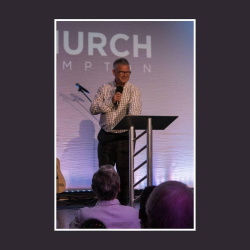
Don’t be fooled, not everyone who appears to be something actually is!

Don’t be fooled, not everyone who appears to be something actually is!

Mark 7: 1-8 “The Pharisees and some of the teachers of the law who had come from Jerusalem gathered around Jesus 2 and saw some of his disciples eating food with hands that were defiled, that is, unwashed. 3 (The Pharisees and all the Jews do not eat unless they give their hands a ceremonial washing, holding to the tradition of the elders. 4 When they come from the marketplace they do not eat unless they wash. And they observe many other traditions, such as the washing of cups, pitchers and kettles.) 5 So the Pharisees and teachers of the law asked Jesus, “Why don’t your disciples live according to the tradition of the elders instead of eating their food with defiled hands?” 6 He replied, “Isaiah was right when he prophesied about you hypocrites; as it is written: “‘These people honour me with their lips, but their hearts are far from me. 7 They worship me in vain; their teachings are merely human rules.’ 8 You have let go of the commands of God and are holding on to human traditions.”

The Pharisees are still alive today even in my western culture:

Yesterday a friend told me how he had been lambasted by a Christian man because he had not helped in a way that had been expected (wrongfully so). He was actually shouted at: “You are an abomination to God.” After rolling our eyes I was left with 2 thoughts: I didn’t think people used the word ‘abomination’ anymore and secondly, the Pharisees that slandered Jesus and the disciples are still here.

  1. Just because people gather around Jesus doesn’t make them Jesus followers. They gather around Jesus but they are focused on his followers and not him. They are gathered around him but not for him or with him.
  2. Just because people can quote the Bible and even pray impressive prayers does not prove they are any more nearer to Jesus than those who don’t have a Bible or pray. Their lips were moving but their hearts were not moving towards Jesus.
  3. Just because people sing, clap, raise their hands or whatever they do as ‘worship’ does not mean they are connected with God. It can all be a waste of time but they don’t think so, because these displays can be impressive and it is possible to fall in love with worship instead of worshipping the one you love or should love.
  4. Just because people have rules for living and whose behaviour is apparently ‘cleaner’ than most does not mean they are more acceptable to God than those who have no rules. A human rule will not bring you closer to God. Neither will the rules of God, the law of God, it doesn’t bring you closer it actually reveals how far away from Him you are, it distances you.
  5. Just because people are doing what has always been done, it has been passed down generationally, it has become cultural norms and laws, does not mean they were right in the first place. Traditions of men are often a variant of the commands of God. Variants are burdensome, the commands are light.

Do you have faith for the edge?

Do you have faith for the edge?

Mark 6: 53-56 “When they had crossed over, they landed at Gennesaret and anchored there.54 As soon as they got out of the boat, people recognized Jesus. 55 They ran throughout that whole region and carried the sick on mats to wherever they heard he was. 56 And wherever he went—into villages, towns or countryside—they placed the sick in the marketplaces. They begged him to let them touch even the edge of his cloak, and all who touched it were healed.”

Here is a very brief understanding of “… the edge of his cloak …”

According to the instruction to Moses (Numbers 15) the Israelite men were to wear tunics that would act as prayer shawls. At each corner of the tunic there were tassels tied into 613 knots to symbolise the 613 laws of Moses. Everyone could see them and the man would have to be careful to keep those laws. Every day the man knew he was carrying the Word of God in his life. They also spoke of the man’s authority. In the Old Testament story of David cutting off a piece of Saul’s robe we see the reason why David was so upset for the action was because he felt he had stolen Saul’s authority. This would humiliate Saul and David was annoyed with himself (2 Samuel 24). Finally the edges of the cloak were also seen as what was referred to by Malachi “… the sun of righteousness will rise with healing in His wings.” (Malachi 4) The word ‘wings’ is a translated word for the edges of the wing. The man knew that symbolically the edge of his cloak was a picture of the power of God.

On the side of the lake at Genneserat pandemonium had broken out as people swarmed like bees for the nectar. They begged Jesus for the edge of his cloak, that’s all that they needed but it wasn’t a demonstration of something small and insignificant, far from it. It demonstrated their faith in these 3 truths.

Today whatever need you have can you demonstrate the same faith?

Can you reach out to Jesus even if it is just the edge of his cloak?

Can you reach out in faith to the Word, to His identity, that Jesus is God? Can you simply believe in Him today?

Can you reach out in faith to His authority, that there is no one higher than Him? He is the King of Kings. One day every knee will bow before Him. He is the creator and sustainer of all things. All things are held together by Him.

Can you reach out in faith to His power, that He actually can change your life? There is no need impossible for Him. He can do this for you.

Reach out to His identity, authority and power today. You may feel your faith is nothing, like it is only touching the edge of His cloak. Yet the people in the past will say that is all that is needed, because to touch the edge can unlock everything that you need.

5 differences between the ordinary and the not so.

5 differences between the ordinary and the not so.

Mark 6: 47 – 52 “Later that night, the boat was in the middle of the lake, and he was alone on land. 48 He saw the disciples straining at the oars, because the wind was against them. Shortly before dawn he went out to them, walking on the lake. He was about to pass by them, 49 but when they saw him walking on the lake, they thought he was a ghost. They cried out, 50 because they all saw him and were terrified. Immediately he spoke to them and said, ‘Take courage! It is I. Don’t be afraid.’51 Then he climbed into the boat with them, and the wind died down. They were completely amazed, 52 for they had not understood about the loaves; their hearts were hardened.”

Jesus had wanted the disciples to do the miracle of the feeding of the 5,000. But they had not grasped the potential of what is possible when Jesus is with you.

He has now sent them across the lake knowing a storm was coming. He wanted the disciples to not just survive the storm but perhaps do what he did which was to calm it. But they had not grasped the potential of what is possible when Jesus has sent you and is watching you.

They failed in both events.

The reason why they failed was their lack of revelation of His divinity.

Here are 5 differences between the ordinary and the not so, between those who lack revelation and the Jesus-people.

  1. Some people at first appear to be advancing forward compared to the Jesus people who prioritise and spend more time in prayer. The disciples had sailed to the middle of the Sea but Jesus was still on a mountainside praying.


  1. Some people become strugglers in life because of the winds of pressure against them compared to the Jesus people who choose not to struggle. Knowing which battle to fight is the key.


  1. Some people use all their strength in getting through the storms of life compared to the Jesus people who decide on a different path during the storms, the reliance on God’s strength, the miraculous path, the walking on water path.


  1. Some people who had a head start and many other privileges don’t necessarily advance at the rate they should have done compared to the Jesus people who not only catch up but are ready to by-pass them because of the speed of the Spirit.


  1. Some people who are in survival-mode misinterpret miracles and thus miss the miracle-worker compared to the Jesus people who understand there are times to stop walking on water and get into people’s boats to bring about a different miracle, that of calming the storm.

Lessons from miracles

Lessons from miracles

Mark 6: 42-46 “They all ate and were satisfied, 43 and the disciples picked up twelve basketfuls of broken pieces of bread and fish. 44 The number of the men who had eaten was five thousand. 45 Immediately Jesus made his disciples get into the boat and go on ahead of him to Bethsaida, while he dismissed the crowd. 46 After leaving them, he went up on a mountainside to pray.”

Jesus left no waste behind.

There was no evidence left behind of the most amazing miracle that this remote place had ever hosted. The disciples were litter-pickers. There were no book signings, record deals or conference bookings. The miracle would stay in the minds of those who had been there.

Jesus was the one to dismiss the crowd.

There are times that at the point of success that Jesus wants you far away from the satisfaction of the crowds. The church that attracts can easily fall in love with itself.

Jesus went to pray.

The desire to pray was there after the miracle as well as before. When miracles are sandwiched by prayer then it is the communion with God that is more important than the miracle. Miracles are born out of constant connection with the divine not by a request from earth for a divine connection.

Thankfulness leading to your miracle

Thankfulness leading to your miracle

Mark 6: 41 “Taking the five loaves and the two fish and looking up to heaven, he gave thanks and broke the loaves. Then he gave them to his disciples to distribute to the people. He also divided the two fish among them all.”

When the head of the Church looked up to heaven with thanks for what was in His hand you knew something was going to happen.

When the Church looks to heaven with gratitude for what it has and not what it doesn’t have, for the people it has, then something is going to happen.

Gratefulness is everything.  What did Jesus say in his prayer of thanks? Let me suggest some things:

Thank you for the boy who willingly gave me his lunch.

Thank you for the 5 loaves and the 2 fish.

Thank you for the 5,000 men plus women and children sat before me.

Thank you for the power of heaven touching earth.

Thank you for the symbol of brokenness, they don’t see it now but they will later.

Thank you for the disciples you have given me.

Thank you for the miracle I am about to do.

Each one of those lines could easily be turned around from gratefulness to a request or a complaint.

Here lies the problem. The problem of how we approach the situation we are in.

I wonder if miracles are birthed in thankfulness not complaint. I wonder if gratefulness is more powerful than we believe.

3 keys to strategically solving a problem

3 keys to strategically solving a problem

Mark 6: 39-40 “Then Jesus directed them to have all the people sit down in groups on the green grass. 40 So they sat down in groups of hundreds and fifties.”

Jesus worked strategically. And He shows us that whatever problem or miracle we need then we too should approach with the same manner as Jesus:

  1. Sit down: Keep the situation still. Stop everyone moving around. Calm things down.
  2. On the green grass: Keep the situation comfortable. They will be sitting for a long time so make it as nice as possible for them.
  3. In groups of 100s + 50s: Keep the situation manageable. Don’t try and manage 5,000, try and see that number through smaller groups.

Crumbs

Crumbs

Mark 6: 31- 44  “Then, because so many people were coming and going that they did not even have a chance to eat, he said to them, “Come with me by yourselves to a quiet place and get some rest.” 32 So they went away by themselves in a boat to a solitary place. 33 But many who saw them leaving recognized them and ran on foot from all the towns and got there ahead of them. 34 When Jesus landed and saw a large crowd, he had compassion on them, because they were like sheep without a shepherd. So he began teaching them many things. 35 By this time it was late in the day, so his disciples came to him. “This is a remote place,” they said, “and it’s already very late. 36 Send the people away so that they can go to the surrounding countryside and villages and buy themselves something to eat.” 37 But he answered, “You give them something to eat.”

They said to him, “That would take more than half a year’s wages! Are we to go and spend that much on bread and give it to them to eat?” 38 “How many loaves do you have?” he asked. “Go and see.” When they found out, they said, “Five—and two fish.” 39 Then Jesus directed them to have all the people sit down in groups on the green grass. 40 So they sat down in groups of hundreds and fifties. 41 Taking the five loaves and the two fish and looking up to heaven, he gave thanks and broke the loaves. Then he gave them to his disciples to distribute to the people. He also divided the two fish among them all. 42 They all ate and were satisfied, 43 and the disciples picked up twelve basketfuls of broken pieces of bread and fish. 44 The number of the men who had eaten was five thousand.


5 loaves and 2 titbits of fish which were no more than a garnish to cover the bread compared to the gigantic problem of 5,000 men plus women and children.

In comparison to the need it was small, mere crumbs, but never under-estimate what Jesus can do with the crumbs of life!

You may describe your life like crumbs today for whatever reason; you are the left-overs of a better past but God specialises in using cast-offs and left-overs.

God will build with whatever and whoever you have become.

You may be going through the process of becoming like crumbs today. It may be for you that God wants you to be a picture of crumbs. You may need to surrender, to give up, to let go so that he has freedom to work in your life.

Are you broken?

Never underestimate the power of crumbs.
Crumbs can feed 5,000.
Miracles occur after brokenness.

Someone asked me the other day: I am in bits, can God use me?

The answer is: He only uses bits.

The Question mark

The Question mark

Mark 6: 12-13 “They went out and preached that people should repent. They drove out many demons and anointed many sick people with oil and healed them …

Mark 6: 29 “On hearing of this, John’s disciples came and took his body and laid it in a tomb”.

Mark 6:30 “The apostles gathered around Jesus and reported to him all they had done and taught”.


So in between the event of the apostles being sent out to preach, deliver and heal the masses and then returning with their joyful reports, John the Baptist was killed and placed in a tomb. What is Mark trying to tell us? What does God want us to know?

The question mark ???

Can you continue to be focused and do the work of God even though it feels like life goes wrong?

Can you be trusted with a question mark or do you need all the answers?

Can you leave things with the story of God knowing you must complete your own task in life?

It seems compassion-less perhaps. But don’t slow down, back-off or become so engaged with someone else’s story that has nothing to do with you to the detriment of what you are meant to be doing. Learn to carry the question mark. You won’t know everything. You will never carry all the answers and reasons to this life.

The consequences of the dance

The consequences of the dance

Mark 6: 21 – 29 “Finally the opportune time came. On his birthday Herod gave a banquet for his high officials and military commanders and the leading men of Galilee. 22 When the daughter of Herodias came in and danced, she pleased Herod and his dinner guests. The king said to the girl, “Ask me for anything you want, and I’ll give it to you.”23 And he promised her with an oath, “Whatever you ask I will give you, up to half my kingdom.” 24 She went out and said to her mother, “What shall I ask for?” “The head of John the Baptist,” she answered. 25 At once the girl hurried in to the king with the request: “I want you to give me right now the head of John the Baptist on a platter.” 26 The king was greatly distressed, but because of his oaths and his dinner guests, he did not want to refuse her. 27 So he immediately sent an executioner with orders to bring John’s head. The man went, beheaded John in the prison, 28 and brought back his head on a platter. He presented it to the girl, and she gave it to her mother. 29 On hearing of this, John’s disciples came and took his body and laid it in a tomb.


Be careful who dances before you.

I mean, be careful who creates a grand impression on you, who captivates and who you become transfixed with. Be careful of seeing the gifting above the person, the charisma not the character and be careful who you give freedom to come into your private world.

Enter Salome. The dangerous dance:

  1. The Pleasure. The dance pleased Herod and the others. There was a unity of pleasure. Just because others agree doesn’t mean it is good for you.
  2. The Promise. The dance moved Herod so much he wanted to give back to her and in a fit of passion and ego he made a ridiculous promise. It was a signed blank cheque.
  3. The Pride. The dance would lead to a death. The death of the man Herod loved listening to, John the Baptist. But Herod was too proud to say no because he had promised publicly. Always break a promise when the promise is ridiculous and given with wrong motivation.
  4. The Pain. The dance initially gave Herod pleasure but this soon turned to pain. Those who enamour you now by the end of the evening may have become an enemy to your soul.
  5. The Parting. The dance was powerful to make Herod do what he would never have done. John’s disciples came and buried their leader in a tomb. John the Baptist didn’t lose his head because of his message. That just created enemies, namely Herodias. No, John the Baptist parted from this world because of the dance before Herod. The dance may be electrifying and enthralling but soon it will lead to you losing what you had, even your relationships.

The love of God costs.

The love of God costs.

Mark 6: 17 “ For Herod himself had given orders to have John arrested, and he had him bound and put in prison. He did this because of Herodias, his brother Philip’s wife, whom he had married.”

John the Baptist had found a way into the centre of the royal family. God had made that way possible. It was actually God’s mission, John may not have even thought of it. The way was made possible because he had been arrested and placed into jail. It was from there that he was regularly being called by Herod to speak to him and to witness and every time he would remind him that his marriage to Herodias was unlawful according the to the law of God. Because of this Herodias wanted him killed.

Can God place a servant into a place of difficulty for the gospel? Could He get that man arrested and put into prison so that the royal house could hear the gospel? Could He take all of the man’s freedoms and ambitions, dreams and hopes away? Could He give that man an uncertain future or even a certain future of death? Could He? Would He do that?

Yes if He found a willing servant.

Yes if He found a messenger who so believed in the coming King of Kings he cared nothing for his or this life.

Yes if that man had a burning passion for Jesus.

Yes because the love of God for this world is worth dying for.

So often we hear people praying for God to come, but if He comes, will He find any John the Baptists?

We want the gospel to get into the most difficult of places, but if God wants that, will He find a servant to take the message there?

We want revival. But will we pay the high price for it?