Jesus’ warnings to religious leaders: Taking people into captivity.

“Woe to you, teachers of the law and Pharisees, you hypocrites! You travel over land and sea to win a single convert, and when you have succeeded, you make them twice as much a child of hell as you are.” (Matthew 23 v 15)

The Pharisees had a hardened sectarian code of conduct.

They were evangelistic.

The problem was that their rules and their enthusiasm to make proselytes (converts to Judaism) became entwined.

Jesus calls it out. He could see how they would take their convert and then burden them down with such an amount of rules that the person became more trapped than they were before conversion.

Evangelism is the path towards freedom not captivity.

This is our gospel.

Jesus’ warnings to religious leaders: Demanding ‘works’ for benefit.

Instead of helping people into the kingdom these leaders were preventing them from doing so.

“Woe to you, teachers of the law and Pharisees, you hypocrites! You shut the door of the kingdom of heaven in people’s faces. You yourselves do not enter, nor will you let those enter who are trying to.” (Matthew 23 v 13)

They create a false understanding of God and His kingdom, one that is based on performance. If you do more, work harder or please me then you will please God. “I am your gatekeeper”. If you come to Jesus through my ministry then you will have a good life.

They involve themselves with branding, marketing, image-based advertisements. They create a self-righteous kingdom based around their ministry.

Their understanding is to create more disciples of their own instead of Disciples of Christ.

Woe to them!

A gorilla story

Over the next few days we will be reading about the warnings of Jesus regarding hypocritical religious leaders who sadly are still around us today. But first a story!

A young man had just lost his job. Desperate for a job, he looked at the newspapers, and he found an opening in a zoo. He went for the interview and the interviewer said, “Oh! Tragically, a gorilla had just died in our zoo. It was the most popular exhibit and we needed to keep that going. So we need to hire someone, to play the role of a gorilla.”
The young man, desperate for a job, says, “Alright, I’ll take it up.” So he was dressed like a gorilla and it was an easy job. All he needed to do was to pretend to be a gorilla. Walk around like a gorilla, sleep like a gorilla, eat bananas like a gorilla. But after a while, that job got rather boring. You could imagine just doing that every single day.
So he, being a very fit young man, he’s a gymnast in the past, began to explore the enclosure and began to swing from tree to tree. And people were amazed at his athleticism. They thought, “Wow! This gorilla – very active!” And he was so excited. But one time, he lost his balance, lost his grip and he fell into the lion’s den. He was obviously in panic mode and so he began to scream, “Help! Help!” To which the lion walked up to him and said, “Shut up, you fool! Or we will both lose our jobs.”

“Woe to you, teachers of the law and Pharisees, you hypocrites!” (Matthew 23 v 13a)

Don’t be fooled, not everyone who appears to be something actually is!

A hypocrite is a person who purposely deceives others. They appear right, all the while they hide or deflect the reality of their wrongness. They deny the invitation of grace because they deny their own sinfulness to either themselves or their world. The moment we deflect our own wrong in order to expose the wrong in others is when we become a hypocrite.

A hypocrite only points fingers in one direction, away from their own heart.

So don’t be fooled, not every gorilla or lion that you meet today are the real deal.

Never magnify yourself over others

Titles can bring confidence in those who are needing help from that person. It means that person has credibility.

Titles bring respect, a recognition that the one with the title is in a more knowledgeable position that the one coming to see them.

Titles can release the person to serve better because it gives the authority perhaps that is needed.

On the other hand …

Titles are all people have left when their ministry/office/work is fading.

Into a culture of hierarchy and religious power, Jesus says to the crowd and his disciples:

 “But you are not to be called ‘Rabbi,’ for you have one Teacher, and you are all brothers. And do not call anyone on earth ‘father,’ for you have one Father, and he is in heaven. Nor are you to be called instructors, for you have one Instructor, the Messiah. The greatest among you will be your servant. For those who exalt themselves will be humbled, and those who humble themselves will be exalted.” (Matthew 23 v 8-12)

We never stop being a disciple, so don’t call yourself Rabbi.

We never become God, so don’t call yourself father.

We never master anyone, so don’t call yourself instructor.

Never magnify yourself over someone else.

This is what we do not want to become!

“Everything they do is done for people to see: They make their phylacteries wide and the tassels on their garments long; they love the place of honour at banquets and the most important seats in the synagogues; they love to be greeted with respect in the marketplaces and to be called ‘Rabbi’ by others.” (Matthew 23 v 5-7)

Knowing what we do not want to become is as important as what we do want to become.

Jesus provides a list:

  1. Phylacteries (small boxes containing Scriptural verses tied to wrists and the forehead): We may want to be known as being a Bible-believer but we do not want to boast of our Bible obedience.
  2. Tassels (On the 4 corners of the garments reminding people to obey God): We may want to be holy but we don’t need to make people feel unholy.
  3. Honour: We may like to go out for dinner but we do not need to sit at the centre of the table.
  4. Seats: We may like to sit down but we do not insist on a VIP seat.
  5. Greetings: We may like to be welcomed but we do not chase after the praise of men.

Cumbersome living

What is just too heavy for you?

“They tie up heavy, cumbersome loads and put them on other people’s shoulders, but they themselves are not willing to lift a finger to move them.” (Matthew 23 v 4)

The Pharisees were so committed to the system they had built but it did nothing to lead the people to recognise the move of God through Jesus.

The cumbersome load was the failure of not reaching the expectations of pleasing God.

There are 613 do’s and don’ts in the Law of Moses.

But then the Mishnah contains more commandments. This was a commentary on those 613 laws which had further man-made rules which served to help people not even come close to breaking the Law of Moses. At the time of Christ these were passed down the generations verbally, it would not be till the 3rd century were they written down. They were not laws, the intention was to train in thinking through the law. So the Mishnah tries to help the questions regarding: Can cheese and meat be on the same table? How much water is needed for a ritual bath? The punishment of a rebellious son is clearly in the Law however, what are the behaviours that actually make a son rebellious? That’s what the Mishnah helps with. They served as oral laws and Jesus denounced the Pharisees who did nothing to help the people.

They created cumbersome loads and placed them on the people who could never carry them and this served only as a reminder they had failed in pleasing God.

In 2021 what is coming against you? What are you burdened down with? Be careful with the cultural norms that may be laid upon you.

“Obey your leaders and submit to them, for they keep watch over your souls as those who will give an account.” This is the Word of God (Hebrews 13:17). However, what does that obedience look like? What are the expectations of submission? Is this leading you to love Jesus more? Years ago I sat in the offices of a senior Pastor waiting to be taken out into the church service to preach. I was sat with members of his staff. When he walked in they all stood to attention. I thought a king had walked in and sadly that’s what they believed!

Cultural norms that may have the intention of good can do more harm to those who do not meet them. Tear them up.

Relationship with Jesus not the rules of Jesus is the most important thing.

Practice what they preach … even if they don’t practice it!

“What do I do with all his books? Should I throw them out?”

Those were the 2 questions someone asked me recently over a preacher/leader who was not only a great author and International speaker he was now someone who threw all that away because he lived a double life.

So what is the answer?

“Then Jesus said to the crowds and to his disciples: “The teachers of the law and the Pharisees sit in Moses’ seat. So you must be careful to do everything they tell you. But do not do what they do, for they do not practice what they preach.” (Matthew 23 v 1-3)

The religious leaders were hypocrites as we will once again find out in this chapter. But what they taught and preached wasn’t all that bad. In fact, Jesus told the crowds and even his own disciples to practice what they preach. Why? Because the Word of God can withstand erroneous leaders who are bad examples of it. The truth of the Bible is not dependent on the truth of the preacher. That is why some preachers are deceived into thinking just because their books are flying off the shelves and they are being booked for this and that conference that God is blessing them etc. He isn’t. He is just using them and their office to speak the truth of His message to people who are there.

So don’t throw out the books. Practice what they preach … even if they don’t practice it themselves!

Jesus is God

It was time for Jesus to ask the questions and within the question lay the answer.

Jesus is revealing that he is more than human. He is not just the son of David which everyone knew as his genealogy but that He is Lord, He is Divine.

“While the Pharisees were gathered together, Jesus asked them, “What do you think about the Messiah? Whose son is he?” “The son of David,” they replied. He said to them, “How is it then that David, speaking by the Spirit, calls him ‘Lord’? For he says, “‘The Lord said to my Lord: “Sit at my right hand until I put your enemies under your feet.”’ If then David calls him ‘Lord,’ how can he be his son?” No one could say a word in reply, and from that day on no one dared to ask him any more questions.” (Matthew 22 v 41-46)

No father calls his son ‘Lord’ so why did David do this?

Apostle Peter knew as he quotes this same text of Psalm 110 in Acts 2:34.

Peter shows how David was prophesying of the coming of Christ. Let me write it like this: David writes, “God said to my Christ, “Sit at my right hand …”

God said to David’s Lord (Jesus).

David was prophesying of the Christ to come. He knew He would be Divine.

Jesus asks the question and the answer lies within that question. He knew who he was and chose the last few days before his crucifixion to reveal it.

Peter knew.

The position of Christ indicates His authority and His power.
The Bible refers to the right hand as a place of refuge and protection. A place where blessing is declared. A place of intercession. Where authority over all powers is established.
And where is Jesus? At the right hand. Therefore, Jesus is God.

Because Jesus is at God’s right hand then there is nothing you are facing today that He cannot help you through.
Call upon God’s right hand today to move in your life.

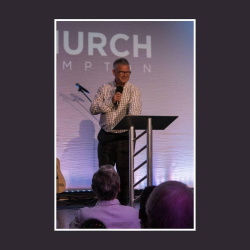
Nothing higher than this: Love God Love others.

“Hearing that Jesus had silenced the Sadducees, the Pharisees got together. One of them, an expert in the law, tested him with this question: “Teacher, which is the greatest commandment in the Law?” Jesus replied: “‘Love the Lord your God with all your heart and with all your soul and with all your mind. This is the first and greatest commandment. And the second is like it: ‘Love your neighbour as yourself.’ All the Law and the Prophets hang on these two commandments.” (Matthew 22 v 34-40)

What does this mean?

  • The vertical relationship is expressed in the horizontal relationship. You cannot separate your worship of God and how you relate to others.
  • Nothing is greater than the commands to love. All the other great things we can do in life are secondary.
  • Exclusivity is pride that needs to be broken. Whether a person desires to be apart from God or apart from others believing that they can do it ‘my way’ they are intrinsically wrong.
  • Whatever you long for, long for it for your neighbour. Whatever you seek then also give. If it is food then long to make sure no one goes hungry. If it is a house then have a heart for the homeless. The list goes on.
  • Let love for yourself be first transformed and fulfilled in the One who gives life abundantly and who satisfies the heart, soul and mind. Then from this place love others with the same love that transformed your self-love.

Gatherings can be religious but not righteous.

“Hearing that Jesus had silenced the Sadducees, the Pharisees got together.” (Matthew 22 v 34)

Gatherings can be powerful but not have the Presence.

They gathered together in unity.

They gathered to rejoice their enemy had been silenced.

They gathered for vision, for purpose and ‘for an assault’ (Msg)

Not all religious gatherings have Jesus at the centre.