
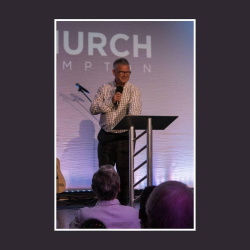
In the past … but now

In the past …. but now
Acts 17:30. “In the past God overlooked such ignorance, but now he commands all people everywhere to repent.”

Paul continues and is heading to his finale, that is Jesus.
However, this morning I want to share something that was laid on my heart as I read this. 

Today I am at my mother-in-laws house because I am helping to move her from a house she has lived in for 49 years in to a bungalow. It will be an emotional day I am sure as 49 years is a whole lot of memories. In the house for 49 years, BUT NOW, the bungalow. It is a new chapter, a new day.
So that’s what I want to share. Five words: In the … but now.
We all have a past and (check your pulse), we all are in the now. 

Can you move in the now moments ? Or are you stuck in the past?
Can you honour the past and not have to rubbish it? Can you carry the past for wisdom sake but also know this is the NOW time?
Can you begin again? In the past you were a different person to now. Now you have changed. You have changed not to live in the past but for now. 
In the past you may have been defeated but now is the time to try again. 
In the past your church had great moves of God but now the church is ready for God to do even greater acts.
You may like to stay in the past but now is for moving in the present in order to create a future. 
But now is a new moment, a new day that you have never seen before. In the past you were prepared for this very time. Psalm 118 tells us to rejoice in this now moment, in this new day, for the Lord has made it. 
In the past … but now. Whatever that means for you may today be a moving day and may it be God who moves in and through you as you move with love and grace towards others. 

This is our God!

This is our God!

Acts 17: 29 “Therefore since we are God’s offspring, we should not think that the divine being is like gold or silver or stone – an image made by human design and skill.”

Paul’s gospel presentation commences with saying the unknown God they worship is the God he worships. His beliefs have some similarity to theirs, there are obvious differences, but he builds bridges and doesn’t alienate. Their unknown God is THE creator God, THE sustaining God, THE ruling God and now through the use of the lyrics of their historical poets Paul announces that this is THE God who is the father of all. Brilliant! It doesn’t get any better than this, well, it does actually, but that’s for the next few days for us to discover!

This is not necessarily a model for evangelism but may God grant us the ability to know more of the beliefs and the culture of those around us before we begin to speak our evangelistic mantra.

I love to see my friend share his faith with Muslims. He knows the Koran very well indeed. As he shares Christ I often hear him say something like this, “It says in the Koran …” My friend has planted over 100 churches in difficult countries and led thousands to Christ and he has done it through not only the knowledge of the Bible but the important knowledge of the Koran and the Islamic culture.

So what does Paul say? He says this, “All of us receive our life from him and it is ludicrous to think of him as some statue. This unknown God of yours shows you do not know everything. What you do not know is who I present to you now. This is our God.” Paul has found a way to connect their unknown god altar and statue to the divine being God. He is yet to connect God with what he has been preaching and why he is indeed standing in front of the Areopagus, that is, Jesus and his resurrection (v18). He is nearly there, the finale is coming. We are in this crescendo of a presentation. It is exciting and thrilling and may God grant us wisdom to learn from him.


Ariana Grande

Ariana Grande

Acts 17:28 For in him we live and move and have our being.” As some of your own poets have said, “We are his offspring.”


In these last few verses we have seen how Paul knew the beliefs of those he was speaking to, those of the Epicureans and the Stoics.

But today in this verse we see how Paul knew their history also.

When I was a teenager, I remember singing a chorus (that’s what we used to call them back then!) with the words, “In him we live and move and have our being”. I truly believed these were words from the Bible and they are but not really!

In order for Paul to illustrate the gospel that God is the creator, sustainer, ruler of all and now he will be saying father of all, he quotes from their history. These are not words from the Old Testament and Paul will regularly quote from there in his writings. Paul is saying “God is near but you know this, look at your poets and what they have said.”  In the first one he quotes from a 6th BC poet Epimenides of Crete. As we have already seen this poet was directly linked to the story of the Unknown God (see 19th May) who healed the city of the plague. He wrote, “In him we live and move and have our being”, “He is near and our lives are lived in him, it is how we were created to be.”  The second is from a 3rd BC Stoic author Aratus of Cilicia. He wrote, “We are his offspring” and Paul is using this to show that we are the unknown God’s children. He is still speaking about their ‘unknown’ god. He is still building bridges. He does this by quoting 2 of their historical pagan poets who when writing were not thinking of his God. The point is Paul was culturally relevant.

In the aftermath of the terrible evil that happened at the Manchester it has been heartening to see the people of the city pulling together and helping one another. I believe if Paul was alive in Manchester today, in trying to present the gospel to them that though evil struck them they will get through this, may not of quoted the Old Testament scriptures but rather the opening song on that dreadful night that Ariana Grande sang. The words are “Baby, don’t you know All of them tears going to come and go. Baby you just got to make up your mind, We decide it. We’re going to be alright.”

The irony is moving. Little did anyone know how powerful these words would be for the devastated city, the grieving families, they were prophetic words.
Some will say but where is the cut and thrust of the gospel? Where is the ABC of salvation? The answer is look at Paul and how there are times when you need to go slowly. You need to demonstrate you are relevant, that you know something of the people you are talking to. We need to know their faith and the history of the people we are reaching and the words of Ariana Grande’s opening song of her set-list of that terrible night in Manchester. Maybe then people will listen to the gospel message.

The gospel on the morning when it doesn’t make sense.

The gospel on the morning when it doesn’t make sense.

Acts 17: 27 God did this so that they would seek him and perhaps reach out for him and find him, though he is not far from any one of us.

Paul is preaching to 2 groups of people who are still alive today in a new generation. He has built some bridges with them both. He has found common ground. He has begun by saying the gospel has elements of what you believe: God is the Creator and God is the Sustainer of life.

Paul now moves into the difference of the gospel truth.

The Epicureans are the people who say God is far away and not involved in our lives.

The Stoics are the people who say ‘God’ whatever that might be is in everyone but we cannot change anything in life, it is all down to fate.

I wake this morning to hear of the terrible news that a terror attack has happened in an arena in Manchester, UK. It is these kind of evil events that make people believe what the Epicureans and the Stoics believed. These events are known throughout the world every day.

The gospel is needed more than ever today. The gospel messenger needs to get to the place in the presentation to say, “You are wrong.”

You are wrong if you think God is beyond reach. God is not so far away He cannot be found.

You are wrong if you think God is automatically in you. God is still out there to be sought.

In the moving film ‘Silence’, Father Rodrigues battling in the darkest night of his soul prays what we have perhaps all prayed at some point, “Lord, I fought against your silence.”

At that moment the voice of Jesus is heard, “I suffered beside you. I was never silent.”

After a short exchange Rodrigues concludes, “It was in the silence that I heard Your voice.”

Those held in the terrors of evil today can find God, He is there. He is near to them. In the screams of pain, He can be heard in the silence.

Those watching who feel helpless because of the injustice of fate, they can find a divine plan for life. It starts by seeking after God. He is there. He is waiting.

When you wake in the morning and life doesn’t make sense then the gospel truth is there speaking words of sense in a senseless world.

God is near

God is near

Acts 17:26 “From one man he made all the nations, that they should inhabit the whole earth; and he marked out their appointed times in history and the boundaries of their lands.”

Paul’s sermon is carefully crafted to the Epicurean and Stoic listeners. He knew their beliefs and he knew how to present the gospel.

God is the creator and God is the sustainer of what He has created. Both groups were in line with that and would agree. This was good bridge building. Having focused on what they know, Paul ventures into what they do not know.

God is the ruler of all nations. He is not responsible for the terrorism and aggression of certain nations, yet both the history and geography of that nation is under His control. Paul is saying: God created and God sustains and more than this, God is involved.

The Epicureans held to an impersonal view of the gods and the Stoics were known for their fatalism. Now they are hearing that from the creation of the world through Adam, God is indeed personal. The worshippers of Athens gathered at the feet of a plethora of gods and goddesses, but they could never know or be known by them. Paul says, “Your Unknown God can be known!”

Let us not underestimate the impact of this.

The Epicureans and the Stoics are not dead today. You will possibly talk with them in your everyday life. The people who may believe in a God but if He is there is far away from their everyday life and people who feel powerless to do anything about life and they cannot alter anything even if they had the power to do so. The gospel is that God is near. He is involved. Paul will continue with this message. So must we.

Keep building bridges

Keep building bridges 
Acts 17:25 “And he is not served by human hands, as if he needed anything, because he himself gives all men life and breath and everything else.”
Having got the Epicureans on his side by commencing his presentation with God the creator, Paul now reaches out to the Stoics. They believed that each of us are our own gods and we are connected to one another by a shared divine life.

Paul says God is the creator but also the sustainer of life. He does not need sustaining. He does not need some supply from us. It is us who depend on God. He does not depend on us. He gives all men life and breath … The Stoics are nodding their heads because it is akin to their belief.
Paul addressing these 2 groups of people is saying, “the God I worship is what your doctrines speak of.” Now he could only do this if he knew their faiths. He will point out the difference but first he builds the bridge that is needed.
So let me summarise Paul’s approach:

1. I know what you believe.

2. I am not going to start with what you do not know or what you do not believe in. I will find common ground. Whether that be in the God of creation or a God who sustains man by being in man.
This is still good advice for our gospel approach today.


Bridge building

Bridge building 
Acts 17:24 “The God who made the world and everything in it is the Lord of heaven and earth and does not live in temples built by hands.”

Now we see Paul begin his gospel presentation. Immediately we can see that Paul knew who he was talking to and more importantly he knew what they believed. This will be seen throughout his message.
The Epicureans believed God is far away and that is exactly why he started his message with God the Creator of the universe. No one can limit him or contain him in some building. He is far and beyond. So the Epicureans are sitting up listening to Paul because he has built the bridge for them to come to him to hear more. “We like this Paul, this is a message we can listen to.”

It makes you wonder why the Church is so desperate to point out the differences between them and the world. Surely it makes more sense to build a bridge? 

Knowing the story

Knowing the story 
Acts 17:23 “For as I walked around and looked carefully at your objects of worship, I even found an altar with this inscription: TO AN UNKNOWN GOD. Now what you worship as something unknown I am going to proclaim to you.”
This is an incredible verse if you know the background history. Paul was one of those who did. This story is recorded in history dating the 3rd century AD.

In the 6th century BC Athens was hit with a destructive plague and none of their gods could do anything about it.

Wisdom was sought and it was decided to send for Epimenides, a philosopher and a religious man who lived in Crete.

When he arrived he found a plethora of gods and goddesses but believed that there must be another God undiscovered that could help the city.

He said that if they let a hundred sheep roam free in the city and the sheep that lay down on the ground be separated for sacrifice then this would heal the city. That’s what happened and the sheep was slaughtered and within a week the city was plague-free. Where the sheep lay down an altar was erected to the Unknown God.

Paul knew this story, he would later quote the philosopher himself.

Here he was in the first century facing the Athenians. How does Paul start? 

He focuses them on their history by talking of this unknown God. Instantly they would know the ancient story of how this unknown God has already entered their city. He is not a foreign God but their God who has already come to them in their story.

Today you may be with someone who isn’t a Christian. In their life it could be that God has already been working with them. In their eyes they might simply see him as Creator God. But this is where you start, with what they have experienced and believed. 

Know your stories, maybe even the history,  that’s the key to successful mission. 

The gospel approach

The gospel approach 
Acts 17:22 “Paul then stood up in the meeting of the Areopagus and said: “Men of Athens! I see that in every way you are very religious.”
Paul begins his gospel presentation to the non-Jews and the leading intellectual Greeks by praising them for their spirituality. It gives us 3 good lessons.
1. Do not let what is wrong with a person be our focus but start with what is right. In order to connect it needs to be based on the good. Connections fail when we are too keen to highlight the sin.
Of course being religious is not necessarily good. In fact with these people it was anything but good. They had many gods. They were full of duty and no relationship with the one true God. Therefore …

2. Even if what appears to be good in a person is actually defective and they are deceived then this does not stop you from praising them. 
3. Paul chose not to begin with Scripture (as he had done with the Jews) and it shows us that we should not commence with what the person does not know but what they do know.

The new old gospel

The new old gospel
Acts 17:21 “(All the Athenians and the foreigners who lived there spent their time doing nothing but talking about and listening to the latest ideas.)”
All day just discussing the latest ideas. 

Today it is the same. There are so many social media to check and then various messenger services. We are throughout the day bombarded with thoughts, opinions and ideas. Most of these not from ourselves

It has taken over our lives. We will never return. On top of this in our generation these new ideas come quick. No sooner are they here than a new idea is being developed.
For the Athenians and the foreigners, this way of life was conducive to the gospel that Paul was declaring. They were open to hear, they wanted to hear and Paul was more than happy to share.
Of course it wasn’t a new idea. The idea of the gospel is as old as time itself. It is an old gospel. There are no new ideas. But for those who hear it as a revelation to their heart it is brand new. 
In all of the information we share and receive may we never forget the old new gospel is as powerful today as it has ever been and people need to hear it more than ever.

The world is waiting for a new message, let us then give them the old gospel.