
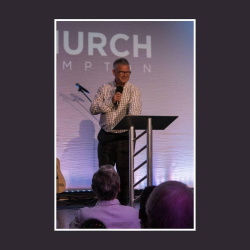
3 questions to ask when feeling trapped by a question!

3 questions to ask when feeling trapped by a question!

Mark 12: 13-17

“Later they sent some of the Pharisees and Herodians to Jesus to catch him in his words. 14 They came to him and said, “Teacher, we know that you are a man of integrity. You aren’t swayed by others, because you pay no attention to who they are; but you teach the way of God in accordance with the truth. Is it right to pay the imperial tax to Caesar or not? 15 Should we pay or shouldn’t we?” But Jesus knew their hypocrisy. “Why are you trying to trap me?” he asked. “Bring me a denarius and let me look at it.” 16 They brought the coin, and he asked them, “Whose image is this? And whose inscription?” “Caesar’s,” they replied.17 Then Jesus said to them, “Give back to Caesar what is Caesar’s and to God what is God’s.” And they were amazed at him.”

3 questions to ask when feeling trapped by a question!

Have you ever been pushed into a corner with a question which was more of an accusation than a desire to learn from you?

Do you have experiences of leading questions? Questions that are trying to gently lead you to answer in a certain way.

Do you have experiences of loaded questions? Questions that are based on lies or presumptions.

How do we get through those difficult moments?

  1. Who is asking the question?

The Pharisees bring the Herodians to Jesus to ask the questions. As its name suggests, the Herodians were a sect of the Jews who supported Herod and Caesar, even thinking that Herod was the promised Messiah. Standing before Jesus are 2 opposite groups of people who do not believe nor do they follow him. There is no relationship at all. Before Jesus hears the question he knows they are here to entrap him.

  1. What is the pre-fix?

Before they ask the question they try to lull Jesus into their trust. They do this by recognition of title and acknowledging his work. They try flattery. Praise is important to us but it can be dangerous.

They call him Master, Teacher or Rabbi. They praise him for keeping true to God’s word and not pandering to man. They didn’t believe either of these statements.

  1. Why are they asking the question?

They want to place Jesus into the hands of angry Jews who hated Rome and would turn their backs on anyone who suggests supporting it or they want to put him in danger with the Romans for sedition against Caesar. In fact later we will see that one of the many accusations taking Jesus to the cross was that he opposed to paying taxes to Caesar and that he was claiming to be king not Caesar. The early church would face persecution for not bowing to Caesar in worship. So this is why they ask the question.

Before you ask the question, ask Who, What and Why?

The authority of Jesus

The authority of Jesus

Mark 12: 1 – 12 “Jesus then began to speak to them in parables: “A man planted a vineyard. He put a wall around it, dug a pit for the winepress and built a watchtower. Then he rented the vineyard to some farmers and moved to another place. At harvest time he sent a servant to the tenants to collect from them some of the fruit of the vineyard. But they seized him, beat him and sent him away empty-handed. Then he sent another servant to them; they struck this man on the head and treated him shamefully. He sent still another, and that one they killed. He sent many others; some of them they beat, others they killed. “He had one left to send, a son, whom he loved. He sent him last of all, saying, ‘They will respect my son.’ “But the tenants said to one another, ‘This is the heir. Come, let’s kill him, and the inheritance will be ours.’ So they took him and killed him, and threw him out of the vineyard. “What then will the owner of the vineyard do? He will come and kill those tenants and give the vineyard to others. 10 Haven’t you read this passage of Scripture: “‘The stone the builders rejected has become the cornerstone; 11 the Lord has done this, and it is marvellous in our eyes’?” 12 Then the chief priests, the teachers of the law and the elders looked for a way to arrest him because they knew he had spoken the parable against them. But they were afraid of the crowd; so they left him and went away.”

On the back of the conversation regarding the authority of Jesus and the question which wasn’t answered, “John’s baptism—was it from heaven, or of human origin? Jesus tells a parable.

It couldn’t be more obvious other than naming the names. The chief priests, the teachers of the law and the elders responded in the only way they knew. They wanted to get rid of Jesus. They had the opportunity to change but they didn’t. In fact they did exactly what the parable said they would do.

The apostle Peter used this parable in his speech in Acts 4 when he was accused with John of causing a near-riot for healing a man. He was clear on who represented who in the parable:

  • the stone is Jesus Christ of Nazareth.
  • the builders are the rulers of the people and elders.
  • the rejection of the stone was the crucifixion of Jesus.
  • the elevation of the stone to the capstone was the resurrection of Jesus.
  • the implication of this new position at the head is that there is salvation in no other.


This parable takes us back to the main point of the argument that the religious leaders had with Jesus, the question of his authority. Jesus is clear, using Psalm 118, the rejected stone becomes the chief stone, the final authority. He would end his time on earth with such statements as “All authority in heaven and on earth has been given to me.”

For Peter, there was no other name given by which we can be saved.

For Paul, this name is above every other name.

For the Psalmist, the elevated name is marvellous in their eyes.

For the priests, the name is to be rejected and removed.

For us?

TPT of Psalm 118: 22-24 “The very stone the masons rejected as flawed has turned out to be the most important capstone of the arch, holding up the very house of God. 23 The Lord himself is the one who has done this, and it’s so amazing, so marvellous to see! 24 This is the very day of the Lord that brings gladness and joy, filling our hearts with glee.”

Jesus is the most important. How can we not bow our knee every single day of our life?

Do not reject what God is doing in your life right now, instead let Him take the final authority, submit to Him.

The authority of Jesus

The authority of Jesus

Mark 11: 27 – 33 “They arrived again in Jerusalem, and while Jesus was walking in the temple courts, the chief priests, the teachers of the law and the elders came to him. 28 “By what authority are you doing these things?” they asked. “And who gave you authority to do this?” 29 Jesus replied, “I will ask you one question. Answer me, and I will tell you by what authority I am doing these things. 30 John’s baptism—was it from heaven, or of human origin? Tell me!” 31 They discussed it among themselves and said, “If we say, ‘From heaven,’ he will ask, ‘Then why didn’t you believe him?’ 32 But if we say, ‘Of human origin’ …” (They feared the people, for everyone held that John really was a prophet.) 33 So they answered Jesus, “We don’t know.” Jesus said, “Neither will I tell you by what authority I am doing these things.”

The response of Jesus was masterful. If John the Baptist’s ministry was from God then that would indicate where the authority of Jesus came from who is “more powerful than I” (Mark 1:7) But they had rejected John. If John the Baptist’s ministry was not from God then all the people who had accepted him as a prophet would turn on these religious leaders. They were caught. People who are caught usually say “I don’t know.”

The questions came as Jesus was walking through the Temple. The building work had begun under Herod the Great approximately 45 years ago at the time of Jesus walking through the courts that day. It would be approximately another 30yrs before it was finished and it would stand for 7 years before being flattened by Titus in AD70.

The questions came from the Chief Priests, teachers of the law and the elders. They are the ones who interpret what Moses taught, they are the intermediaries between man and what God desires and demands. They are at the top of their careers. There are many who want to be in their position. They are the authority.

The questions come for a reason. Jesus had entered the Temple the previous day and caused havoc. They had lost money that day. Jesus had prevented people carrying their offerings and goods in and out of the Temple, he had effectively shut down the worship.

I am painting the picture of the battle of authority. Can you see it?

Mark (who is widely-known to have documented the teachings of Peter) is writing post-resurrection and he is clear. He knows who wins the battle. He knows where the authority of Jesus lies. He began his gospel with, “The beginning of the gospel about Jesus Christ, the Son of God.” He ends his gospel with Jesus ascending into heaven and sitting at the right hand of God.

There is still a battle of authority today.

Jesus is more than your best friend who walks with you like a brother.

He is the Holy One of God according to the evil spirits quaking in His presence (1:24).

He is the forgiver of sins which only God can do (2:7).

He described himself as Daniel’s authoritative Messiah title, Son of Man (2:28).

He built a team and gave them the ability and authority to do what He was doing (6:7).

He feeds 5,000 and then 4,000 and He walks on water (chapters 6 and 8).

He is transfigured on the mountain into His divinity and disciples here “This is my Son” from a descended cloud (9:7).

And then He enters Jerusalem and demonstrates authority which leads to the question.

So we are faced with this question today, the same question. The authority of Jesus. What is it? Where does it come from?

What do you say?

It seems to me that many want to hold his hand but not bow their knee. Many want the benefits of Jesus but not the surrender. What do we say?

If Jesus is who people like Mark says He is then it matters not how we feel, nor our circumstances that we go through, nothing absolutely nothing justifies us not surrendering our lives to Him. The only position is the bended knee.

Churches that fall-out over whose authority is higher, who is right and wrong, are churches that have not recognised the highest authority in the universe.

Christians that hurt others are people who are not kneeling before the throne but sitting on it.

I want to see the authority of Jesus brought back into the Church. We need a move of God throughout the nation. We need the outpouring of His glory. Our position regarding His authority will create the stage for that move.

Fig trees and mountains need faith and forgiveness.

Fig trees and mountains need faith and forgiveness.

Mark 11: 20-25 “In the morning, as they went along, they saw the fig tree withered from the roots. 21 Peter remembered and said to Jesus, “Rabbi, look! The fig tree you cursed has withered!” 22 “Have faith in God,” Jesus answered. 23 “Truly I tell you, if anyone says to this mountain, ‘Go, throw yourself into the sea,’ and does not doubt in their heart but believes that what they say will happen, it will be done for them. 24 Therefore I tell you, whatever you ask for in prayer, believe that you have received it, and it will be yours. 25 And when you stand praying, if you hold anything against anyone, forgive them, so that your Father in heaven may forgive you your sins.”

Withering fig trees and moving mountains are possible through faith and forgiveness.

Today the Church will again work with people’s need for salvation and demonstrate the dangers of rejecting Jesus (the withered fig tree).

Today the Church will work with people with insurmountable problems in their lives (moving mountains).

Both are needed, one carries a future threat and the other a present possibility. If you only focus on the fig tree curse then Church becomes heavy in its talk of judgment and threat of eternity. If you only focus on moving mountains then the Church becomes a social action group.

Both operate through prayer, an alignment with God where not only requests are made but you hear what He is wanting to do.

The success of the Church is dependent on faith and forgiveness.

Simply put: Do you believe God can and will? Do you have unforgiveness in your heart?

Perhaps right now you can answer those 2 questions in case you meet a fig tree or a mountain.


DO YOU KNOW WHEN TO EXIT?

DO YOU KNOW WHEN TO EXIT?

Mark 11: 19 “When evening came, Jesus and his disciples went out of the city.”

When the sun came down the Son went out.

At the end of every day Jesus would return to Mary, Martha and Lazarus’ home in Bethany to rest before returning to the city the next day. It was a 2 mile walk and so very close and easily done.

Jerusalem was his mission but Bethany his home.

A prolific church planter within Islamic nations said to me that the most important thing to note when entering difficult situations is the exit route.

Jesus didn’t wait till the evening and then ask “where shall we stay tonight?” He had already planned the exit.

The problem I see is that to enter is easy but EXIT TAKES WISDOM. Everyone knows how to start but knowing when to stop is only held by a few.

Carrying on relentlessly is not faithfulness when you have missed the exit sign years ago.

The EXIT PRESERVES THE MISSION because it gives time for rest, reflection and a reality check on the day’s activity. People who have no time for appraisals are in danger of making mistakes.

The disciples were learning to follow Jesus into and out of situations. The call of God can be as much to do something as to stop something. What do you need to stop doing right now? To EXIT CAN BE TO OBEY as much as to enter.


The Temple crash

The Temple crash

Mark 11: 15-18

 “On reaching Jerusalem, Jesus entered the temple courts and began driving out those who were buying and selling there. He overturned the tables of the money changers and the benches of those selling doves, 16 and would not allow anyone to carry merchandise through the temple courts. 17 And as he taught them, he said, “Is it not written: ‘My house will be called a house of prayer for all nations’]? But you have made it ‘a den of robbers.” 18 The chief priests and the teachers of the law heard this and began looking for a way to kill him, for they feared him, because the whole crowd was amazed at his teaching.”


Jesus knew what to do, he had been there the evening before. He had seen the state of the Temple.

His anger was because of the exploitation of the poor and all done inside the place of prayer.

There were crowds continually arriving into Jerusalem from many parts of the world and as today they need their currency exchanging. The main money exchange seems to be at the Temple, it was convenient there as they would then go and buy animals in order to bring sacrificial worship. Jesus said they had turned the house of prayer for all nations into a den of robbers meaning that there was exploitation taking place, the Temple were benefiting hugely on the back of people’s needs.

And who were they exploiting the most? Well, it was as it is today, the poor.

Jesus overturned the tables of those selling doves. Leviticus 5: 7 “Anyone who cannot afford a lamb is to bring two doves or two young pigeons to the Lord as a penalty for their sin—one for a sin offering and the other for a burnt offering.”

Jesus’ concern isn’t for the rich, for those who can afford say a lamb sacrifice, it is for those who cannot afford anything more than a dove. These exploited people are in his heart. It still is today.

Jesus caused a Black Wednesday or whatever day it was. It was an economic meltdown on Wall Street which affected nations.

Maybe He will do it again.

But pause again. You see, we are the Temple of the Holy Spirit. We are called for prayer. Have we exchanged that? Do we pray? How long for? Does it occupy the main purpose of our life? What about how we treat others? Look behind, is anyone hurting because of the way you have treated them, unkind words, neglect of love or using and abusing them? Maybe our temples need cleansing today. Maybe we need to be hurt by Jesus coming and causing a meltdown, upsetting our whole life because we have become not what we were created for. Let Him have His way today.

The fig tree is cursed.

The fig tree is cursed.

Mark 11: 12-14

“The next day as they were leaving Bethany, Jesus was hungry.13 Seeing in the distance a fig tree in leaf, he went to find out if it had any fruit. When he reached it, he found nothing but leaves, because it was not the season for figs. 14 Then he said to the tree, “May no one ever eat fruit from you again.” And his disciples heard him say it.”

First the fruit then the leaves, that is the order for the fig tree. So the fig tree has leaves so there must be fruit. Yet this isn’t the season for fruit but that doesn’t stop Jesus looking for it because he is hungry. When he looks at the tree he finds no figs so he curses the tree. His voice is loud enough for the disciples to hear him. It would indicate he wanted them to pay attention to this, it wasn’t that he was shouting, but he was purposely drawing them into this scene giving them a thought that they were overhearing or listening in to a private conversation. Which of course they weren’t but Jesus just wanted them to hear the importance of this.

This isn’t only a lesson in lost potential it is more than that. This isn’t only a lesson in the wrongs of arrogance, it is again more than that.

It is the arrogance of displaying you have what you don’t have at a time when no one is expecting you to have it in the first place!

Confused?

The fig tree is the generation of Israel expecting the Messiah.

It is the Temple of worship built to honour the glory of God, which Jesus has just entered and found it as a den of robbers and on that day would turn the Temple into disarray.

The fig tree had no fruit because it was not the season, all that was left on the tree were the leaves.

God has punished and exiled Israel because of its waywardness and rejection of Him throughout its history, in the time when it was not the season for the Messiah. If Jesus curses the fig tree out of season what does that indicate would happen to Israel if it is in season but is not fruitful? When the Messiah is here and it is the season and there is no fruit how much more will the curse be?

This is the season now. Jesus is here. He has been in the Temple which is heralding the One to come and He is here. Now is the time for salvation. So what now if there is no response? If there is no fruit?

Will Jesus bring a bigger curse to Israel?

We know what happens.

Jesus becomes the curse.

A life of adjustment and alignment

A life of adjustment and alignment

Mark 11:11 “Jesus entered Jerusalem and went into the temple courts. He looked around at everything, but since it was already late, he went out to Bethany with the Twelve.”

Jesus rode into Jerusalem with crowds of people shouting their praise and their expectations of victory, this was a new day they believed, this was the expected Messiah who would take hold of the government of the city and of Israel. The day came and was over very quickly and Jesus hadn’t done what they had expected.

Jesus headed straight to the temple and walked around looking at everything. It was late in the day and the market was over but probably the benches and tables were still there, maybe traders were tidying up after a long day buying and selling, certainly there was evidence of the state that the Temple had got into and what he would forcefully correct. But the day came and was over quickly and Jesus hadn’t done what perhaps the disciples had expected.

Have you experienced a move of God in your life and thought this is it, this will change everything and all the many items on your list would be completed, healed, provided for and Jesus would do it all?

God can move upon your life and not do what you expect He would do. This is not because He can’t do those things. It is because He has another agenda for your life. It is us who have to align our lives with Him not the other way round. Those who have unfulfilled expectations can often move bitterly into the place of questioning whether it was a move of God at all (which is seen in the crowd’s response only a few days later). It is hard to accept one’s expectations were wrong.

Perhaps there has been a move of God in your life and you are yet to recognise it. You have carried on as normal. He is walking around and looking at your life, observing, taking it all in. He is the one who walks amongst the seven churches of Revelation and sees what we don’t want Him to see. But nothing happens. So we carry on prayer-less, worship-less, disciple-less and continue on the cheap trying to earn, gain and achieve with such ambitious arrogance. But this could be the day of mercy for us for God is slow to anger. Yet the day is late and mercy is drawing to a close.

Jesus wasn’t fitting into anyone’s schedule and He still doesn’t. He works according to the perfect.

So we continue to adjust our expectations resisting disappointment and we continue to align our lives under Him thankful for His mercy.

Just a few questions on mission, provision and submission

Just a few questions on mission, provision and submission

Mark 11: 1-6 “As they approached Jerusalem and came to Bethphage and Bethany at the Mount of Olives, Jesus sent two of his disciples, saying to them, ‘Go to the village ahead of you, and just as you enter it, you will find a colt tied there, which no one has ever ridden. Untie it and bring it here.If anyone asks you, “Why are you doing this?” say, “The Lord needs it and will send it back here shortly.”’ They went and found a colt outside in the street, tied at a doorway. As they untied it, some people standing there asked, ‘What are you doing, untying that colt?’ They answered as Jesus had told them to, and the people let them go.”


What mission have you been sent on which is solely to do with provision for a future event?

  • Today is not about results but about provision for the results of tomorrow.
  • The success of mission is to bring back what you were sent to get.

What is outside your door that is needed by the Lord more than you need it?

  • If Jesus is Lord then He owns everything you have, you have no rights to your possessions.
  • If you want God to use you then perhaps you should start by saying ‘God use all I have.’

What do others have that the Lord wants you to be boldly obedient to go and take?

  • Jesus never wanted a worn out old donkey, so find the best because that’s what he wants.
  • Radical obedience can sometimes at first glance break what would be the norm, (taking without asking).


Destiny

Destiny

Mark 11: 1 “As they approached Jerusalem and came to Bethphage and Bethany at the Mount of Olives, Jesus sent two of his disciples.”

On your approach to your destiny you will come through many seasons and experiences.

Through Bethphage whose name means ‘House of unripe figs’ where Jesus caused a fig tree with no fruit to wither. A fig tree has fruit developing before the leaves so if you saw a fig tree with leaves you would be expecting fruit.

Through Bethany where the tomb of Lazarus is and where Jesus wept.

On the Mount of Olives where since 3 B.C. it has served as the main burial grounds of the city.

Jesus was always heading to Jerusalem. It is where we celebrate the centre of our faith, his death and resurrection.

Even today you may experience:

  1. Unfulfilled potential, people who are experiencing a death of their marriage, of their work, of who they could have been and who talked the talk but on a closer scrutiny didn’t live up to that talk. But we are not called to this death. Bethphage is not our destiny.
  2. Personal grief, when death comes to your own home or that of your close friends, when you lose forever what was so precious, even though you know you will see them again, even though you know there is a resurrection to come, you weep, your heart is broken. But we are not called to remain here. Bethany is not our destiny.
  3. The obvious. The fact that everyone and everything has a time-span. Nothing lives forever. Stories come to an end. Happy stories, sad stories, good and kind stories, bad and cruel stories, they all share the same burial ground. But we are not called to such fatalism. The Mount of Olives is not our destiny.

We have to keep going.

To the place of the voluntary surrendering of our lives to God for others.

To the place of submission.

This is a new death. A letting go at the point of momentum. We still have life. We may even be at our prime. We still have vision. We have more to give. But it isn’t taken from us and we do not lose it, we give it away, we lay our life down, all that we are, all that we have accomplished, all that we own, we surrender to Him, out of our love for others. This is our destiny, Jerusalem. Where we willingly close the chapter trusting in Him who opens a new one, who makes a way, who never lets death win, who always causes the sun to rise, who continually makes sure we can begin again. This is our destiny.